
Travel to The Gambia
The Gambia is the smallest country on the African mainland, a strip of land that follows its river all the way to the Atlantic. It offers sandy beaches, mangroves to explore by dugout canoe, hundreds of bird species and near-guaranteed sunshine in winter. Here is what to know before you look for cheap flights to The Gambia.
The Gambia in numbers
Capital
Banjul
Population
About 2.5M
Area
~11,300 km²
Currency
Dalasi
Language
English
UNESCO sites
2
Continent
Africa
Time zone
UTC+0
Airports covered
1
Why visit The Gambia
The Smiling Coast: sun, river and birds in a small country
Winter sun
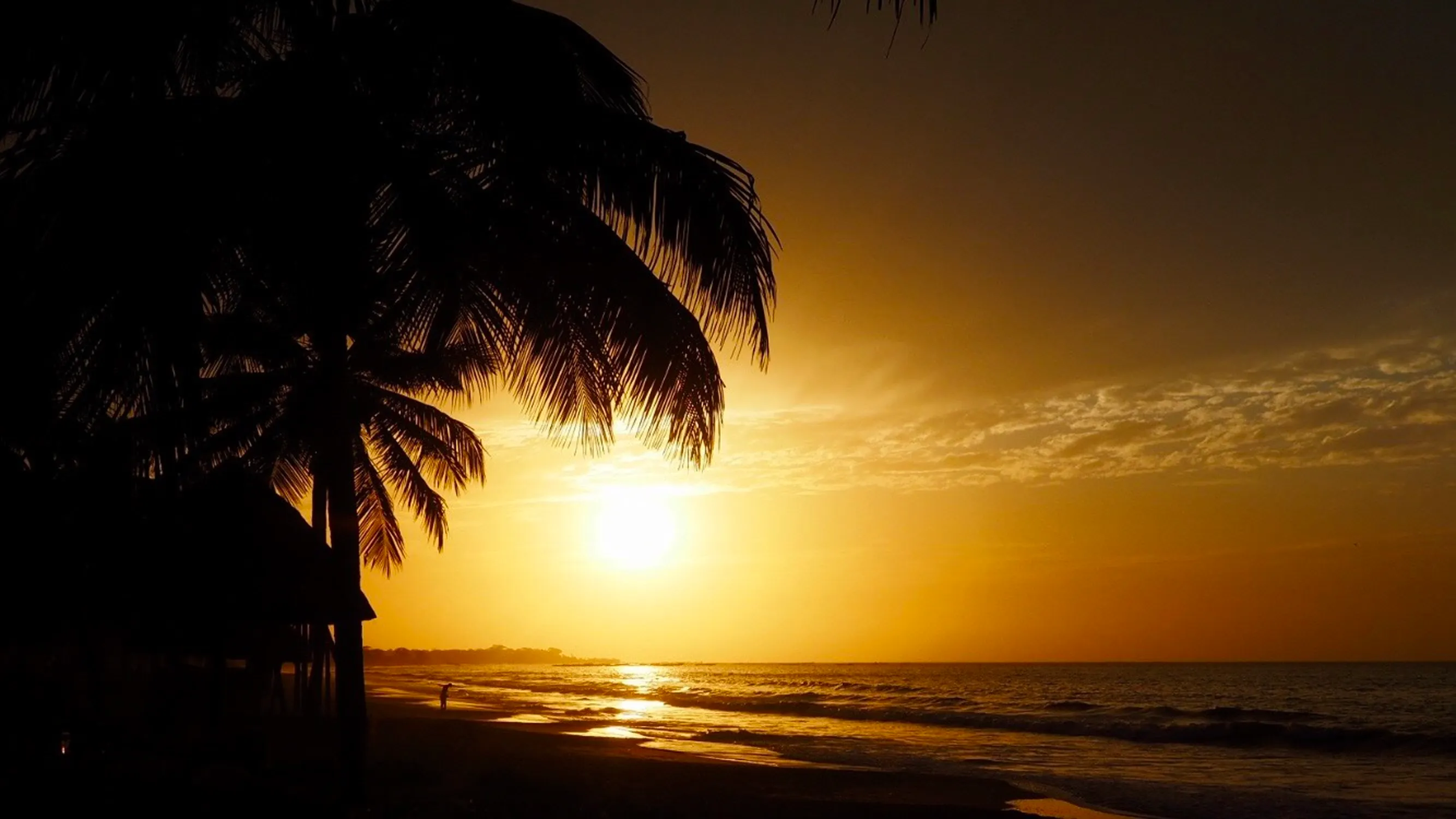
From November to April the dry season brings sunshine almost every day with little rain, and the official tourism site puts the flight from Europe at about six hours. The Atlantic beaches, from Kololi to Kartong, draw travellers looking for warmth in midwinter.
The Gambia River
The river is navigable along the whole length of the country. Cruises, dugout canoe trips through mangroves, floating lodges and excursions to the Gambia River National Park, where chimpanzees have been reintroduced, make for an unusual way to discover West Africa.
A birdwatcher's paradise
More than 500 species are recorded, a third of them migratory. The Abuko, Bijilo and Makasutu reserves let you see birds, monkeys and crocodiles a few kilometres from the coastal hotels.
History and culture
Kunta Kinteh Island, a UNESCO site, and the village of Juffureh recall the history of the slave trade and the novel Roots. The sacred Kachikally pool, music, djembe drumming and peanut-based cooking complete the trip.
Where to go
Atlantic coast, river, forests and Banjul
Most stays combine a few beach days on the west coast with one or two excursions: a day on the river, a nature reserve, a visit to Banjul. The country is small and distances are short, though traffic can slow things down. To extend the trip, see also our Senegal page, the country that almost entirely surrounds The Gambia.
The Atlantic coast, from Kololi to Kartong
Along 80 kilometres of coast, the resorts of Kololi, Kotu, Bakau and Fajara concentrate hotels, restaurants and the tourist-season entertainment. Further south, Sanyang, Tanji and Kartong are quieter fishing villages with long beaches; Sanyang is cited among the loveliest. Atlantic currents can be strong, so obey the swimming flags. In Bakau the sacred Kachikally pool lets you get close to crocodiles.
The Gambia River and its mangroves
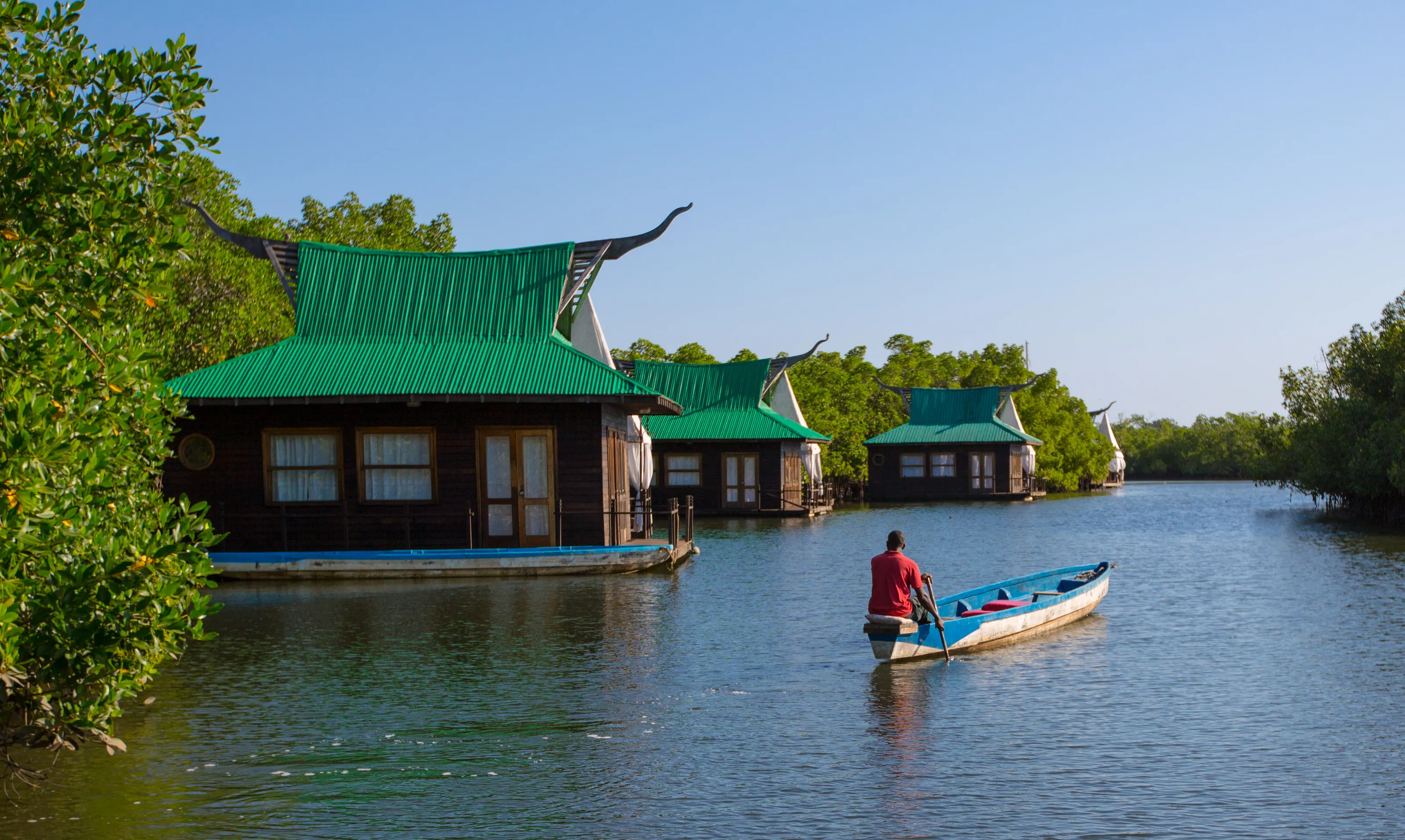
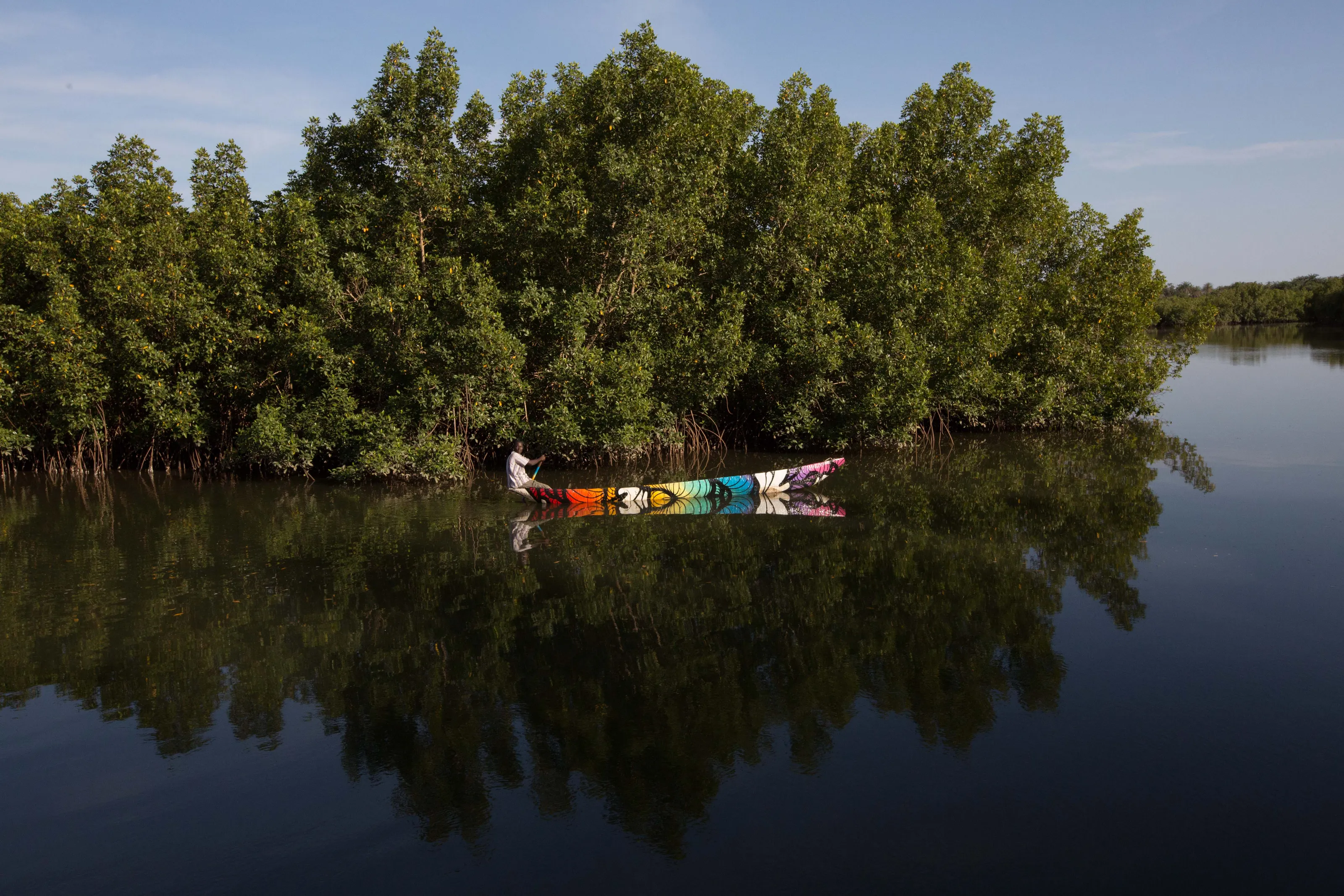
The river is the country's backbone. You travel on it by cruise or dugout canoe between mangrove banks, watching for birds. Floating lodges and bush camps let you sleep to the rhythm of the current, and Gambia River National Park upstream shelters reintroduced chimpanzees. Sunrise outings are best for light and birds.
Forests, reserves and monkeys
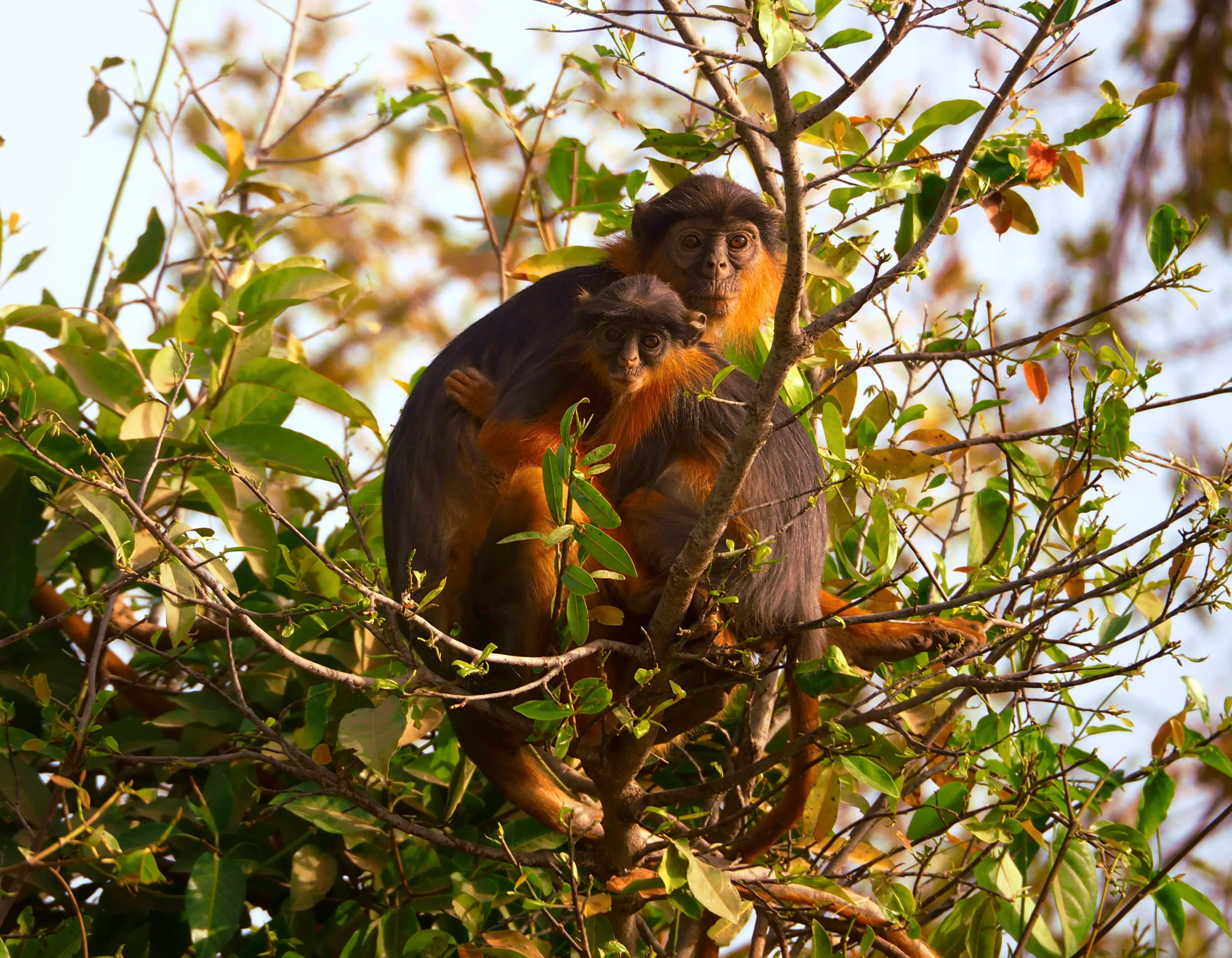
A few kilometres from the hotels, Abuko Nature Reserve covers about a hundred hectares and shelters monkeys, crocodiles and some 300 bird species. Bijilo Forest Park at Kololi is home to monkeys, and Makasutu forest mixes mangroves, palm groves and savanna. Western red colobus monkeys, with their dark and orange fur, are among the most photogenic animals in the country.
Banjul, Juffureh and history
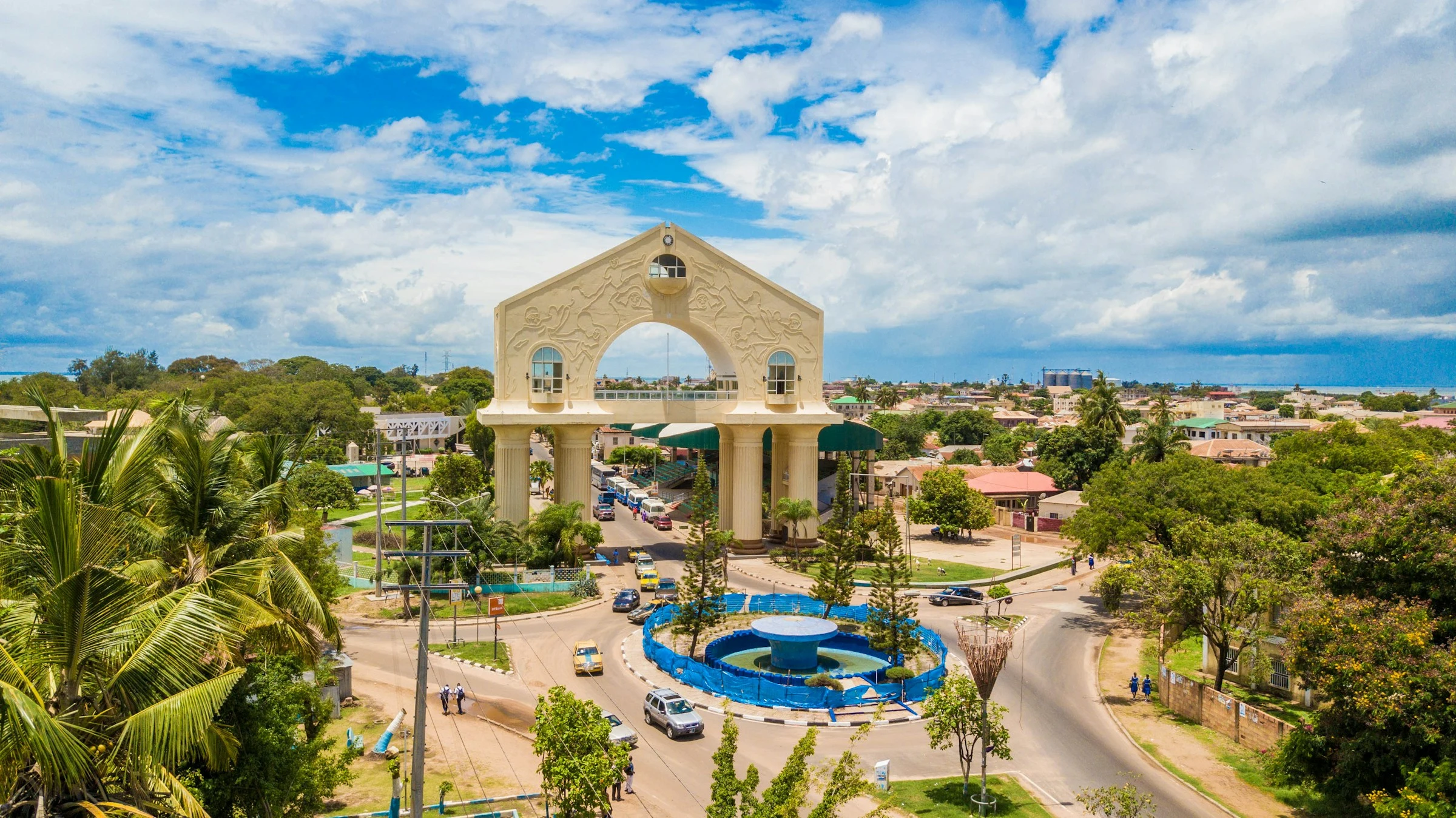
The capital, built on an island at the river mouth, is small and can be seen in half a day: a monumental arch, the national museum, the market and the ferry to Barra. Further up the river, Juffureh and Kunta Kinteh Island tell the story of the slave trade. Inland, the Wassu stone circles, whose origin and purpose are still poorly understood, are worth the detour.
Before you go
A dry season from November to May, rains from June to October
| Region | Climate | Best time to visit |
|---|---|---|
| Atlantic coast | Sunny and pleasantly hot from November to March, hotter at the end of the dry season. Rains June to October, rough sea in places. | November to April |
| Banjul and Serekunda | Hot almost all year, cooler nights in winter. Summer rains, with roads sometimes flooded. | November to April |
| River and inland | Hotter inland, with the dry, dusty harmattan in the dry season. Marked rains June to October. | November to February |
| Birdwatching | Migratory birds are present in winter, and reserves are easier to reach in the dry season. | November to April |
The climate is tropical savannah, with a rainy season from June to October or November and a cooler dry season from November to May. The harmattan, a dry wind from the Sahara, can bring a dust haze. The tourist season runs from October to April, so keep an eye on flight prices before fixing your dates, as they rise around the holidays.
Getting around
Taxis, the Banjul ferry and guided excursions
Yellow taxis are cheap and used by locals, while green taxis are reserved for tourists, at higher fares. Official guides and many tour operators run day excursions; beware of fake guides and always meet them at their office. To reach Banjul from the north, a ferry crosses the river from Barra in about thirty minutes.
Most visitors stay in the coastal area and take organised excursions to the river and the reserves. Driving is unpredictable and some roads are in poor shape, so a driver is wiser. English is the official language and is easy to use in the tourist areas.
Food and culture
Domoda, yassa and fresh fish
Domoda, a meat stew in peanut paste, is considered the national dish. You can also try superkanja, an okra stew, chicken or fish yassa marinated in lemon and onion, and benachin, a rice dish with vegetables and fish. Fish, fresh or dried, rice and peanuts are the staples.
The cuisine is close to that of neighbouring Senegal. River oysters, gathered by women, are a local speciality. For music, the kora and drums liven the coast, and djembe courses are available for those who want to try.
Flying to The Gambia
The Gambian airport tracked by SniperAir
Banjul International
The country's only international airport, at Yundum, outside Banjul and not far from the coastal resorts. Many flights to The Gambia are charters in the October to April season.
FAQ
Frequently asked questions about The Gambia
Which airport should I fly into for The Gambia?
Banjul International (BJL), at Yundum, is the country's only international airport. It serves the coast and the capital, and river excursions start from there.
When is the best time to visit The Gambia?
The dry season, November to April, is the most pleasant: sunshine almost every day and little rain. Rains from June to October green the landscape but complicate some roads. The official tourist season runs from October to April.
Is The Gambia expensive to visit?
The tourism board presents The Gambia as an affordable destination all year round. The budget depends mostly on the flight, the season and guided excursions. Choosing your dates and watching flight prices helps keep the total down.
Do I need a visa for The Gambia?
Entry rules depend on your nationality and change over time: some travellers enter without a visa, others must obtain one beforehand or on arrival. Check official sources and your government's travel advice before booking.
How long should I spend in The Gambia?
A week is enough for beach time, a river excursion and a bird reserve. Plan about ten days if you add Juffureh, the interior and a stay on the river.
Is The Gambia safe for travellers?
Careful travellers get around without difficulty, but watch out for classic scams, fake guides and insistent sellers. Obey the swimming flags, as currents can be strong, and talk to a doctor about malaria prevention.
How do I get alerted when flights to The Gambia drop in price?
Create a SniperAir alert profile with your departure airport and Banjul as the destination. We track prices and notify you as soon as a matching opportunity appears. See how it works.
Ready to track prices to The Gambia?
Create an alert and let SniperAir do the rest.
Create my alert