
Travel to Syria: ancient and medieval heritage
The golden columns of Palmyra, the crusader fortress of Krak des Chevaliers, the Roman theatre of Bosra, the Umayyad Mosque in Damascus and the Citadel of Aleppo: Syria holds some of the great monuments of the ancient and medieval world, to discover when conditions allow. Here is some background before you look at flights to Syria.
Before reading further: many governments advise against or restrict travel to Syria, and the situation can change. Check the official advice of your country of departure before considering any trip; this page only presents cultural and historical landmarks.
Syria at a glance
Capital
Damascus
Area
About 185,000 km²
Currency
Syrian pound
Language
Arabic
Highest point
Mount Hermon
Heritage
UNESCO sites
Continent
Asia
Time zone
UTC+3
Airports covered
1
Why it fascinates
Caravan cities, crusader fortresses and great mosques
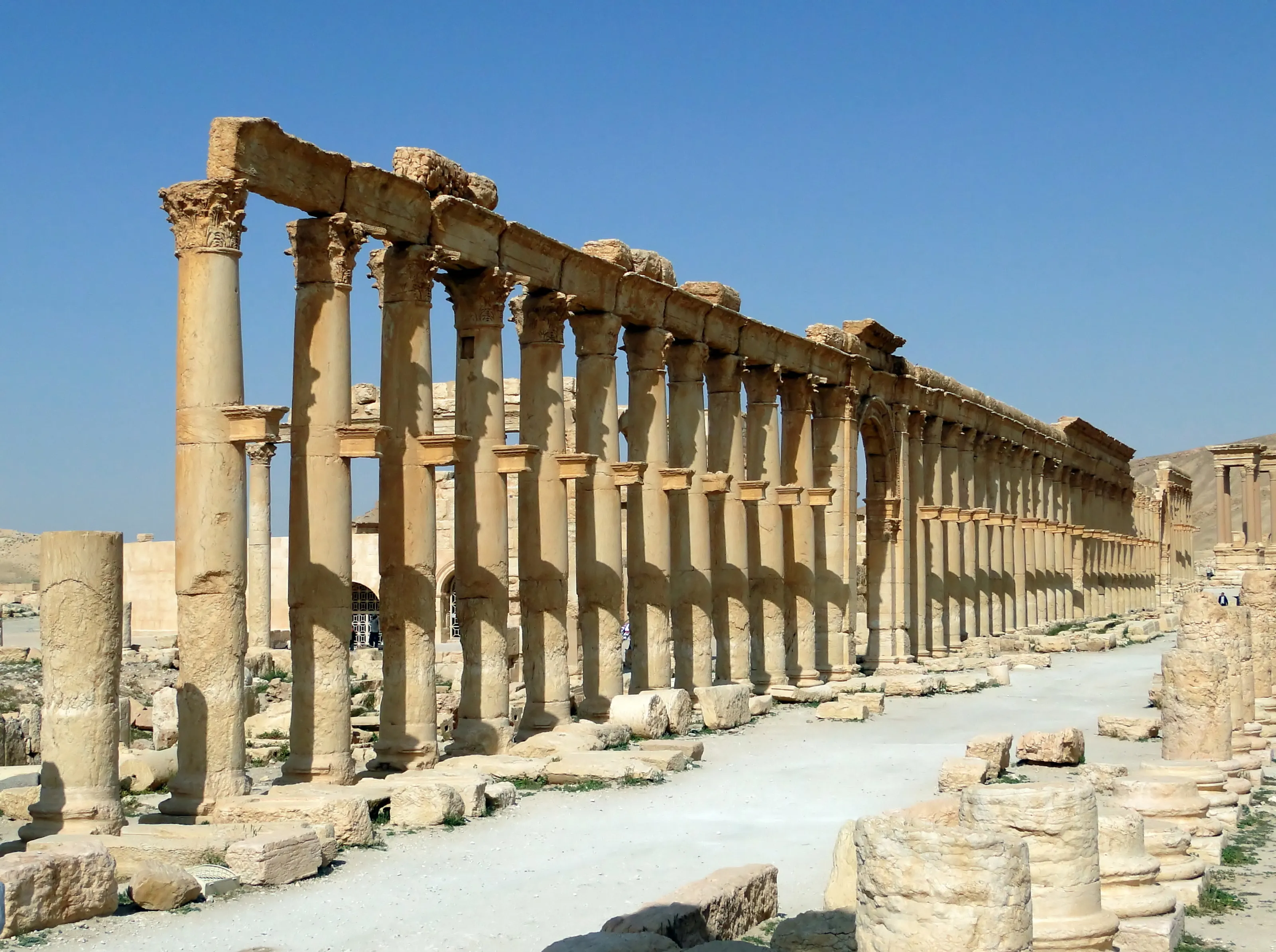
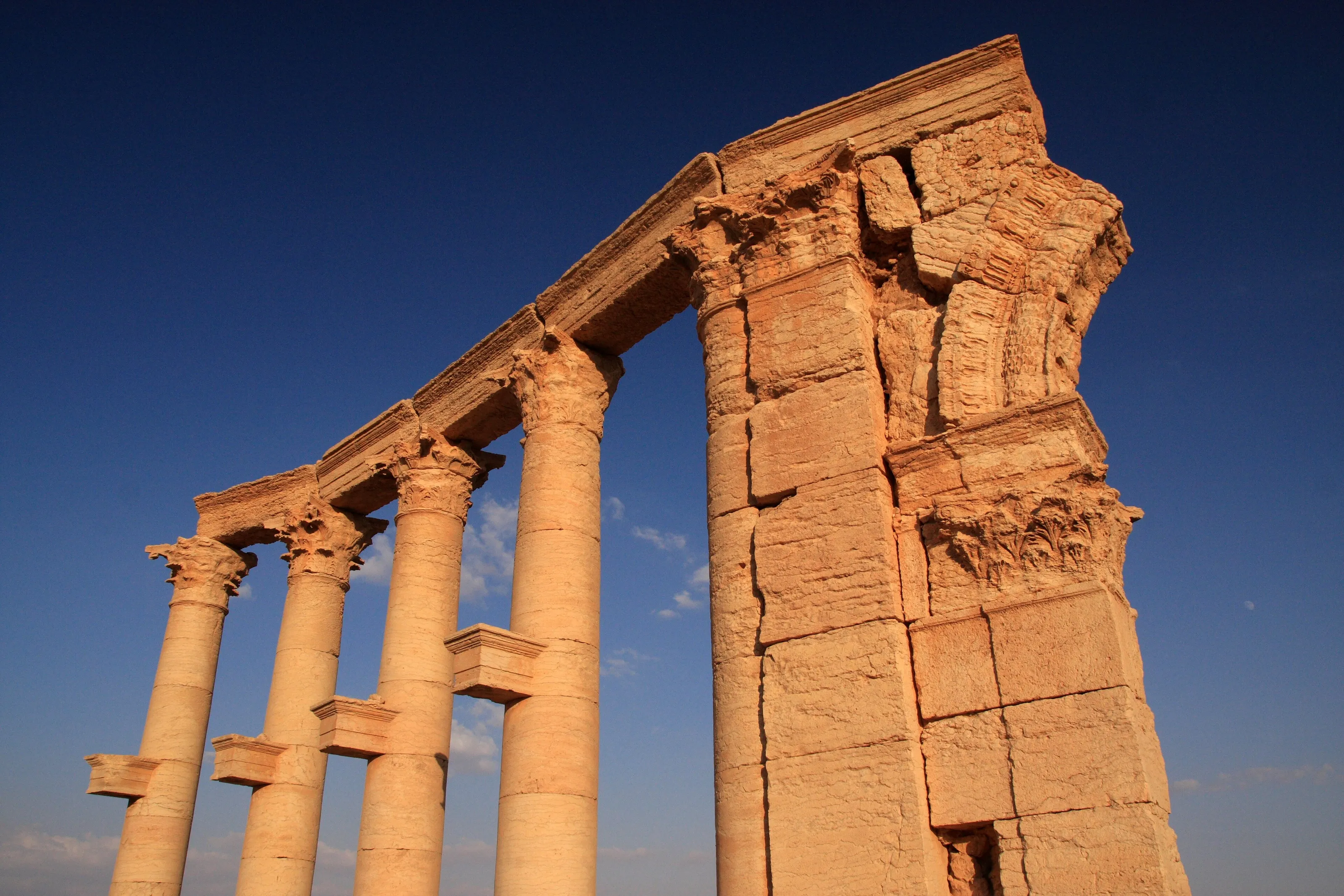
Palmyra, city of the desert
An ancient caravan oasis, Palmyra peaked under King Odaenathus and then Queen Zenobia in the 3rd century: its Great Colonnade runs for more than a kilometre.
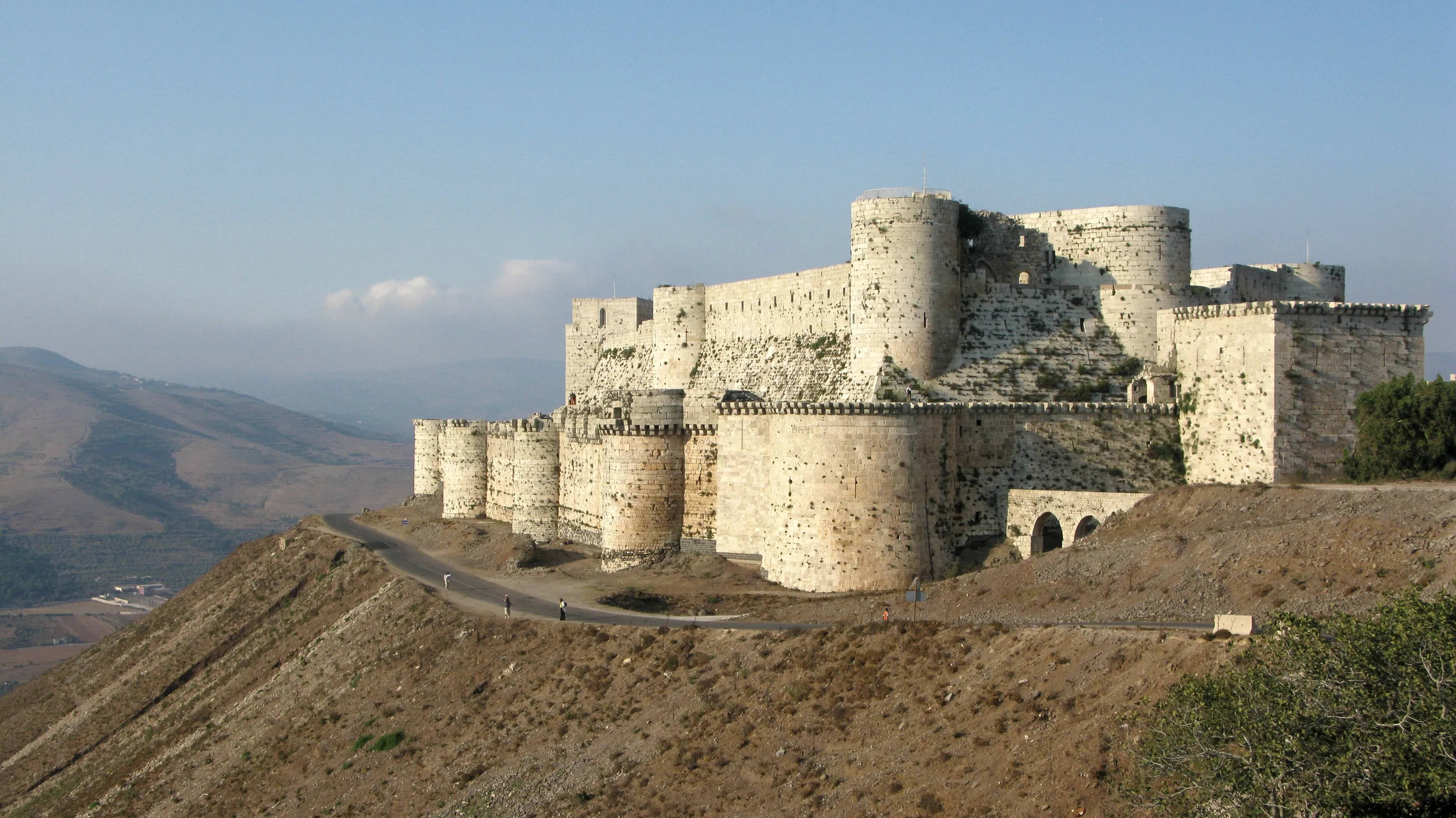
Krak des Chevaliers
A Hospitaller fortress from 1142, with a double wall that could shelter a garrison of about 2,000: one of the best-preserved medieval castles in the world.
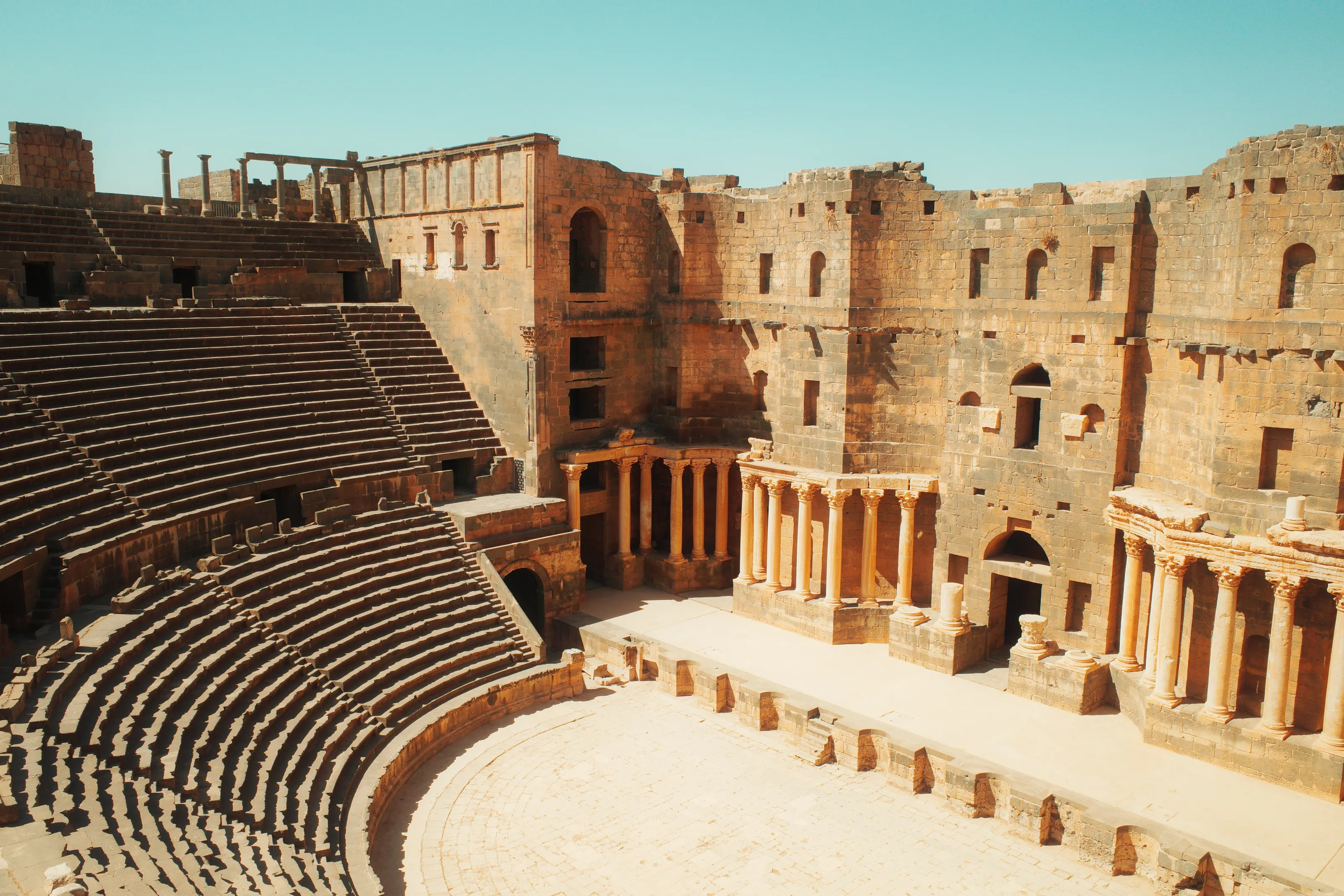
Bosra and its theatre
Roman capital of the province of Arabia, Bosra keeps a 2nd-century theatre of 17,000 seats, built of black basalt.
Damascus, Aleppo and their monuments
The Umayyad Mosque of the early 8th century in Damascus, the Citadel of Aleppo on its mound: two old cities that are UNESCO-listed.
Highlights
Palmyra, Krak des Chevaliers, Bosra, Damascus and Aleppo
These are the sites that give Syria its reputation for ancient and medieval heritage. They are presented as cultural information, landmarks to discover when conditions allow; this page offers no itinerary and no on-the-ground advice.
Palmyra, the caravan oasis
About 215 km north-east of Damascus, Palmyra is an oasis city mentioned since antiquity, enriched by the caravan trade between Syria, Mesopotamia and the Mediterranean. It joined the Roman Empire in the first century and its landmarks include the Great Colonnade, a street of about 1.1 km, and the Temple of Bel, dedicated in AD 32. It has been UNESCO-listed since 1980.
Krak des Chevaliers, the crusader fortress
On a hilltop in the west of the country, the Krak was held by the Knights Hospitaller from 1142 to 1271. Rebuilt after the earthquakes of 1157 and 1170, it is protected by a concentric double wall with an outer rampart of round towers. You can still see the Gothic-influenced Hall of the Knights and a vaulted chapel; UNESCO listed it in 2006.
Bosra, the city of black basalt
On a basalt plateau in the south, Bosra was a Nabataean city and, after 106 AD, the capital of the Roman province of Arabia. Its great 2nd-century theatre, whose upper gallery survives, was later fortified into a citadel. The Ancient City of Bosra has been UNESCO-listed since 1980; the climate is cold semi-arid, with rain mostly in winter.
Damascus and the Umayyad Mosque
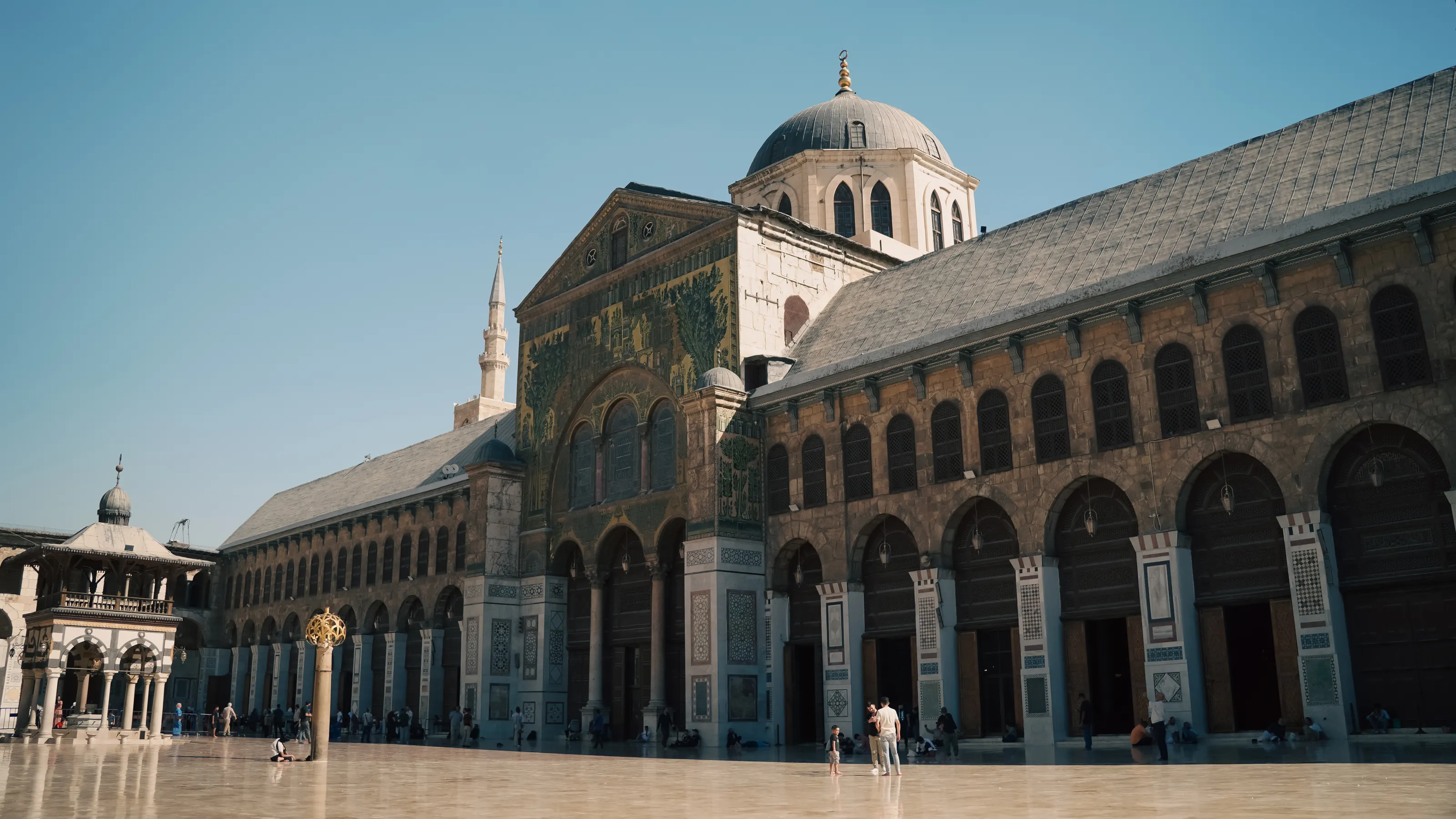
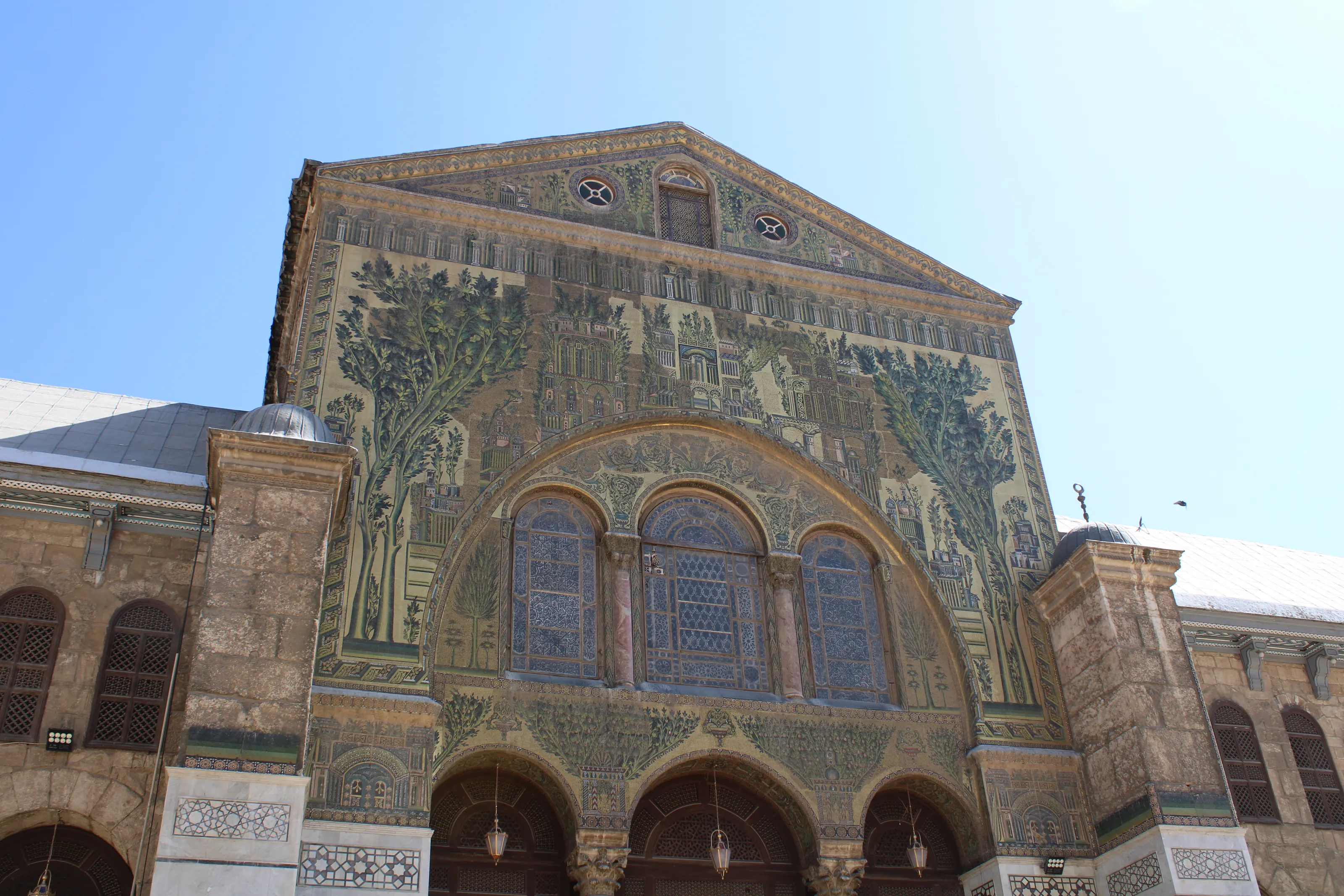
Damascus is one of the oldest continuously inhabited cities in the world. Its great mosque, begun about 706 under al-Walid I on the site of a Byzantine cathedral and a Roman temple, has three minarets and a courtyard that keeps the largest remnants of the original golden Umayyad mosaics. Around it the old city holds Al-Hamidiyah Souq and the Azm Palace.
The Citadel of Aleppo
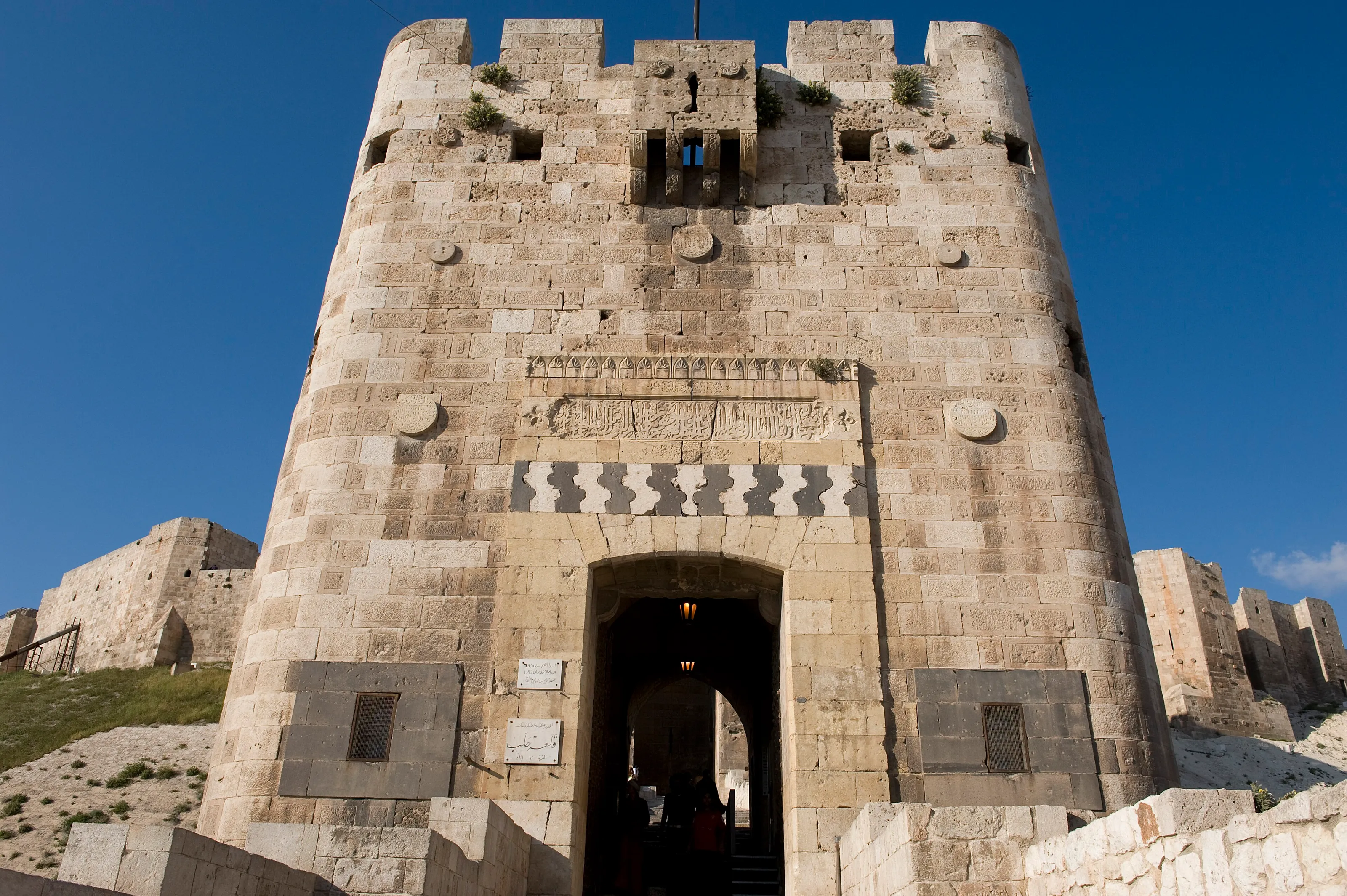
The Citadel of Aleppo is a fortified medieval palace on a mound about 50 m high, with traces of settlement from the middle of the third millennium BC. A stone bridge leads to an entrance block rebuilt in 1213 by the Ayyubids, which also holds a palace with a honeycomb-vaulted portal, a bath house and a mosque with a minaret. The Ancient City of Aleppo is UNESCO-listed.
Before you go
Spring and autumn: the climate of Syria, region by region
| Area | Climate | Period often cited |
|---|---|---|
| Damascus | Semi-arid: hot summers, cool winters with occasional snow, rain from November to March. | Spring and autumn |
| Palmyra and the desert | Very dry, very hot in summer (about 38 C in July), cool in winter. | Spring and autumn |
| Bosra and the south | Cold semi-arid, rain mostly in winter. | Spring and autumn |
| Coast and Krak des Chevaliers | Mediterranean: mild wet winters, hot dry summers. | Spring and early summer |
Many governments advise against or restrict travel to Syria. These climate notes are cultural information only; check your departure country's official advice before considering any trip, and follow it. Entry requirements vary by nationality.
Getting around
Sites that lie far apart
Syria's great sites are spread across the territory, from the Palmyra desert to the hills of the west and the basalt south, so distances between them are long. Travel conditions change and depend on decisions that only the official sources of your country of departure can reliably communicate.
This page offers no itinerary and no on-the-ground advice. It presents the country for what is most precious about it: its heritage and culture, to discover when conditions allow.
Culture and food
Jasmine, mezze and candied-fruit sweets
Damascus is nicknamed the City of Jasmine, and its confectioners display whole candied fruits, apricots or pears, the legacy of a long sugar-making tradition. Aleppo soap and rose water are among the products associated with the country.
At the table, Syrian cooking rests on mezze, hummus, kibbeh, tabbouleh and fattoush, with pistachio pastries to finish.
Travel to Syria
The Syrian airport tracked by SniperAir
Damascus International
Damascus's airport, in the capital. Some services may be suspended or limited: check the situation before any booking.
FAQ
Frequently asked questions about flights to Syria
Which airport for a flight to Syria?
SniperAir tracks Damascus (DAM). Some services may be suspended or limited: check with airlines and the authorities before any booking.
When is the best time to travel to Syria?
Spring and autumn are the gentlest seasons in most regions. Summer is very hot in the desert and in Damascus. These are only climate notes.
Is travelling to Syria expensive?
The budget depends on many factors, and the flight is often a large share. We give no prices or estimates: conditions can change and fares vary widely.
Do I need a visa for Syria?
A visa is generally required, but conditions vary by nationality and can change. Ask the competent authorities and check the official website of your country of departure.
How long should I plan for?
The length depends entirely on conditions at the time, and SniperAir offers no itinerary. The sites lie far apart; the answer belongs with official sources.
What should I know before going?
Many governments advise against or restrict travel to Syria, and the situation can change. Check the official advice of your country of departure before considering any trip. This page is cultural information: it does not recommend travelling.
How do I get alerted when a flight to Syria changes price?
SniperAir monitors flight prices and sends alerts; we do not sell or book any ticket. Create an alert profile with your departure airport if you follow this destination. See how it works.
Follow flight prices to Syria?
Create an alert and let SniperAir do the rest.
Create my alert