
Travel to Haiti: cheap flights to a mountaintop fortress, waterfalls and Caribbean art
A stone fortress perched about 900 metres up, the ruins of a royal palace built to rival Versailles, turquoise pools hidden in a canyon, a coastline of beaches and a painting tradition that bursts with colour: Haiti, the western third of the island of Hispaniola, is a country of heritage, nature and creole culture. Here is what you need to plan the trip, then start watching cheap flights to Haiti.
Haiti at a glance
Capital
Port-au-Prince
Area
About 27,750 km2
Highest point
Nearly 2,700 m
Currency
Haitian gourde
Languages
Creole and French
Independence
1 January 1804
Continent
North America
Time zone
UTC-5
Airports covered
1
Why visit Haiti
World Heritage, waterfalls, colour and creole flavours
A UNESCO-listed fortress
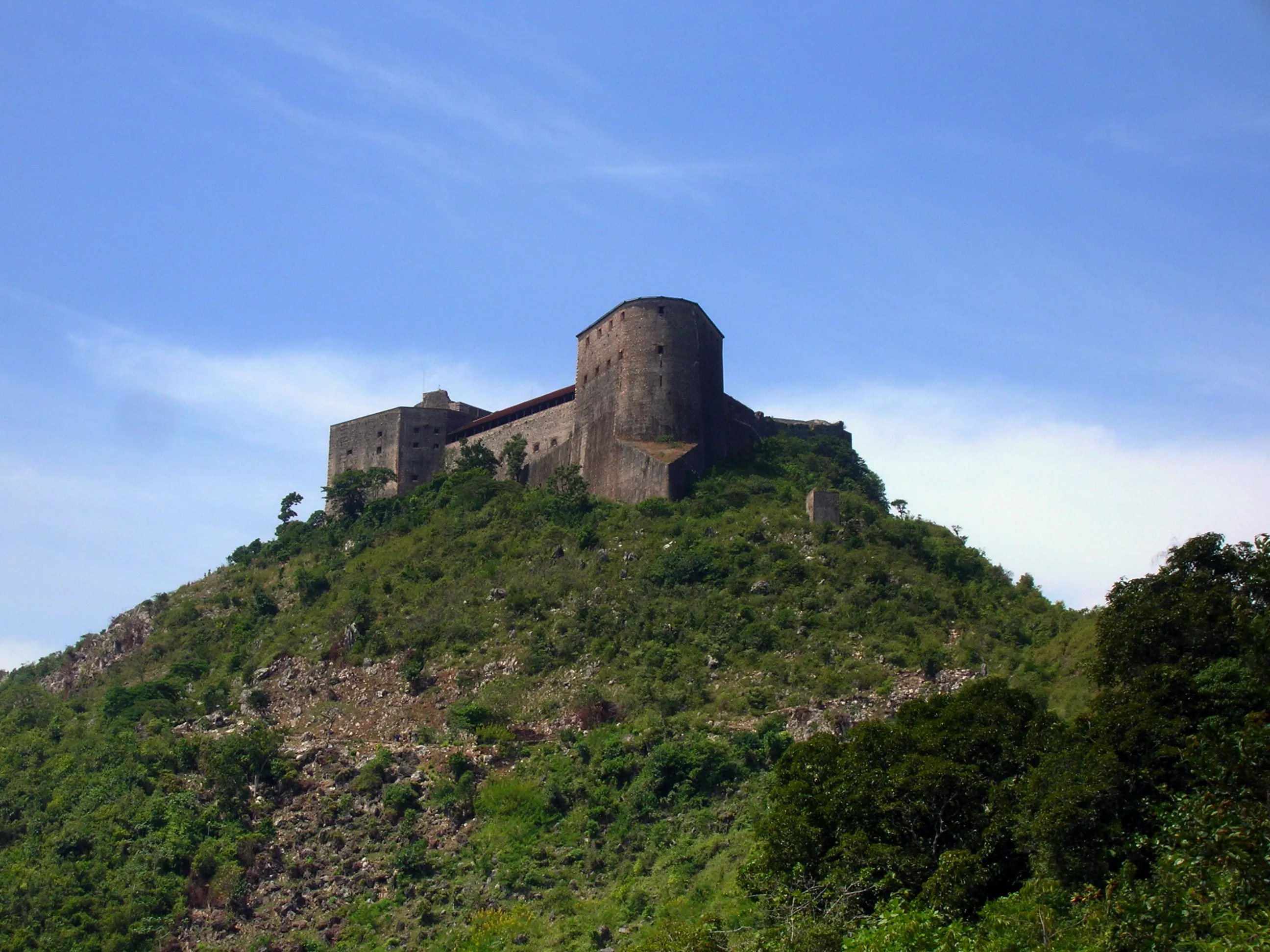
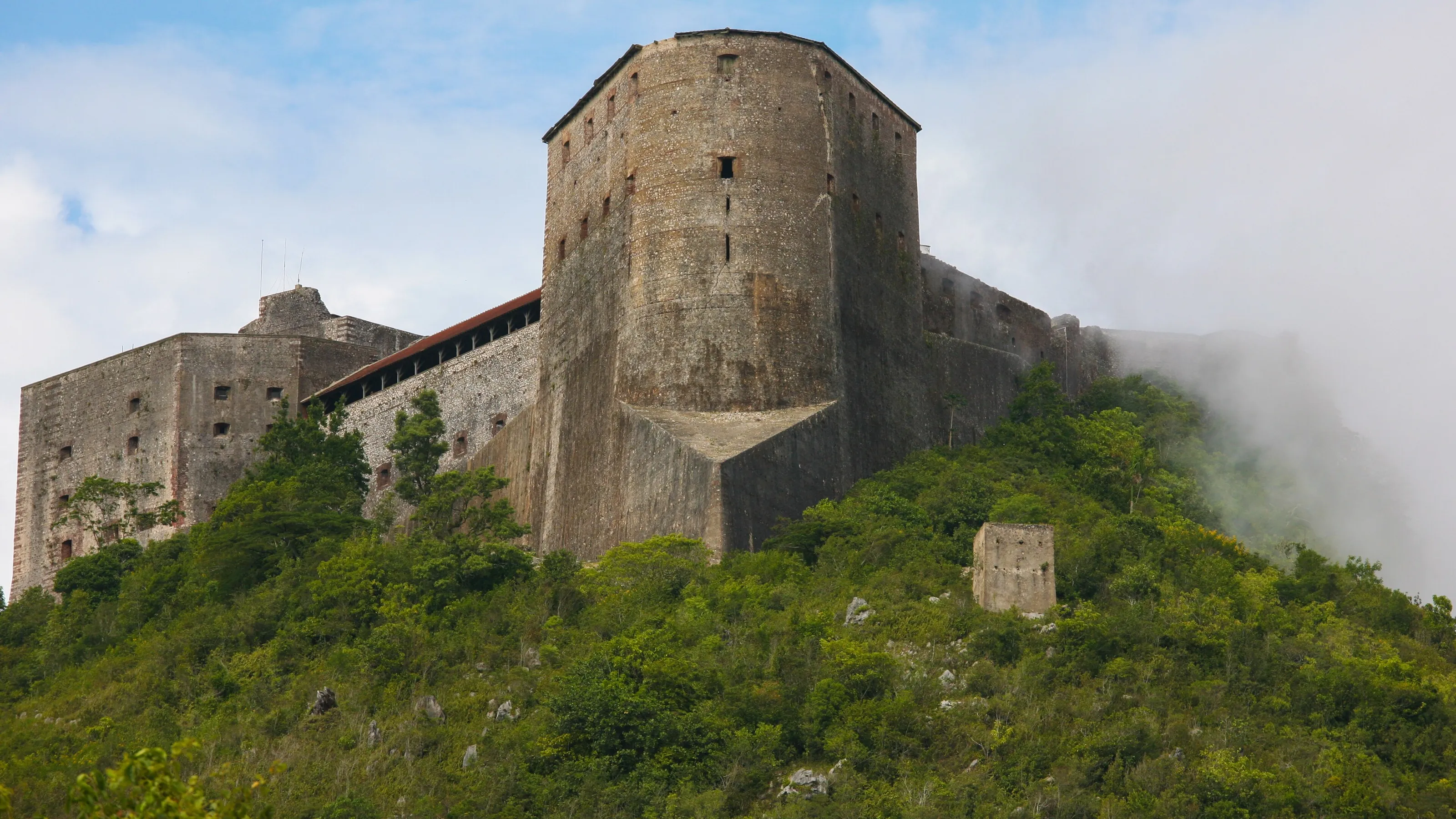
The Citadelle Laferriere, the Sans-Souci palace and the Ramiers ruins make up a national historic park listed in 1982. The Citadelle, often called the largest fortress in the Caribbean, towers over the northern mountains.
Waterfalls and turquoise pools
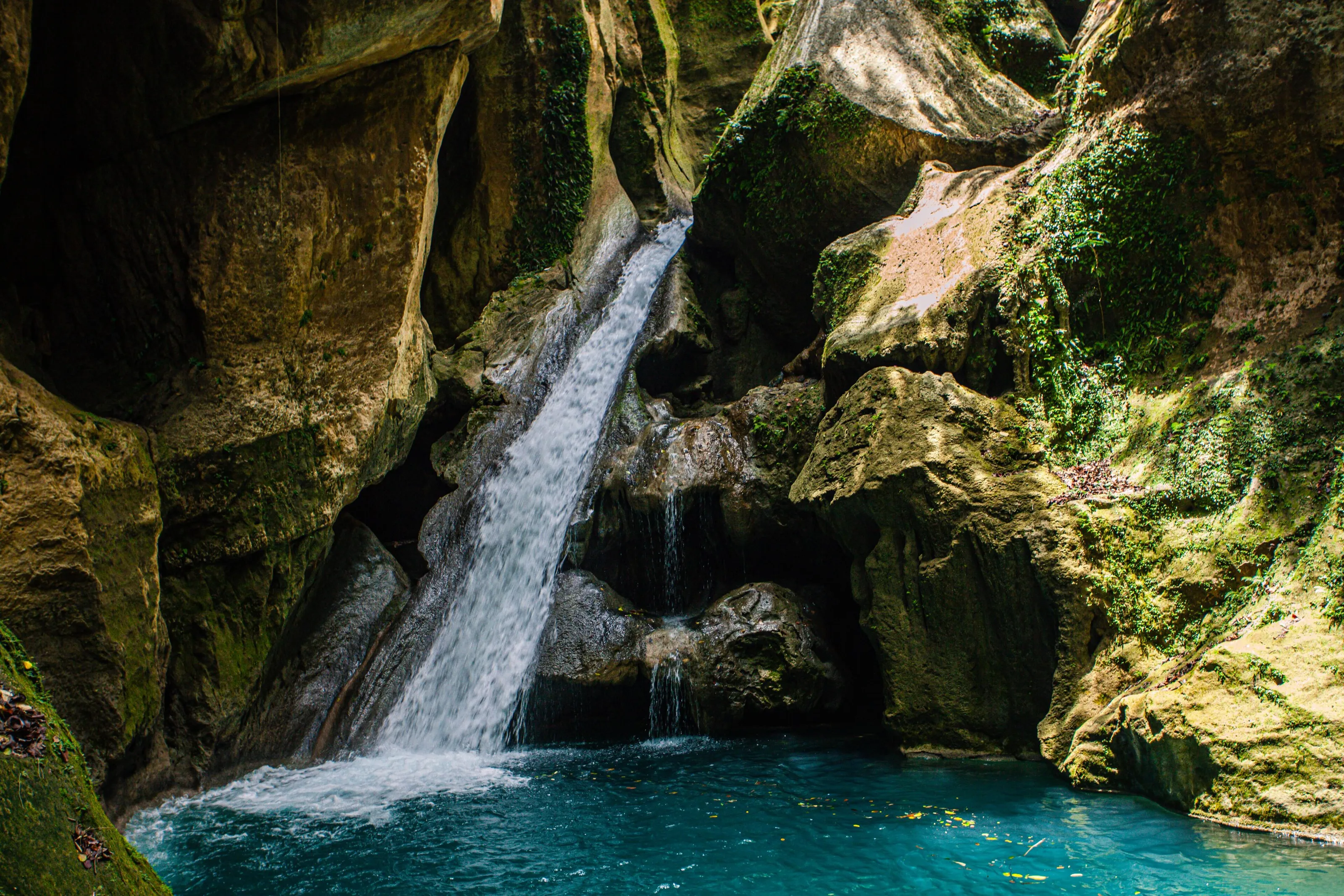
Near Jacmel, Bassin Bleu strings together deep pools and small falls in a rock gorge: a rare swim far from the beach, among dense green.
Art and music of their own
Brightly coloured painting, cut-iron sculpture, rara, kompa and roots music: Haitian creativity is among the most inventive in the Caribbean, from Jacmel's workshops to the markets.
Generous creole cooking
Fried pork griot, spicy pikliz, djon djon mushroom rice, the New Year soup joumou, Barbancourt rhum and strong coffee: Haitian food blends African, French and Taino roots.
Places to see
The Citadelle, Sans-Souci, Jacmel, Bassin Bleu and the coast
Haiti is best explored by region: the historic north around Cap-Haitien, the artisan south-east around Jacmel, and a shoreline of beaches and small islands. Here are the landmarks to keep in mind when you shape an itinerary.
The Citadelle Laferriere, a fortress in the northern mountains
Commissioned by Henri Christophe in 1805 and completed in 1820, the Citadelle Laferriere sits on a summit about 910 metres high, roughly 27 kilometres south of Cap-Haitien. Its walls rise some 40 metres, with pyramids of cannonballs and hundreds of cannons, and on a clear day the view stretches to the bay and the Atlantic. The route starts in the village of Milot, finishing on foot or on horseback.
Sans-Souci, the ruined palace at Milot
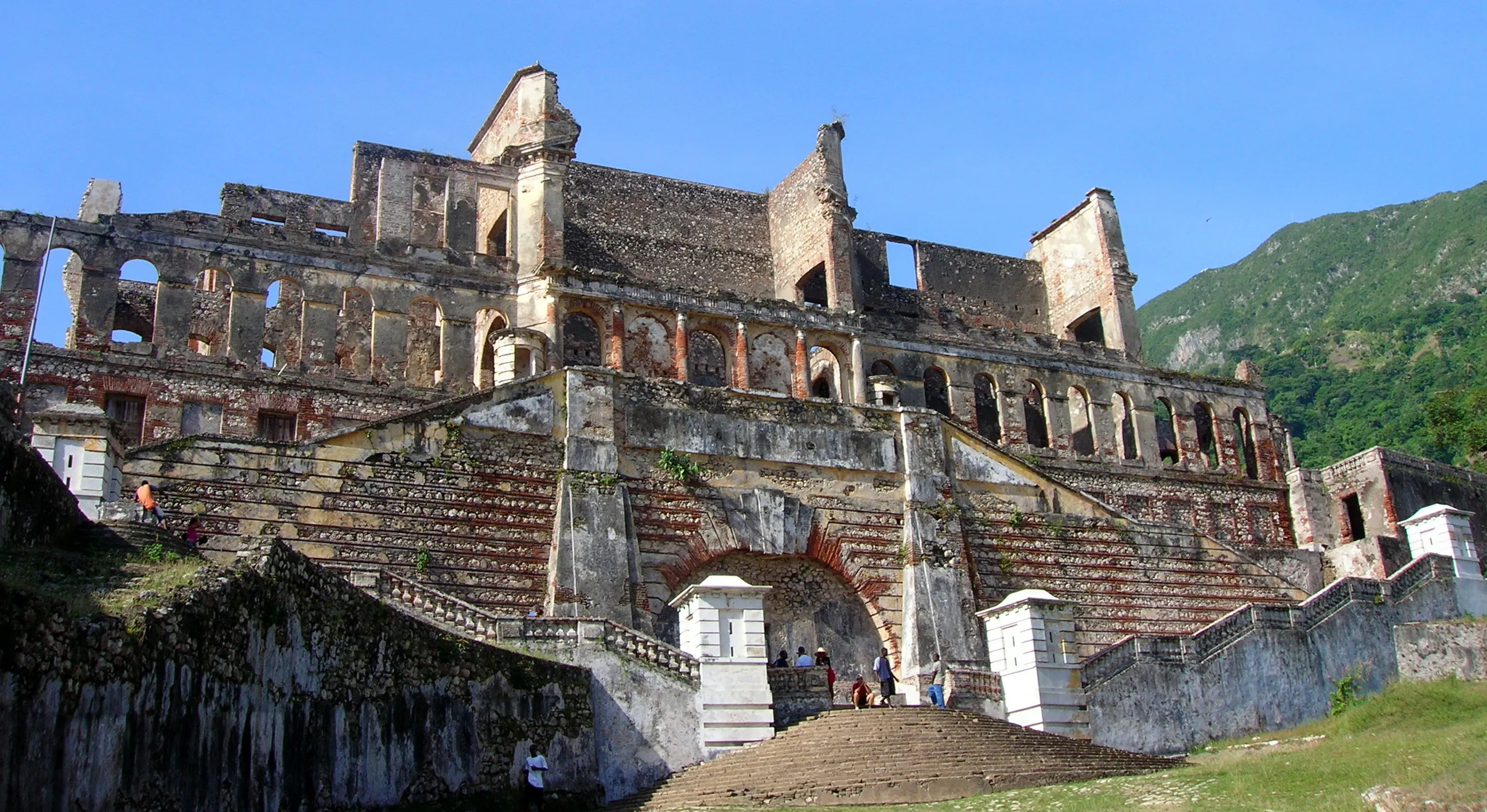
At the foot of the Citadelle trail, the ruins of Sans-Souci Palace recall Henri Christophe's royal residence, designed to rival Versailles. An earthquake in 1842 left it in ruins and it was never rebuilt: grand staircases, brick arcades and tall facades still climb the hillside.
Jacmel and Bassin Bleu
On the south coast, Jacmel, founded in 1698, is known for its colonial houses with wrought-iron balconies, artisan workshops (papier-mache masks, painted crafts) and one of the country's most inventive carnivals, held just before the national carnival in February or March. Nearby, Bassin Bleu links vivid blue pools and small waterfalls in a rock canyon.
Beaches, coast and islands
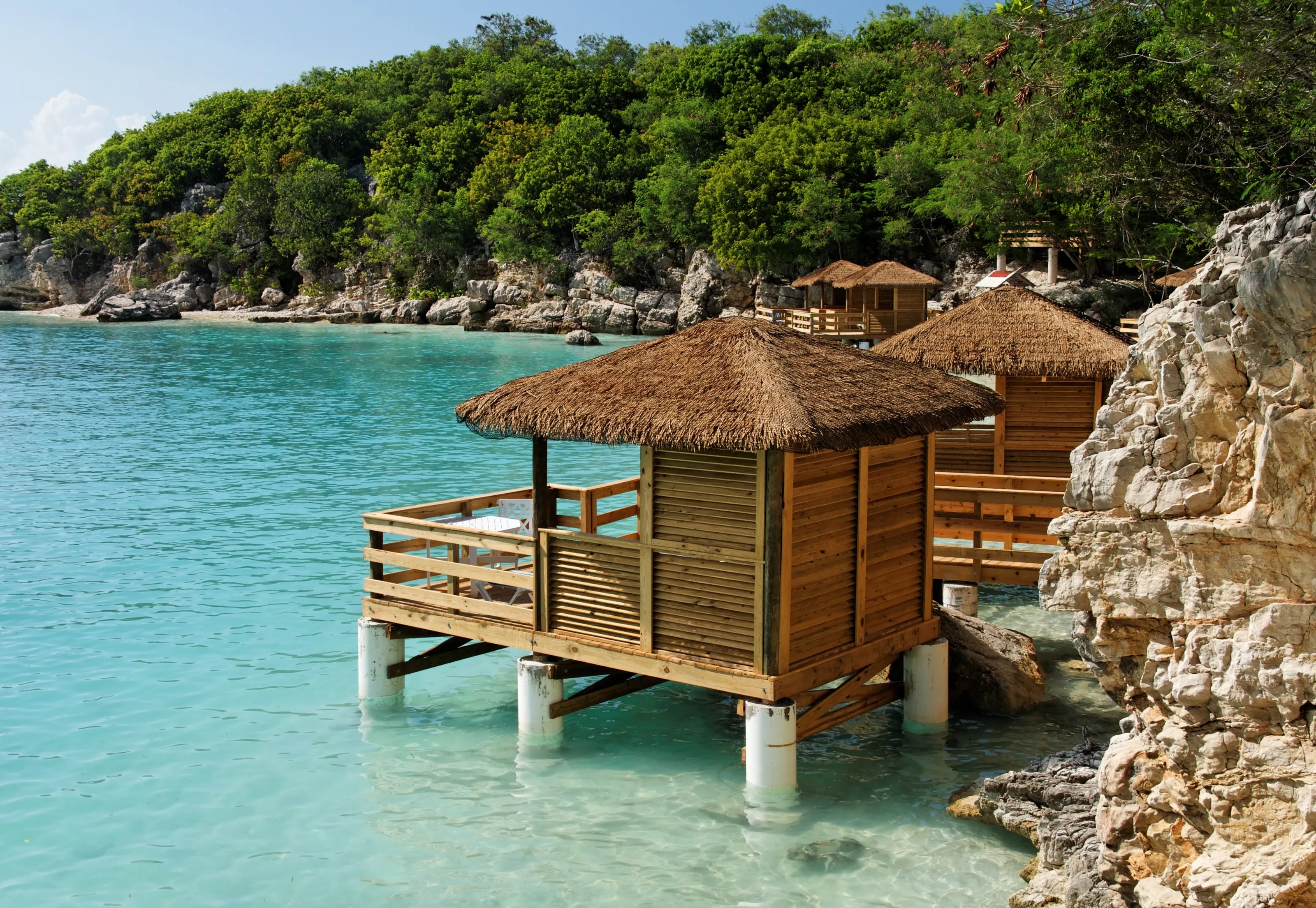
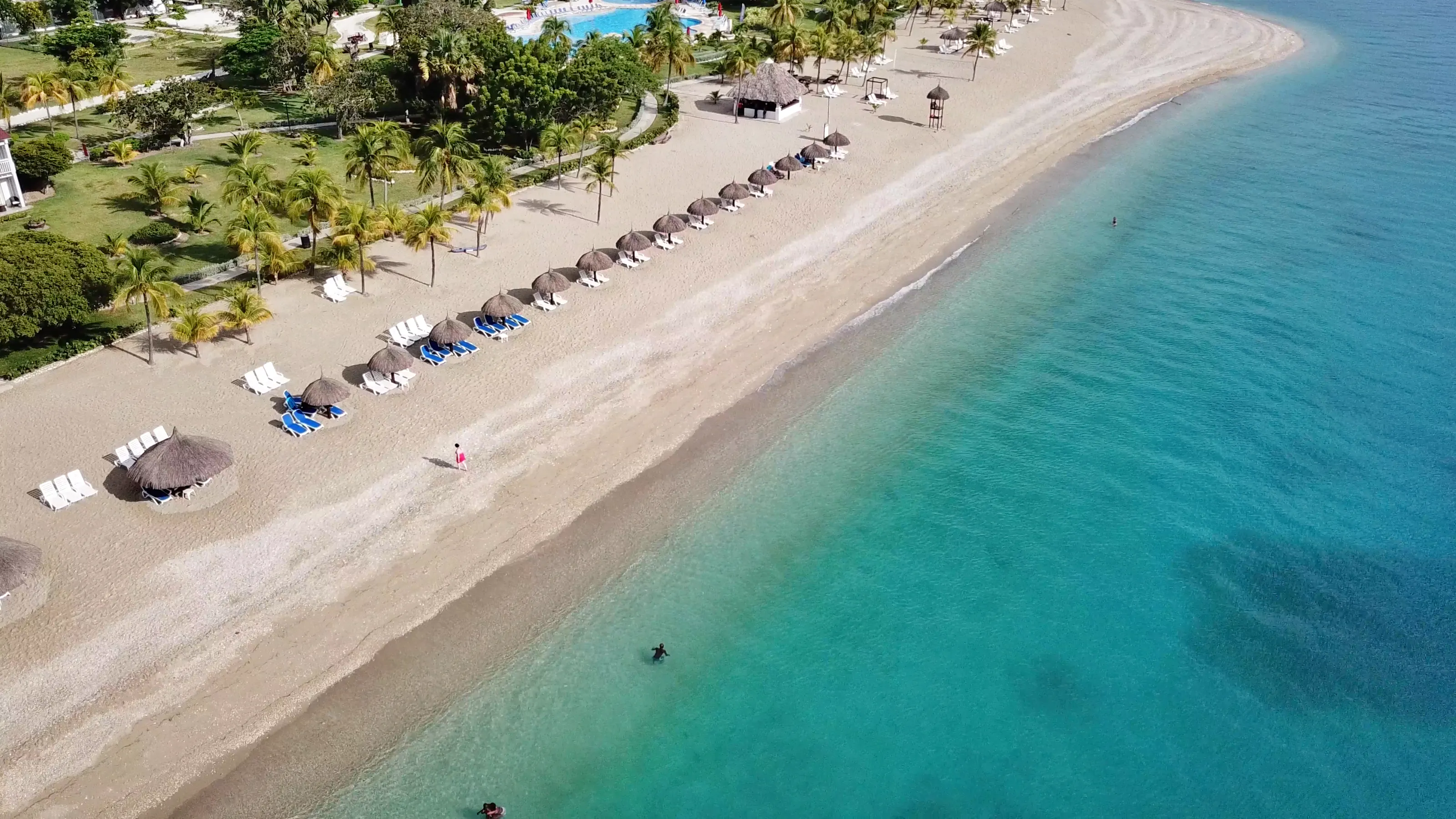
Haiti has plenty of beaches: the north coast around Labadee, the Arcadins coast near the capital, and in the south Ile-a-Vache with its coves and small hotels. The water is clear and palms and limestone rocks frame the scene; conditions and access vary by season.
Cap-Haitien, gateway to the north
Haiti's second city, Cap-Haitien is the natural base for the Citadelle and Sans-Souci. Its centre of galleried houses and quiet port atmosphere suits a stroll, and you can find guides and drivers for excursions to the northern sites.
Before you go
Warm all year, with a drier season from November to March
| Region | What to expect | Best time |
|---|---|---|
| North (Cap-Haitien, Citadelle) | Humid heat low down, cooler at altitude; trails can be slippery after rain. | November to March |
| South-east (Jacmel, Bassin Bleu) | Good days for the canyon and swimming; carnival in February or March. | November to March, and carnival |
| Beaches and islands | Warm clear sea, plenty of sun. | November to May |
| Year-round | Rainy spells mainly in April-May and September-October. | Keep dates flexible |
The climate is tropical: warm all year, marked rains in spring and autumn, and a hurricane season from June to November. Conditions differ a lot from region to region, so flexible dates help. Entry rules depend on nationality: check them before you go, and always read the official travel advice of your departure country.
Getting around
Driver-guides, shared taxis, buses and domestic flights
Many travellers rely on driver-guides, or on local hotels and operators who know the roads, timings and sites. Journeys often take longer than the map suggests, so build a margin into each leg.
Colourful pick-up trucks and shared taxis link the towns, and Cap-Haitien has its own airport for the north. Book excursions (Citadelle, Bassin Bleu) with a local guide, and carry some cash for small expenses.
Culture and food
Painting, carnival, rara and creole cooking
Haitian painting is famous for flat bright colours, humour and scenes of markets, landscapes and traditions; there are schools in Jacmel, Cap-Haitien and Saint-Soleil, and a tradition of cut-metal sculpture. Kompa, rara and roots music drive festivals and carnivals, and creole is spoken as much as French.
Soup joumou is traditionally shared on 1 January, independence day, marking 1804 and the revolution that made Haiti the first independent state in the Caribbean. On the table you will also find griot with pikliz, rice and beans, and to finish a coffee or a Barbancourt rhum.
Travel to Haiti
The Haitian airport tracked by SniperAir
Toussaint Louverture International
The country's main airport, in Port-au-Prince. It is the usual gateway, with links mostly from Florida, New York, Montreal, Paris or other Caribbean hubs, often with a stopover.
FAQ
Frequently asked questions about Haiti
Which airport should I use to travel to Haiti?
PAP, Toussaint Louverture airport in Port-au-Prince, is the main international airport. SniperAir tracks PAP for you. Cap-Haitien also has an airport serving the north, depending on available routes.
What is the best time to visit Haiti?
From November to March the season is drier and more pleasant. For the Jacmel carnival, aim for February or March. The hurricane season runs from June to November, so keep your dates flexible.
What should I know about travel advice before going?
Haiti is not a risk-free destination and conditions can change: read the official travel advice of your departure country before any trip, and follow it. Local hotels and guides are good points of contact.
Do I need a visa for Haiti?
Entry conditions depend on nationality. A valid passport is expected. Check the official rules, and the embassy or consulate if needed, before you book.
How long should I stay in Haiti?
One to two weeks lets you combine the north (Cap-Haitien, the Citadelle, Sans-Souci) with the south-east (Jacmel, Bassin Bleu, beaches). On a first trip you can focus on one region.
Is travelling to Haiti expensive?
The budget varies widely with accommodation and transport: driver-guides and excursions are major items. Watching flights early helps keep the cost under control.
How do I get alerted when a flight to Haiti drops below my budget?
Create a SniperAir alert with your departure airport and PAP, set your maximum price, and we will let you know as soon as a fare falls below it. SniperAir tracks prices and sends alerts. See how it works.
Ready to track prices to Haiti?
Create an alert and let SniperAir do the rest.
Create my alert