
Travel to Myanmar (Burma)
Golden pagodas, a plain dotted with more than two thousand temples, a teak bridge at sunset and a lake with floating gardens: here is what to plan before you look for cheap flights to Myanmar (Burma), the land of pagodas in Southeast Asia.
Myanmar (Burma) in numbers
Largest city
Yangon
Population
About 55 M
Highest point
5,881 m
Currency
Kyat
Language
Burmese
Bagan
Over 2,000 temples
Continent
Asia
Time zone
UTC+6:30
Airports covered
1
Why visit Myanmar (Burma)
Pagodas, temple plains and highland lakes
The land of pagodas
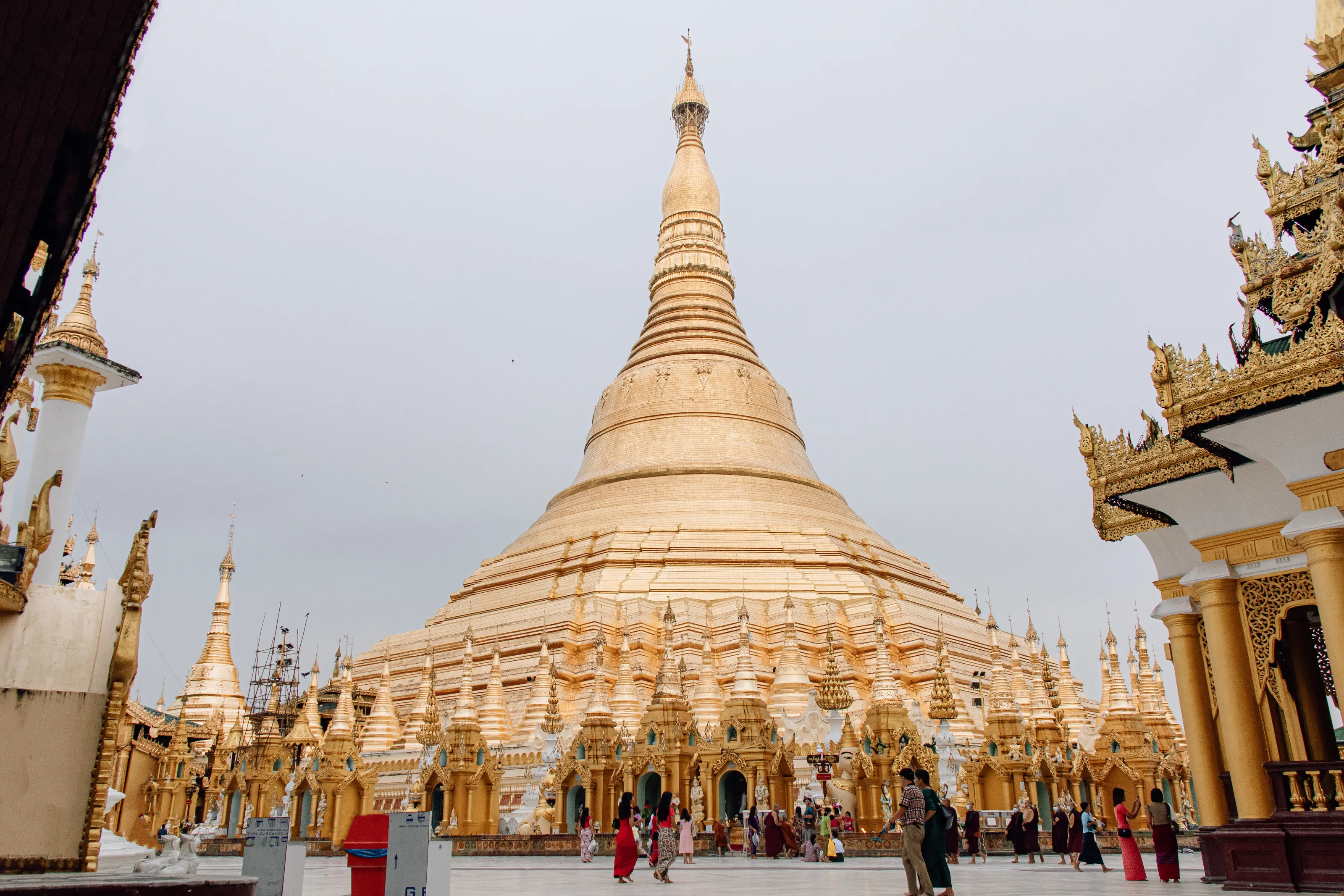
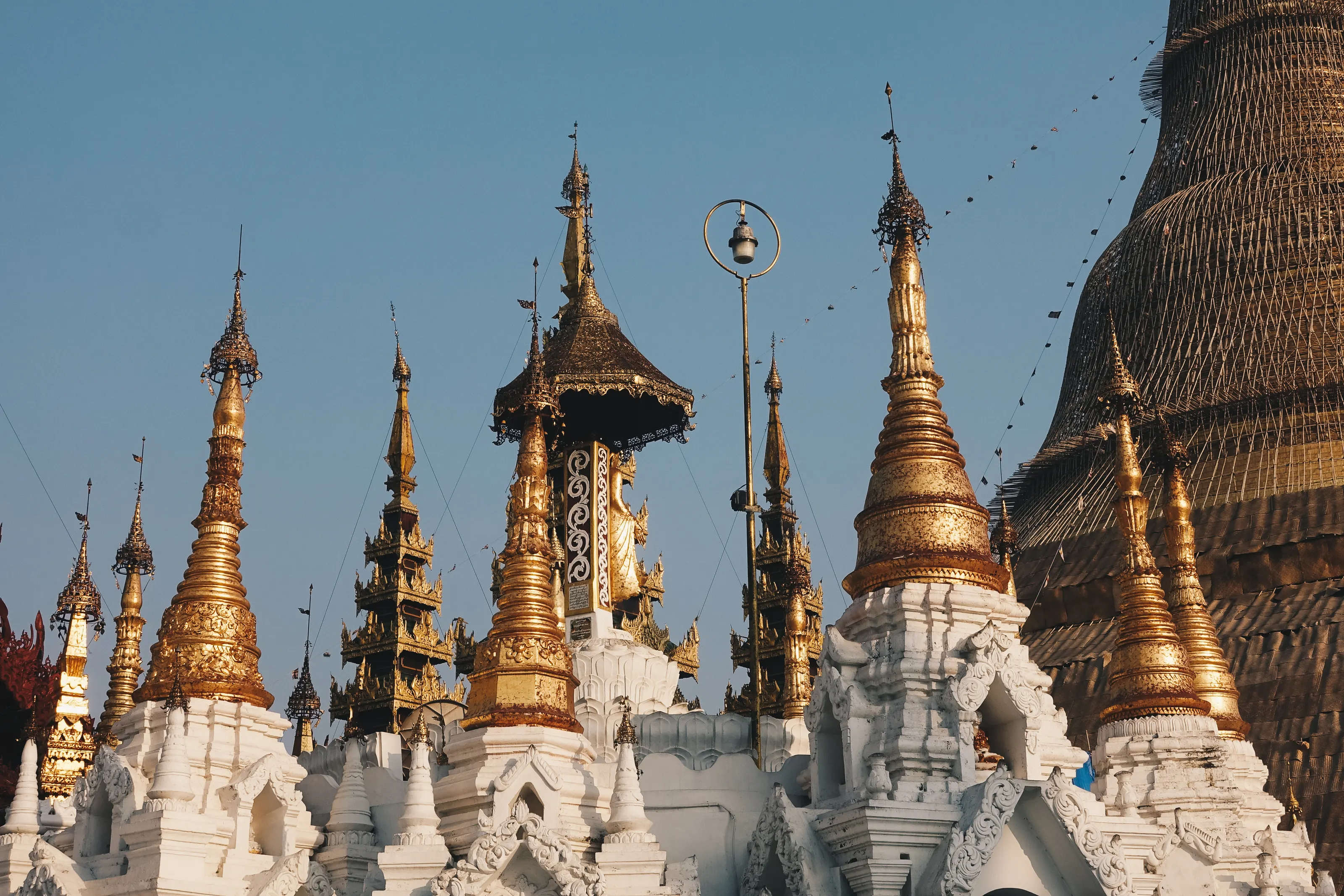
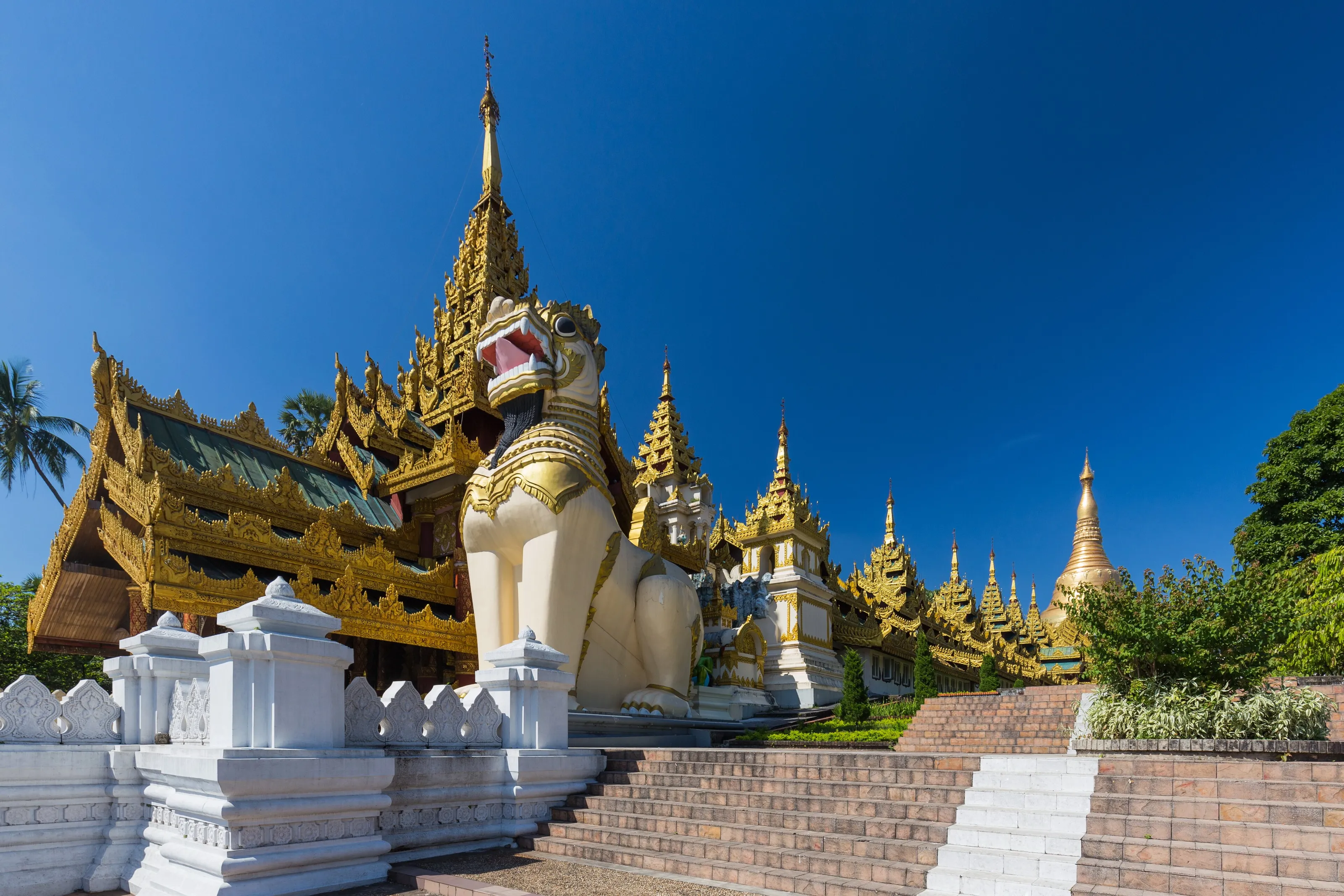
Yangon's Shwedagon is gilded from base to tip; across the country, white and golden stupas dot hills, towns and riverbanks.
Bagan, the plain of a thousand temples
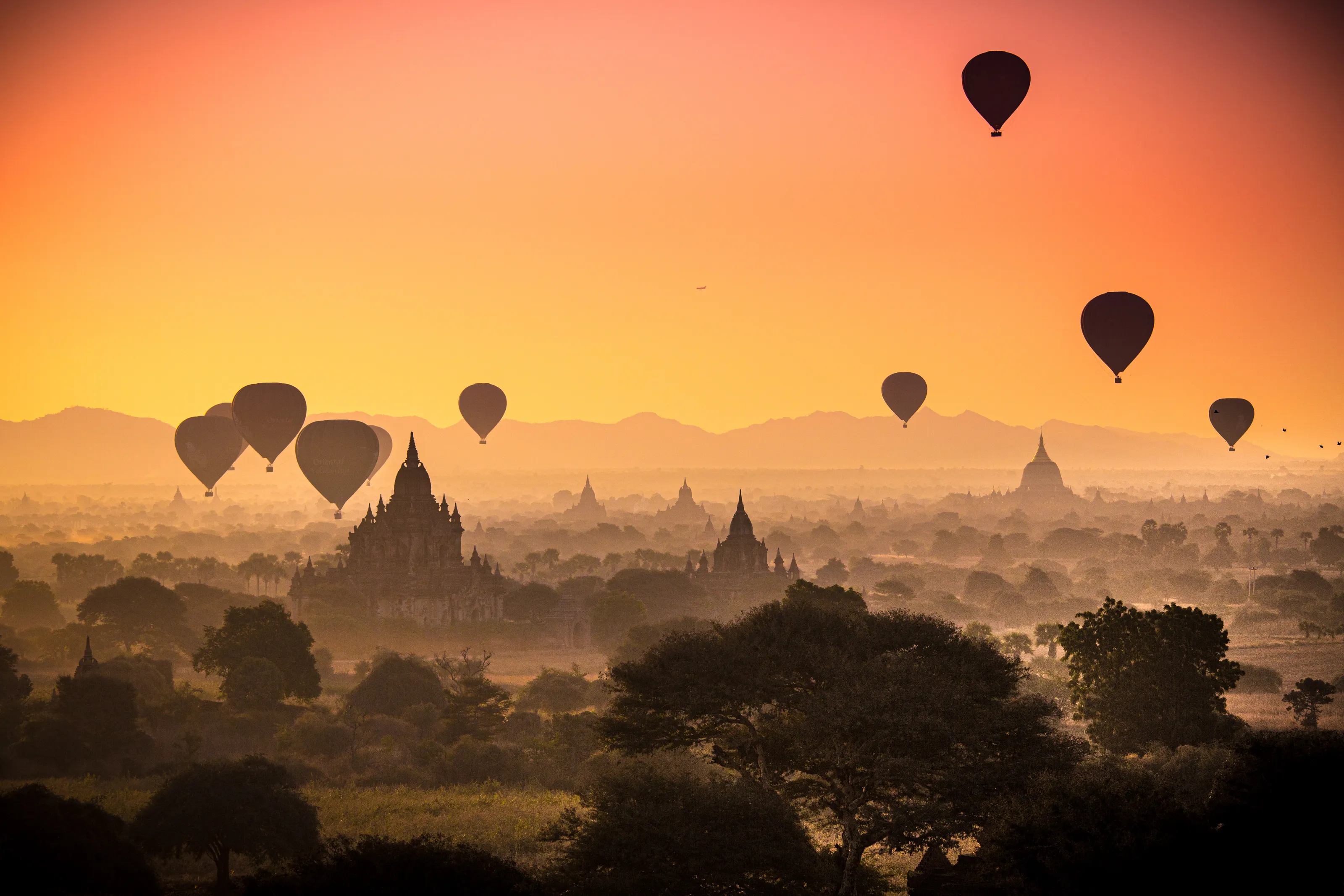
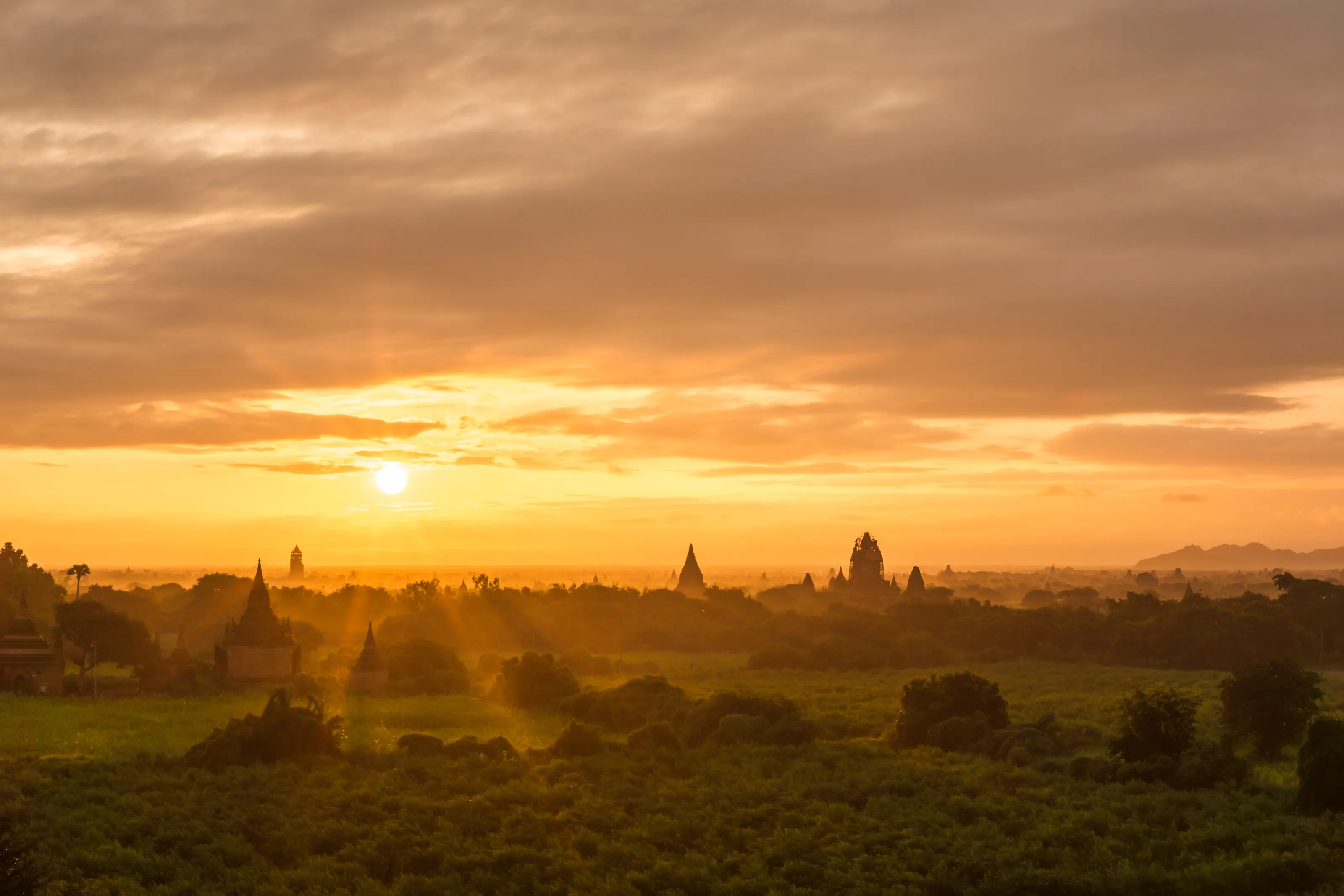
Brick, sunrise and hundreds of temple silhouettes: Bagan, inscribed on UNESCO's list in 2019, lines up more than two thousand buildings across a plain of over thirty square kilometres.
Waters and stilt villages
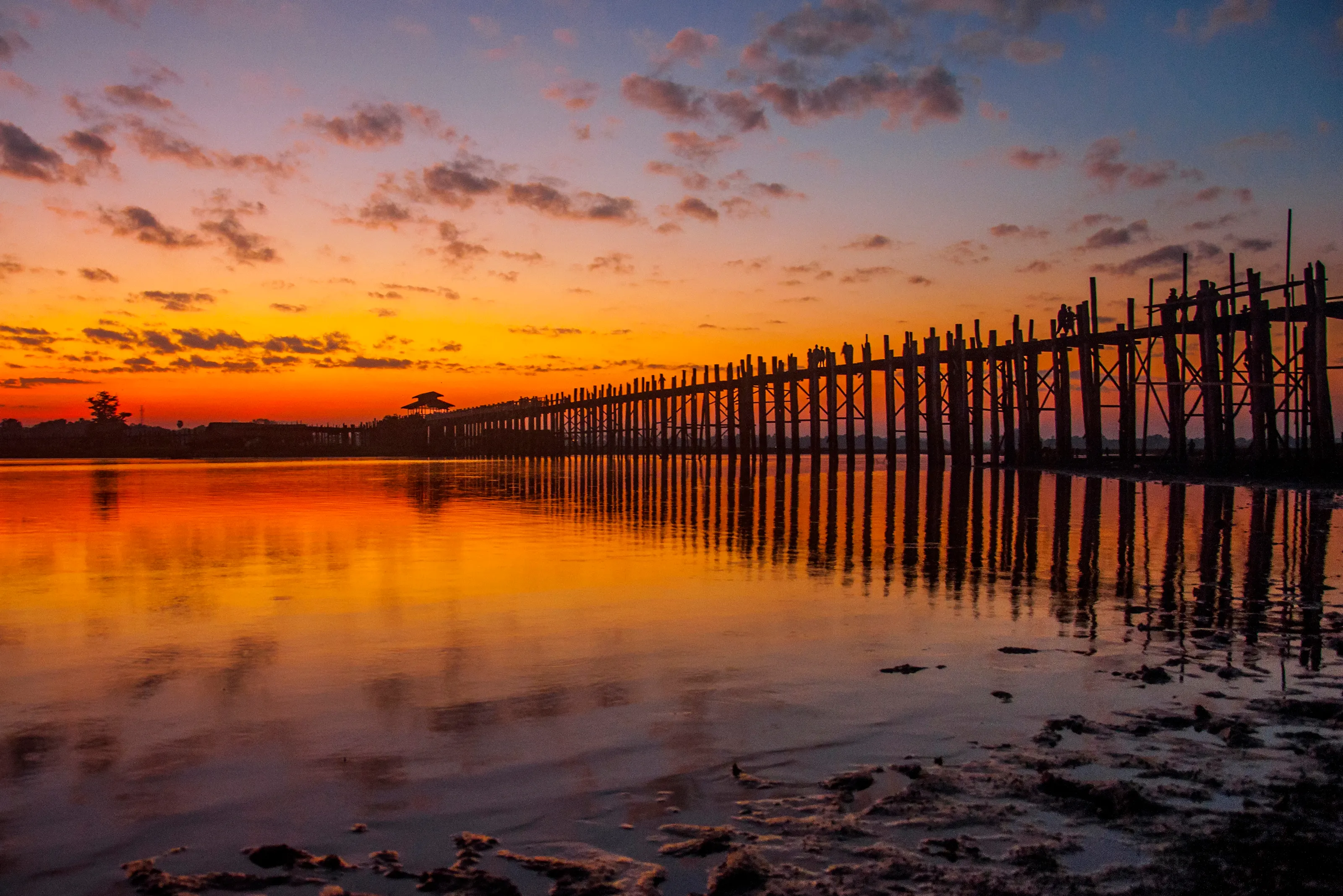
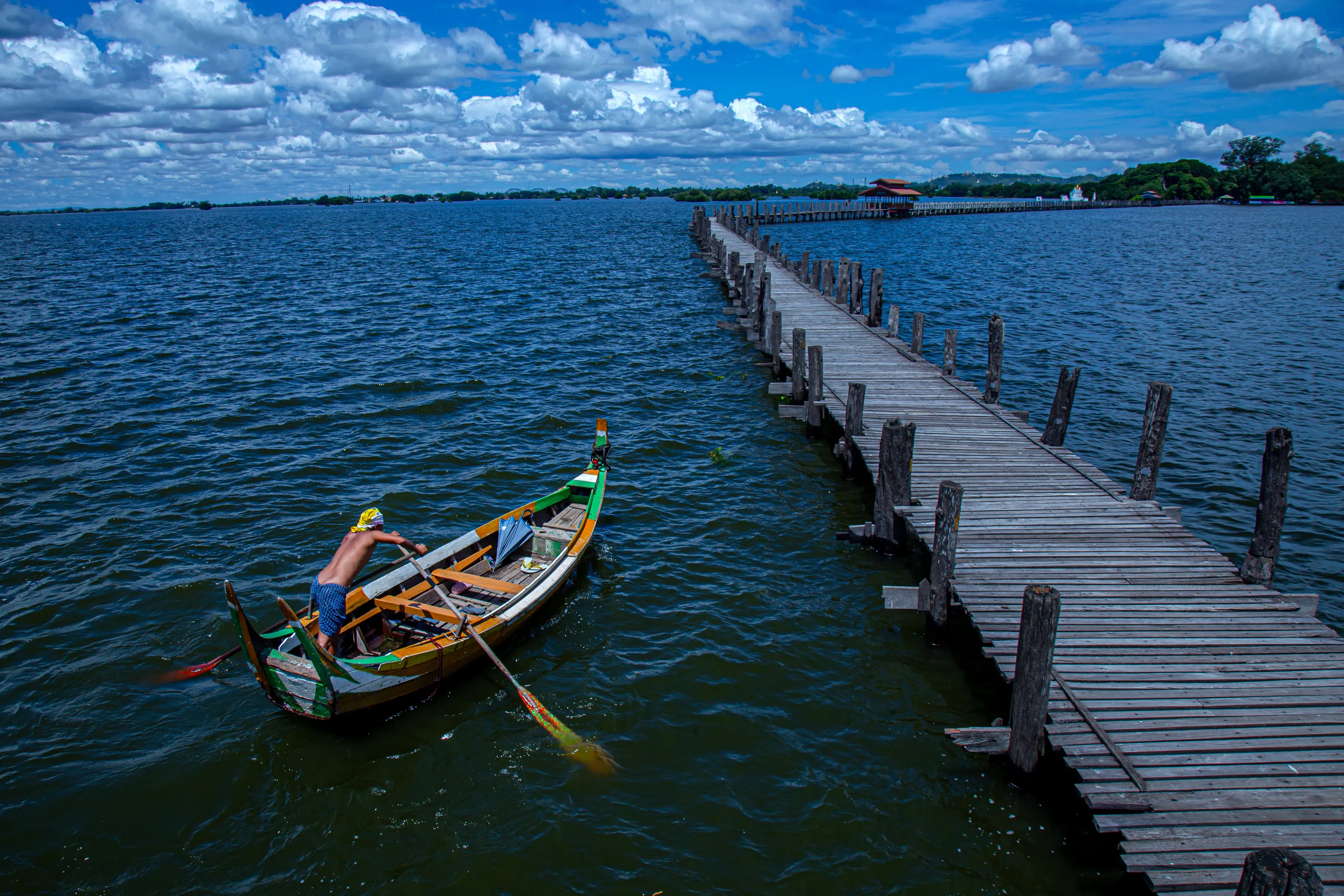
Inle Lake in Shan State holds floating gardens and stilt villages; at Amarapura, the 1.2-kilometre U Bein Bridge crosses a lake at golden hour.
A table and gestures of their own
Mohinga for breakfast, thoke salads, fermented tea leaves called lahpet, longyi and thanaka: culture reads in the bowl as much as in clothing.
Landmarks
Yangon, Bagan, Mandalay, U Bein Bridge and Inle Lake
A trip to Myanmar (Burma) usually revolves around Yangon, Bagan, Mandalay and Inle Lake, linked by domestic flights, night buses or boats: ten to fourteen days give a good rhythm. The classic route can be shortened to Yangon and Bagan alone.
Yangon and the Shwedagon Pagoda
Yangon, the largest city, is dominated by the Shwedagon, the country's most sacred stupa, which stands about a hundred metres tall on Singuttara Hill and is said to hold relics of four Buddhas. Most people come in the late afternoon, barefoot, with shoulders and knees covered, when the light turns the stupa to gold and worshippers walk around the complex.
Bagan, the plain of a thousand temples
Founded from the 9th century, Bagan was the capital of the country's first unified kingdom. More than two thousand brick temples remain on a plain of about thirty-six square kilometres, inscribed on UNESCO's list in 2019. You explore it by e-bike or horse cart and watch the sunrise from a temple terrace, sometimes with balloons rising in the dry season.
Mandalay, Amarapura and U Bein Bridge
Mandalay is a cultural centre, with monasteries, craft workshops and the Mingun bell, cast in 1808. At nearby Amarapura, the teak U Bein Bridge crosses Taungthaman Lake for 1.2 kilometres, as it has since about 1850: it is believed to be the world's longest teakwood bridge, and sunset draws walkers and boats.
Inle Lake and Shan State
In Shan State, at about 880 metres altitude, Inle Lake spreads out its floating gardens, stilt villages and pagodas. A UNESCO biosphere reserve since 2015, it shelters fish found nowhere else. A long-boat trip is the classic way to see it.
Golden Rock, Hpa-An, Mrauk-U and beaches
To extend the trip: the Golden Rock at Kyaiktiyo in Mon State, Pindaya and its caves, Hpa-An and its limestone peaks, Mrauk-U and its temples, or the beaches of Ngapali and Ngwe-Saung. Check ahead which regions are accessible using the official information of your departure country.
Before you go
Which season to travel to Myanmar (Burma)
| Area | Climate | Best time to visit |
|---|---|---|
| Yangon and the delta | Humid heat, heavy monsoon rain from late May to mid-October. | November to February |
| Bagan and Mandalay | Dry zone, under 1,000 mm of rain a year; very hot from March to May. | November to February |
| Inle Lake and Shan State | About 880 m altitude, cool mornings in the dry season. | November to February |
| Coasts (Ngapali, Ngwe-Saung) | Over 5,000 mm of rain a year on the coast, calm sea in the dry season. | November to April |
The country has three seasons: rains from late May to mid-October, a cool season from late November to late February, a hot season from March to May. Pack light layers for cool mornings at altitude. Keep an eye on fares before you lock in your dates.
Getting around
Domestic flights, night buses, trains and boats
Between the main stops, domestic flights save time; night buses, slow trains and Irrawaddy boats offer other rhythms. On the ground, taxis, tuk-tuks, motorbike taxis, e-bikes and horse carts are easy to find. Leave some slack before a return flight: schedules can change.
Before any trip, consult the official information of your departure country for entry formalities, accessible regions, insurance and payment methods.
Food and culture
Mohinga, fermented tea and pagodas
Mohinga, a rice-noodle fish soup eaten at breakfast, is the national dish. You can also try thoke salads, built around one main ingredient, and lahpet, fermented tea leaves eaten as a salad or snack.
At pagodas you take your shoes off and cover shoulders and knees. People wear the longyi, a cloth tied at the waist, and many wear thanaka, a yellow paste applied to the face. Monks and pagodas set the pace of the day.
Flying to Myanmar (Burma)
The Burmese airport covered by SniperAir
Yangon International
Yangon's airport, about twenty kilometres north of the centre: allow forty minutes to an hour by road depending on traffic; taxis and shuttles serve it. It is the entry point for Yangon and the departure point for domestic flights to Bagan, Mandalay and Inle Lake.
SniperAir destinations
Discover our destination pages
FAQ
Frequently asked questions about Myanmar (Burma)
Which airport do I fly into for Myanmar (Burma)?
Yangon (RGN, Yangon International) is the international airport SniperAir tracks. From there, domestic flights serve Bagan, Mandalay and Inle Lake.
When is the best time to travel to Myanmar (Burma)?
From November to February the season is dry and cooler, ideal for Bagan, Mandalay and Inle Lake. March to May is very hot; from late May to mid-October the monsoon brings heavy rain.
Is travelling to Myanmar (Burma) expensive?
On the ground, meals, simple accommodation and local transport are generally modest. Domestic flights, private excursions and high-end hotels push the bill up.
Do I need a visa for Myanmar (Burma)?
It depends on your nationality. Check entry formalities and travel advice on the official sites of your departure country before you pick your dates.
How long do I need in Myanmar (Burma)?
Ten to fourteen days cover Yangon, Bagan, Mandalay and Inle Lake. Allow a week if you keep only Yangon and Bagan.
What should I see in Bagan?
The brick temples of the plain, the terraces from which you watch the sunrise and, depending on the season, the balloons. Allow at least two days so you don't rush.
How do I get alerted when a flight to Myanmar (Burma) gets cheaper?
Create a SniperAir alert profile with your departure airport and Yangon as destination: we track prices and tell you as soon as an opportunity matches. See how it works.
Ready to track fares to Myanmar (Burma)?
Create an alert and let SniperAir do the rest.
Create my alert