
Travel to Slovakia
Mountains that top 2,600 metres, caves of ice and aragonite, a capital you can leave for Vienna by lunchtime and a castle on seemingly every hill: Slovakia is small, but it packs in a lot. Here is what to know before you travel to Slovakia and look for cheap flights to Bratislava.
Slovakia in numbers
Capital
Bratislava
Population
~5.4M
Area
49,035 km²
Currency
Euro
Language
Slovak
UNESCO sites
8
Continent
Europe
Time zone
UTC+1
Airports covered
1
Why visit Slovakia
Mountains, castles and caves in the middle of Europe
The High Tatras, roof of the Carpathians
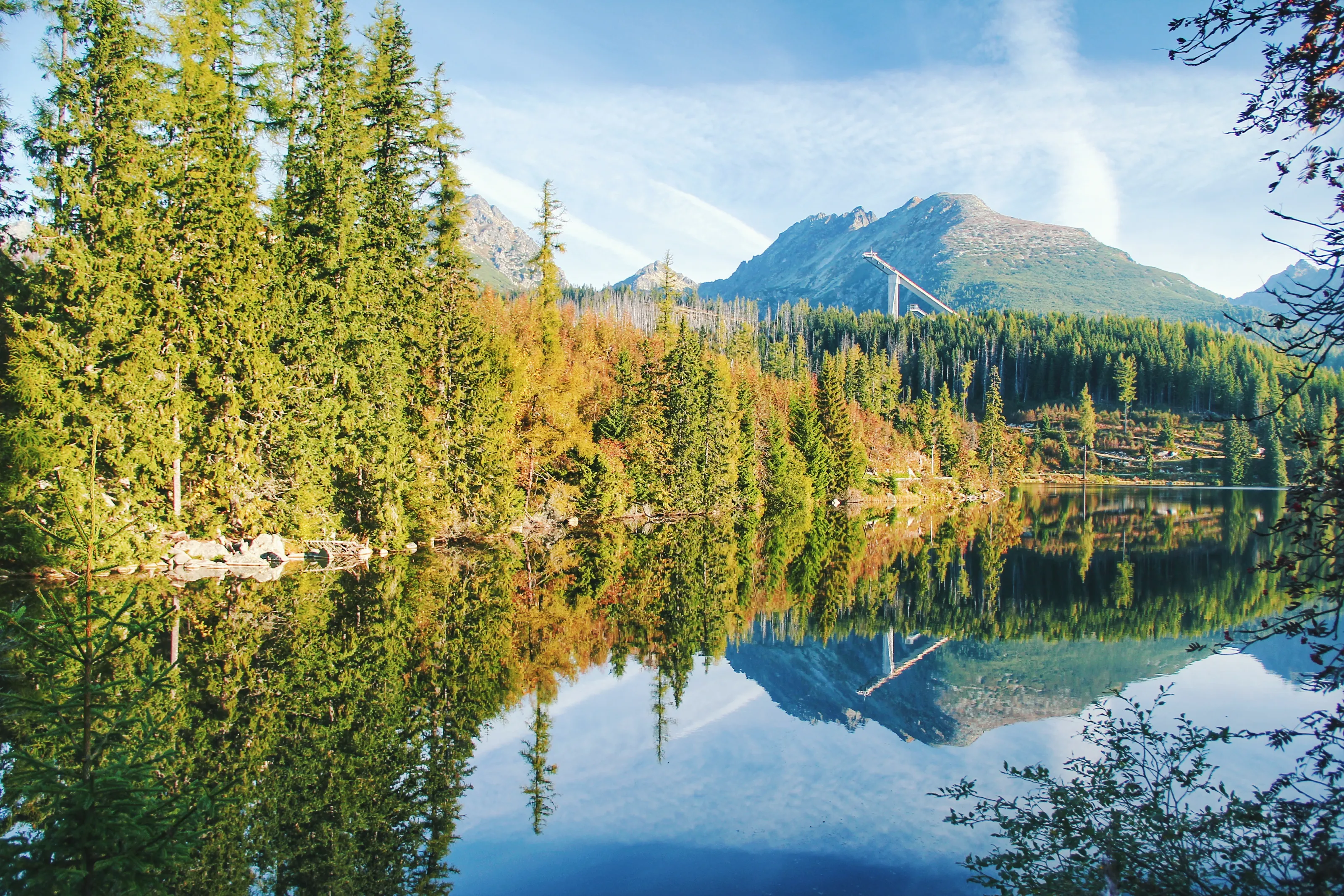
Gerlachovský štít rises to 2,655 m, the highest peak of the entire Carpathian range. Glacial lakes, marked trails and winter skiing, with Poprad as the gateway.
More than 7,000 known caves
About a dozen are open to visitors. Ochtinská Aragonite Cave is one of only three of its kind in the world, and Dobšinská Ice Cave belongs to a UNESCO site shared with Hungary.
Castles in every valley
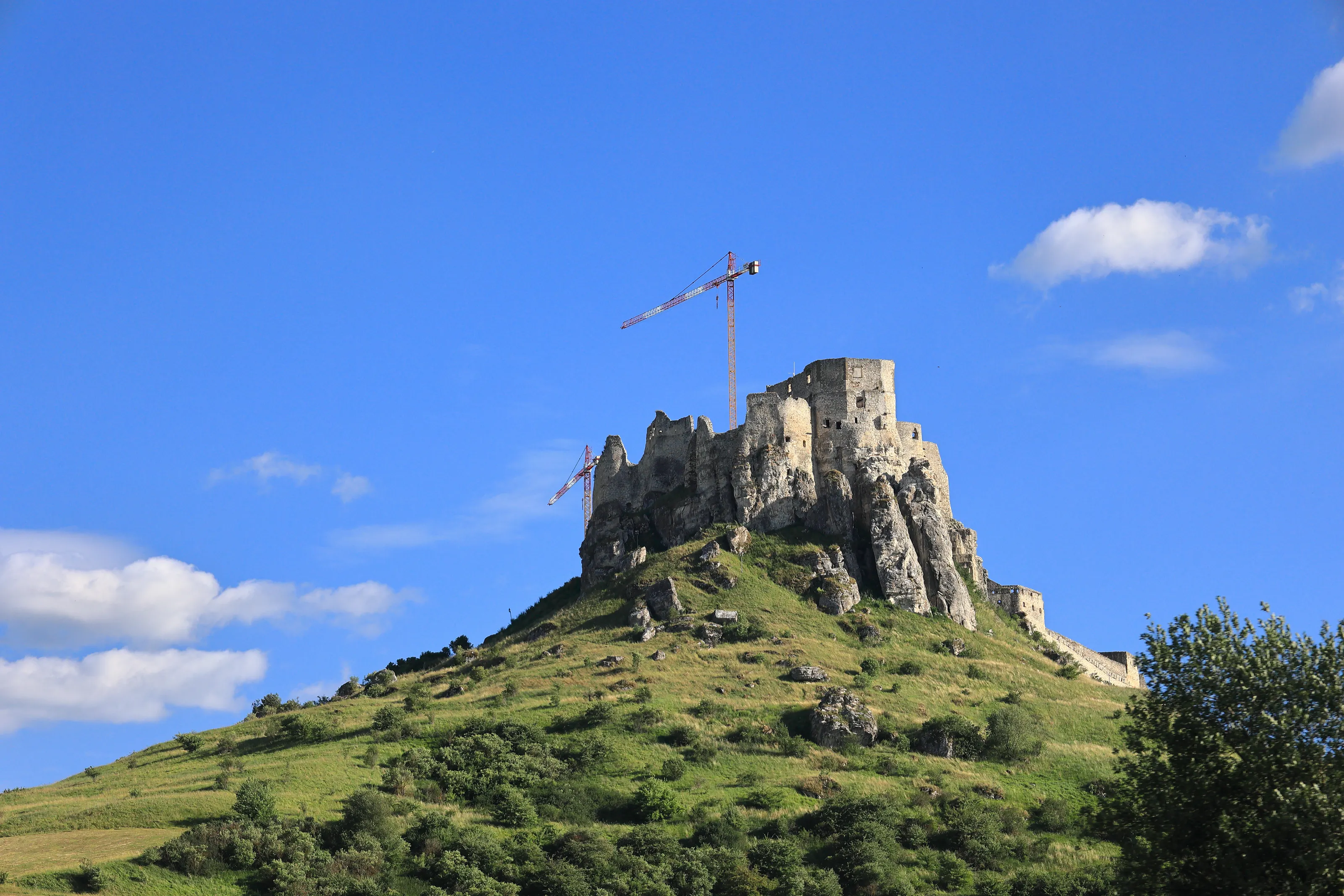
Slovakia has a very high number of castles for its size: Spiš is one of the largest in Europe, Bojnice is the most visited, and Devín stands where the Danube meets the Morava.
Eight UNESCO sites
Wooden churches of the Carpathians, the mining town of Banská Štiavnica, the painted village of Vlkolínec, Levoča and Bardejov, plus caves and beech forests, make a heritage list that mixes culture and nature.
Highlights
Bratislava, Košice, the Tatras and Slovak Paradise
Bratislava can be done in a long weekend, but the country is best seen by train or car, hopping between medieval towns and mountain valleys.
Bratislava, the Danube capital
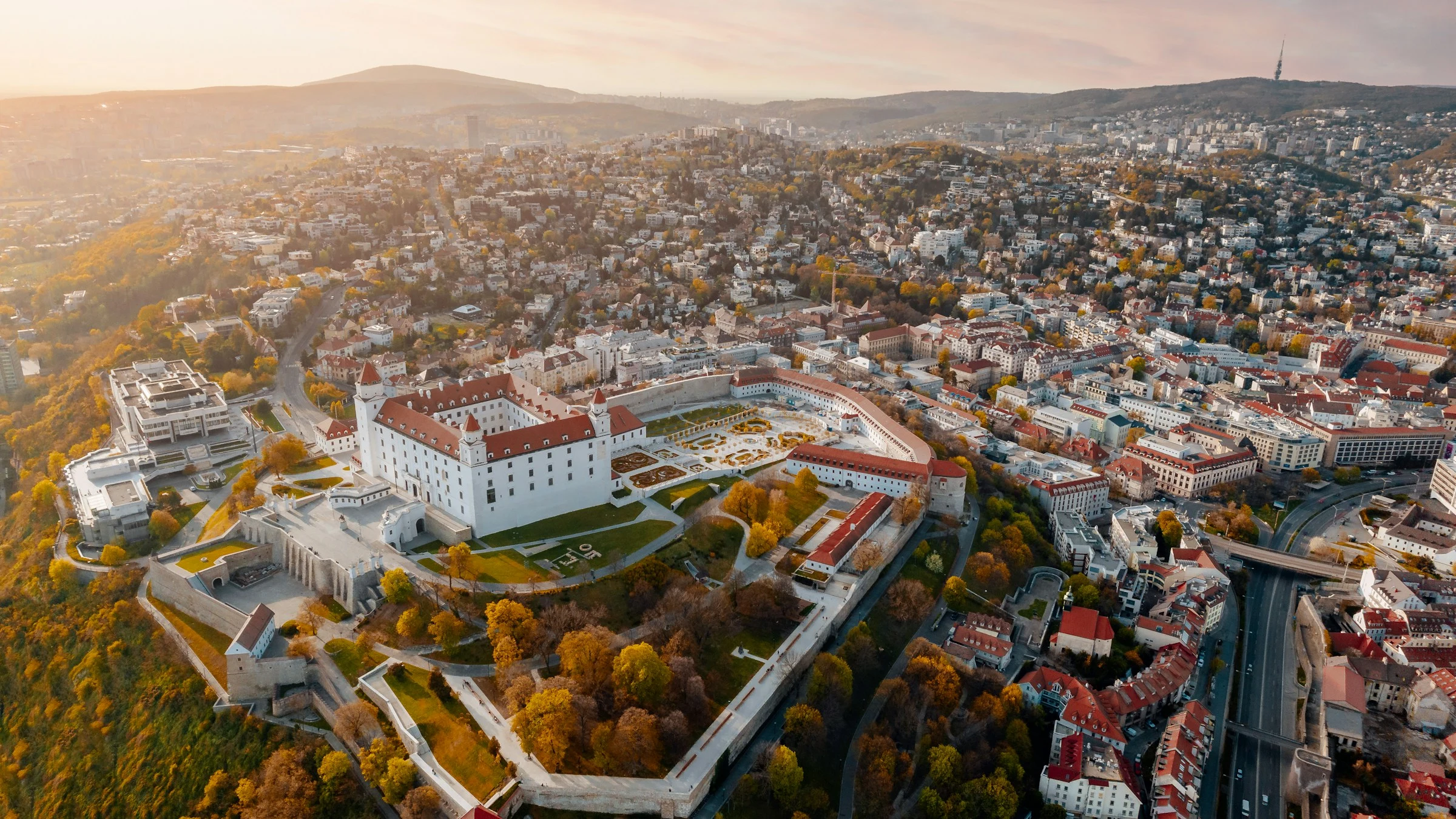
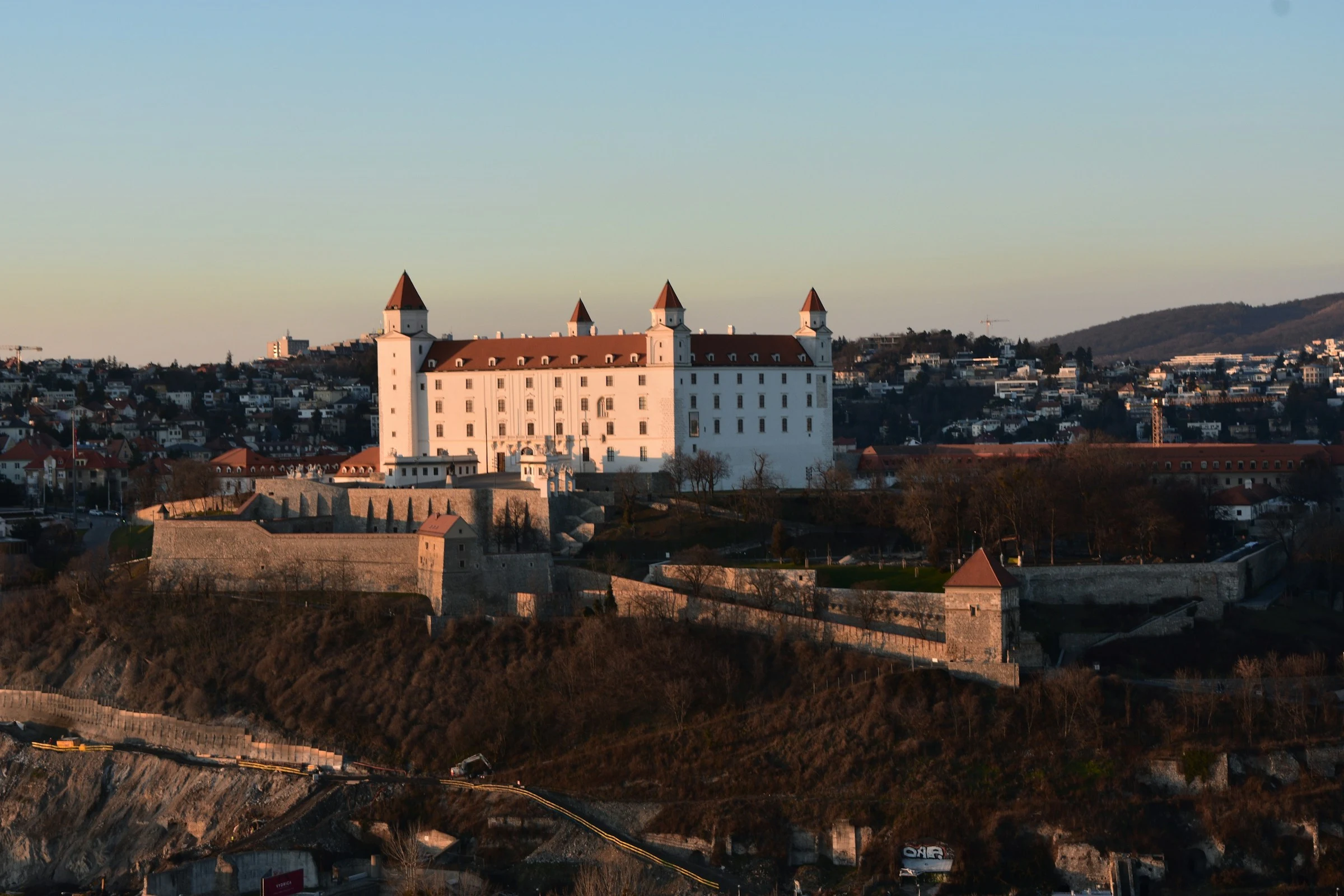
Bratislava is the only capital in the world that touches two other countries, Austria about 7 km away and Hungary about 20 km. The restored Old Town is full of cafes, St Martin's Cathedral was the coronation church of Hungarian kings from 1563 to 1830, and the white castle looks down on the river. Devín Castle and the Little Carpathians wine route are a short ride away.
Košice and the east
Košice, the second city, has a large historic centre and a Gothic cathedral. Further north, Levoča and Bardejov keep their medieval layouts, and Spiš Castle, a UNESCO site, covers an entire hilltop.
High Tatras and Slovak Paradise
From Poprad you reach alpine lakes and ridges in the High Tatras, home to Jasná, the country's biggest ski resort. Slovak Paradise is hiked through gorges, waterfalls and metal ladders, while the Low Tatras and Malá Fatra offer quieter trails.
Mining towns and wooden villages
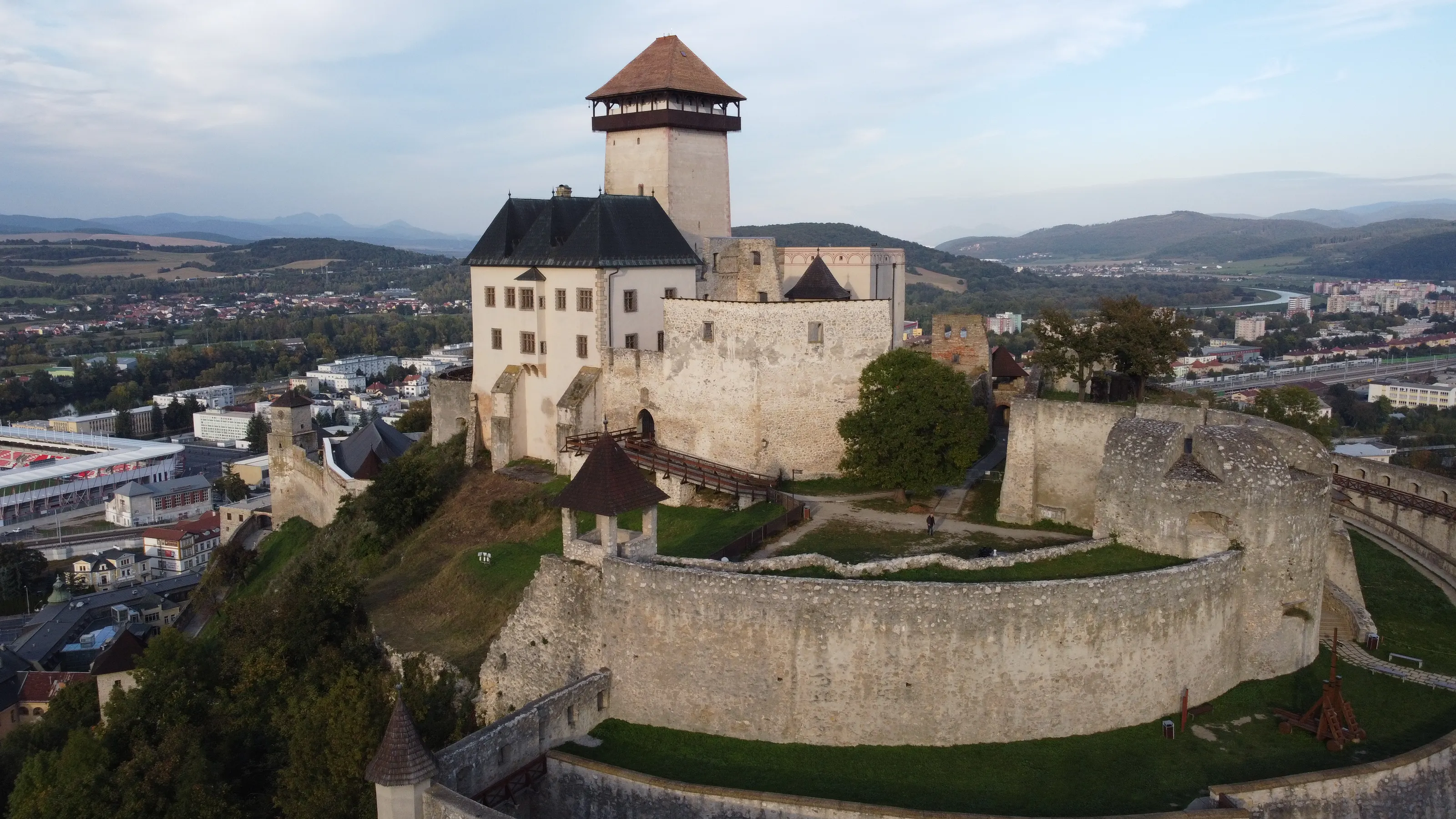
Banská Štiavnica is a former mining town, Trenčín has a castle above its centre, Nitra is considered the oldest Slovak town, and Vlkolínec shows what a painted wooden mountain village looked like.
Getting around
Trains, buses and the motorway vignette
Trains link the main cities: the main line runs from Bratislava to Košice in about five hours by InterCity, where seat reservations are compulsory. ZSSK and RegioJet both operate, and their tickets are not interchangeable. Buses are sometimes quicker, for instance between Bratislava and Nitra.
Drivers need an electronic vignette for motorways, sold for 10 days or one month, and the alcohol limit is zero. Vienna and Bratislava are linked by an hourly regional train that takes about an hour, and Bolt runs in many towns.
Before you go
Four regions, four ways to travel
| Region | Climate | Best time |
|---|---|---|
| Bratislava and the south-west | Warmest part: around 20 °C in July, 0 °C in January, about 2,000 hours of sunshine a year | May to September; autumn for grape harvests |
| Košice and the east | More continental: about 18 °C in July, -2 °C in January | May to September |
| High Tatras | Cold winters, down to about -20 °C at altitude, weather that can turn fast even in summer | June to September for hiking, December to March for skiing |
| Caves and Slovak Paradise | Constant cool temperatures underground; trails slippery after rain | May to October |
Slovakia is in the European Union, the eurozone since 2009 and the Schengen area since 2007. EU citizens need only a valid ID or passport; other nationalities should check visa rules before booking, as visas are not issued at the border.
To combine several countries, see also Austria, the Czech Republic and Poland. Before booking, check your government's official travel advice.
Food and drink
Halušky, sheep cheese and Kofola
The national dish is bryndzové halušky: small potato dumplings in a sauce of sheep cheese, usually topped with bacon, so vegetarians should ask for it without. Look also for kapustnica, a sauerkraut soup, pirohy dumplings, goulash and lokše potato pancakes. At a salaš, a shepherd's hut turned restaurant, you eat sheep cheese close to its source.
To drink there is Zlatý Bažant and Šariš beer, wine from the Little Carpathians, plum slivovica and juniper borovička. Kofola, the local cola, is even served from the tap. In the spa town of Piešťany, spa wafers are the souvenir to bring home.
Flying to Slovakia
The Slovak airport tracked by SniperAir
M. R. Štefánik (Bratislava)
About 9 km north-east of the centre; trolleybus 61 reaches the main station in around 25 minutes, and Ryanair has been based here since 2015. Vienna (VIE), 37 km away, is a common alternative.
FAQ
Frequently asked questions about Slovakia
Which airport should I fly into for Slovakia?
M. R. Štefánik (BTS) in Bratislava, about 9 km from the centre, is the airport tracked by SniperAir. Vienna (VIE), 37 km from Bratislava, is a common alternative with hourly direct buses.
When is the best time to travel to Slovakia?
May to September for cities, castles and hiking; December to March for skiing in the High Tatras. Autumn is the grape-harvest season.
Is Slovakia an expensive destination?
It is cheaper than neighbouring Austria, and restaurants are less expensive outside Bratislava. Cards are widely accepted in cities, though some small museums and cafes are cash only.
Do I need a visa to travel to Slovakia?
Slovakia is part of the Schengen area: EU citizens need only an ID card or passport, and visa-exempt visitors can stay up to 90 days in any 180.
How long should I stay in Slovakia?
Two to three days for Bratislava, five to seven days to add the High Tatras, a castle and a cave, and a week or more with Košice and the east.
Can I combine Bratislava with Vienna?
Yes: the two capitals are about an hour apart, linked by an hourly regional train.
How can I be alerted when a flight to Slovakia drops below my budget?
Create a SniperAir alert profile with your departure airport and Bratislava as the destination: we watch prices for you and notify you as soon as a deal matching your criteria is detected.
Ready to track prices to Slovakia?
Create an alert and let SniperAir do the rest.
Create my alert