
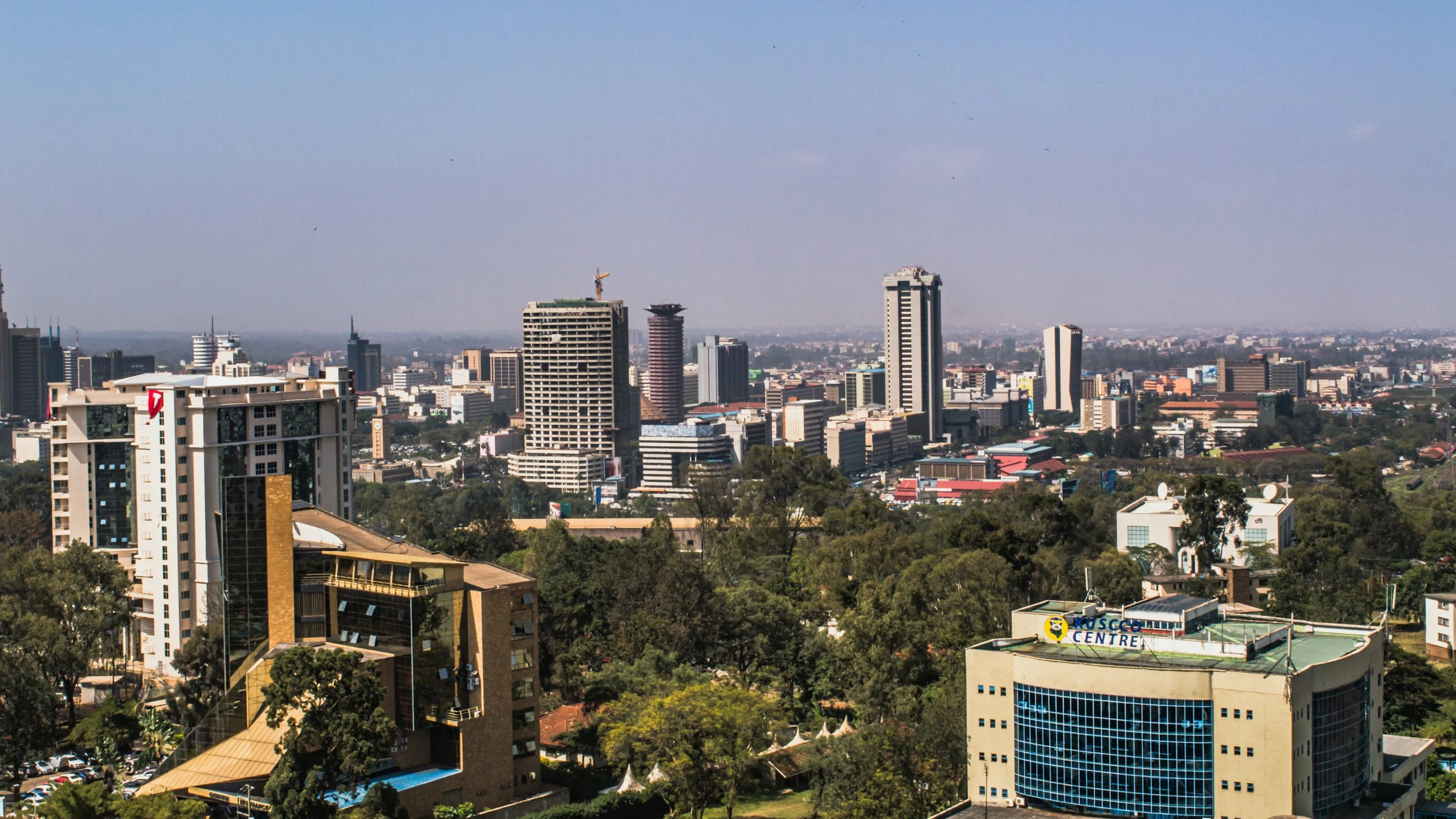
Travel to Kenya
More than a million wildebeest crossing the Mara River, lions within sight of a capital's skyscrapers and white-sand beaches on the Indian Ocean: Kenya is one of Africa's most visited countries, and for good reason. Here is what to know before you look for flights.
Why visit Kenya
Safari country with an ocean on the side
The great wildebeest migration
More than a million wildebeest and 200,000 zebras cross the Mara River each year as part of a movement between the Serengeti and the Masai Mara, which runs roughly from June to September. Lodges in the Mara fill months ahead.
The Big Five, plus a thousand birds
Lion, leopard, buffalo, rhino and elephant all live here, alongside more than 1,000 recorded bird species. Protected areas cover about 8% of the country across 26 national parks, 34 reserves and 5 sanctuaries.
Cradle of mankind
Fossils from Koobi Fora and Lake Turkana, including the 1.6-million-year-old Turkana Boy found in 1984, make the Rift Valley one of the key places in the story of human origins.
A coast made for after-safari days
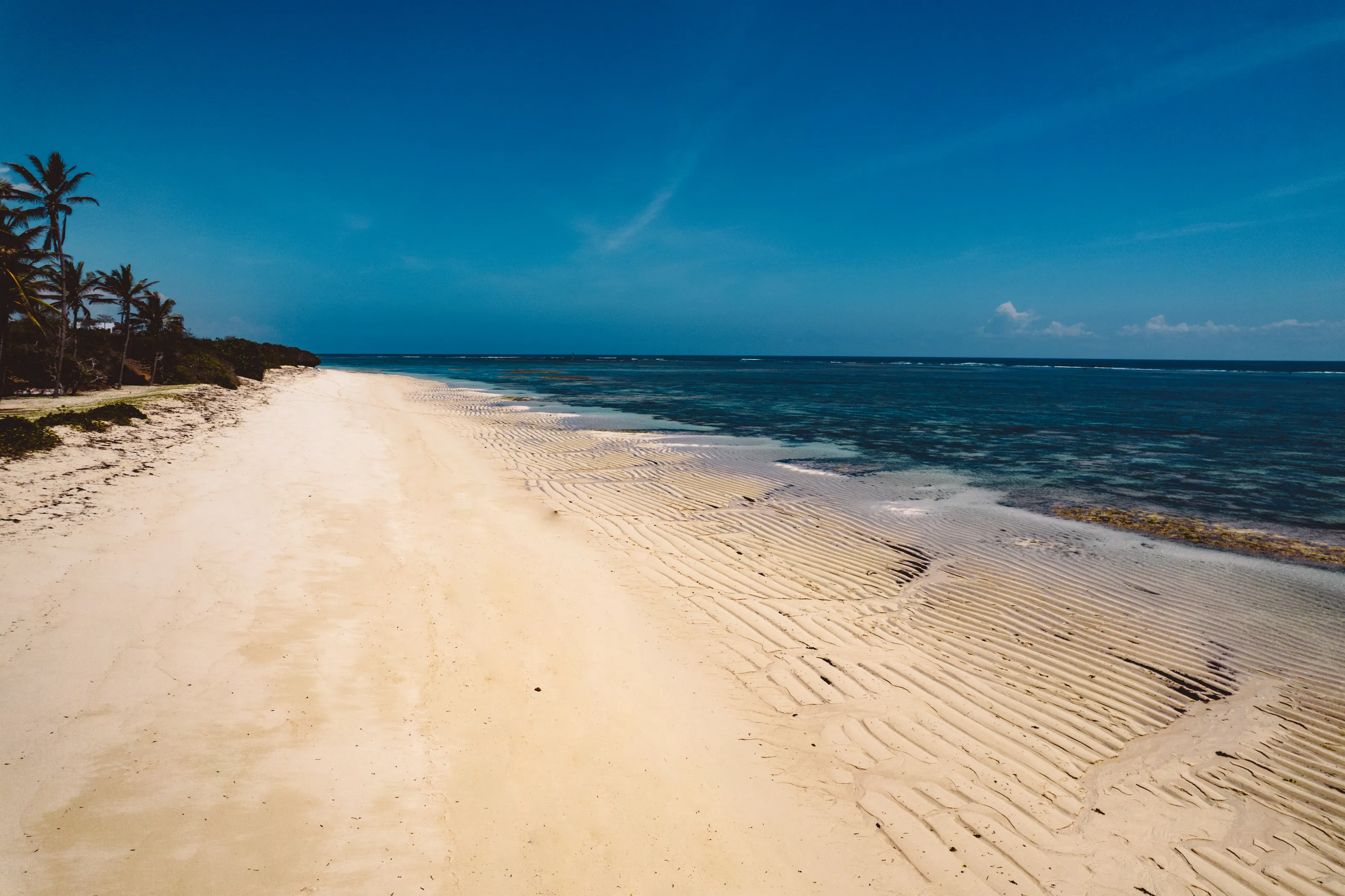
The Indian Ocean coast has 536 km of beaches and coral reefs. Diani Beach is the best known stretch of sand on the south coast, and the old streets of Mombasa and Lamu add history.
Kenya in numbers
Capital
Nairobi
Population
Over 47M
Area
~580,000 km²
Currency
Kenyan shilling
Language
English, Swahili
UNESCO sites
7
Continent
Africa
Time zone
UTC+3
Airports covered
3
Getting around
Flights to the parks, the Madaraka Express and matatus
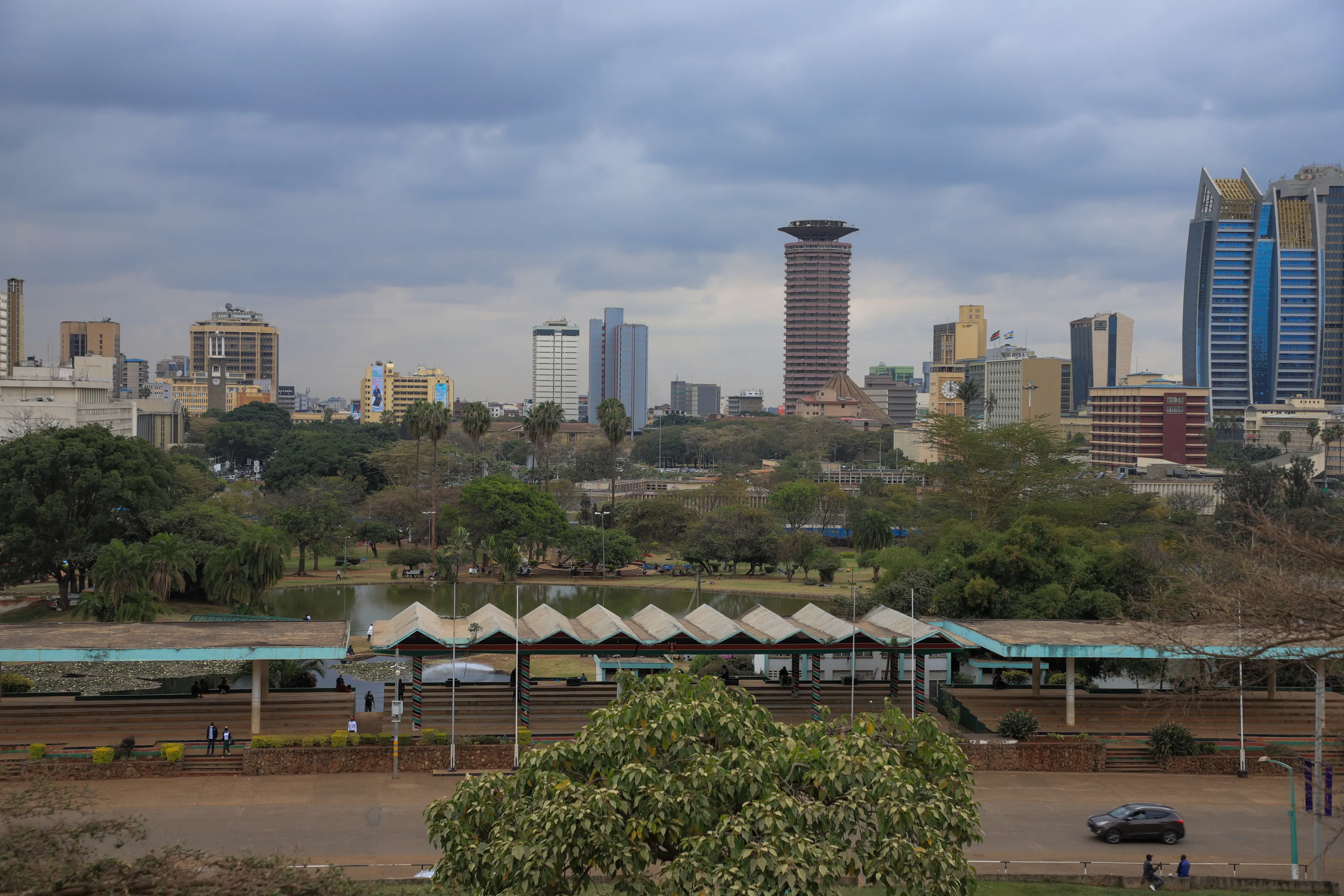
Kenya Airways, the national carrier, connects Nairobi to Europe, Asia and the rest of Africa, and Nairobi is a hub for East and Central Africa. Once inside the country, small carriers such as Airkenya and Fly-Sax fly to the park airstrips, while the standard-gauge Madaraka Express train has linked Nairobi and Mombasa since 2017.
On the ground, matatu minibuses and boda-boda motorbike taxis carry most locals; taxis should be agreed on before you get in. Self-driving is possible but demanding, with heavy traffic and left-hand driving. For the Masai Mara, starting from Nairobi is cheaper than flying in from the coast. Mobile money (M-Pesa) is more common than cards, and some park gates accept little else.
Where to go
Masai Mara, Amboseli, Rift Valley lakes and the Diani coast
Kenya splits neatly into a safari circuit around Nairobi and a beach circuit on the coast. Most visitors combine the two, and the guides advise against cramming in too many parks.
Masai Mara
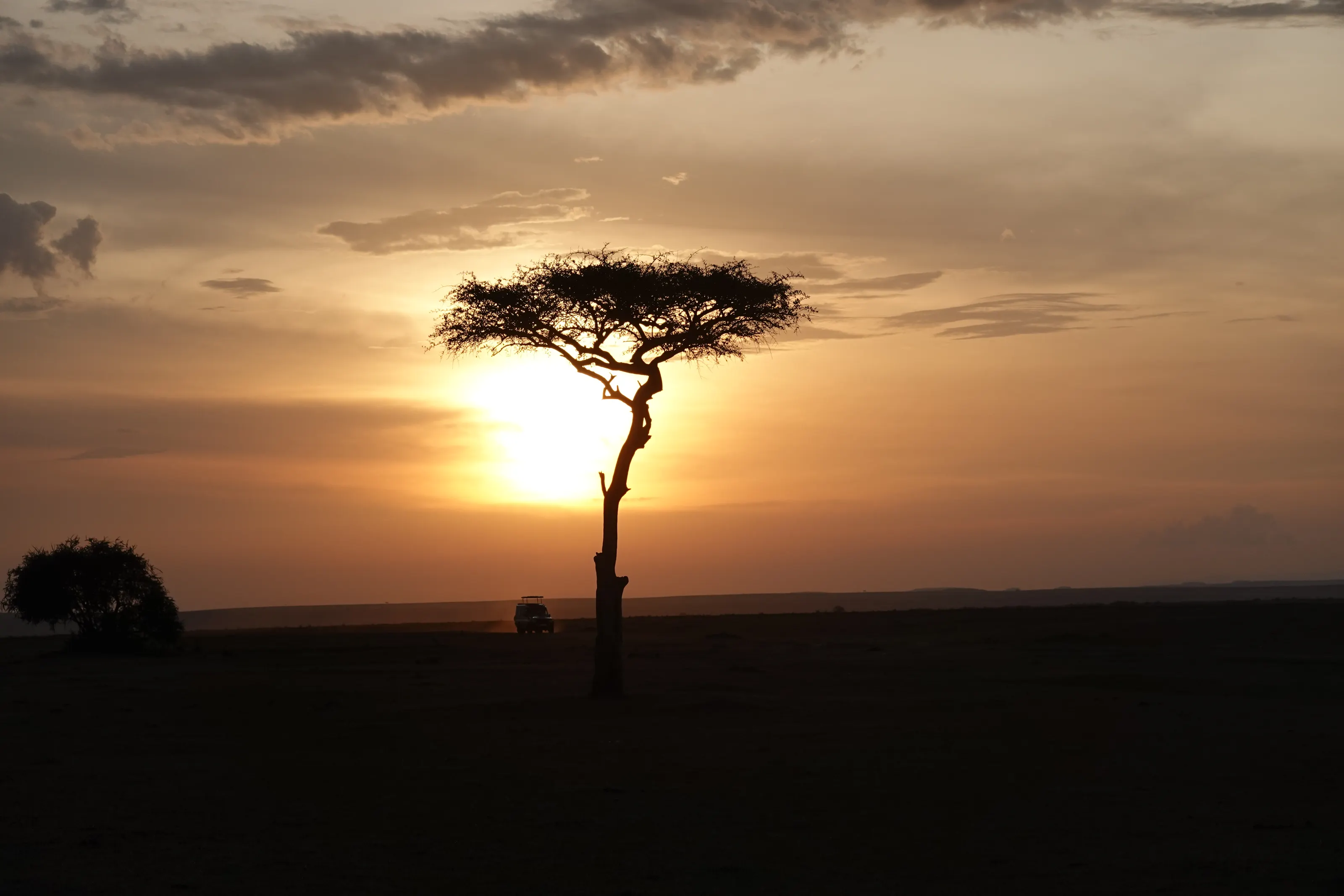
Probably the country's most popular reserve, thanks to its high concentration of big cats. Game drives and balloon flights are the classic ways to see it, and a local guide is essential. For the migration, the best chances are July to September.
Amboseli, Tsavo and the south
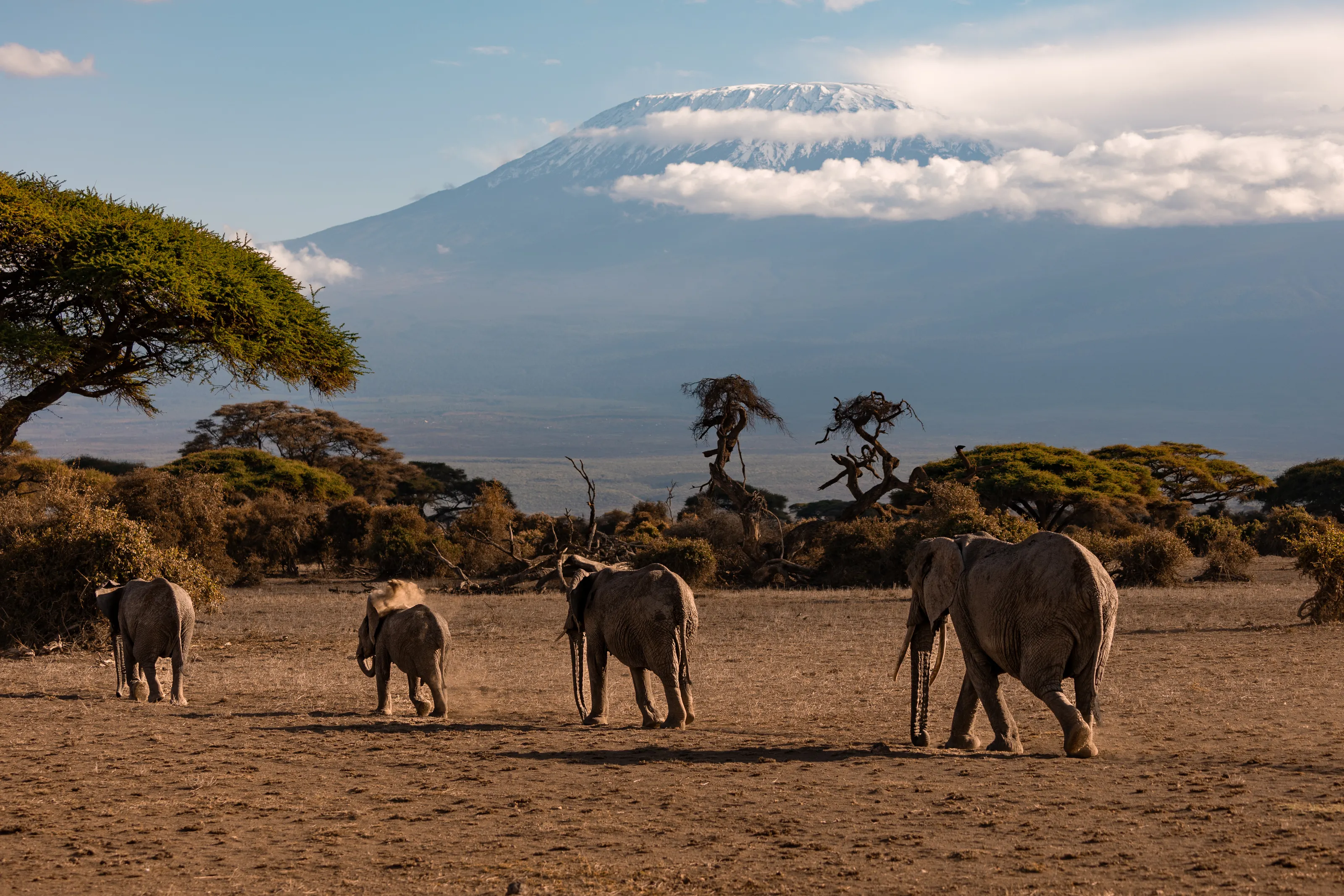
Amboseli is one of the best places in Africa to watch elephants. Tsavo East (13,747 km2) and Tsavo West are the standard short-safari parks from the coast, and Nairobi National Park sits less than 20 minutes from the business district. Across the border, Tanzania offers the other half of the migration: see our Tanzania page.
Lakes, mountains and forest
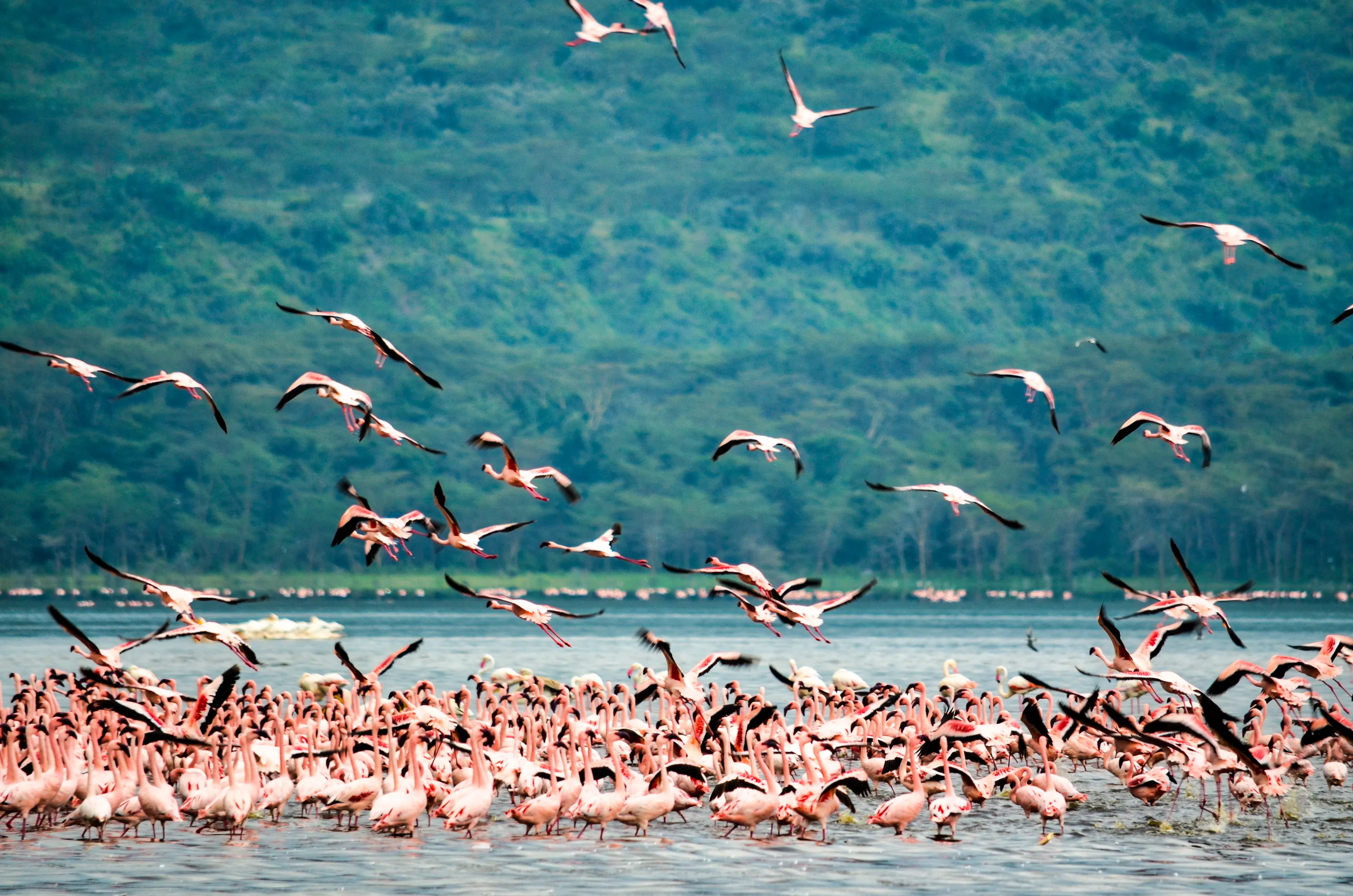
Lake Nakuru has the largest flocks of flamingos and over 400 bird species. Naivasha and Hell's Gate open up the Rift Valley, Mount Kenya (5,199 m) draws trekkers and Kakamega is the country's last primeval rainforest.
Mombasa, Diani and Lamu
Mombasa has an old town and the UNESCO-listed Fort Jesus. Diani Beach, about 30 km south of the city, has the finest sand on the south coast, while the north coast around Bamburi and Mtwapa offers more activities. Malindi, Watamu and the Lamu archipelago are quieter.
Before you go
Best time to visit by region
| Region | Climate | Best time to visit |
|---|---|---|
| Coast (Mombasa, Diani) | Hot and humid, 22 to 35°C. January to March are driest, April to June wettest. | December to March for the beach |
| Nairobi and the highlands | Cool nights, 11 to 21°C in July and 13 to 26°C in February. Long rains March to May, short rains November to December. | June to October, January and February |
| Masai Mara and southern savannas | Warm days, mornings sometimes below 10°C. Grass is tall after the long rains. | Mid-June to October for the migration and game viewing |
| North and Chalbi desert | Semi-arid to arid, very hot and dry. | Dry seasons, with a local guide |
Wildlife viewing is best in the dry seasons, mid-June to October and late December to mid-March. After the rains the landscape is greener and lodges are often cheaper, but animals are harder to spot.
Food and culture
Ugali, nyama choma and a coastline of spice and coconut
The staple is ugali, a firm maize porridge, served with sukuma wiki (braised kale, whose Swahili name means "stretch the week"). Nyama choma, grilled goat or beef, is the social meal, often with kachumbari salad and chapati. Samosas and biryani reflect the country's Indian community.
On the coast, coconut, seafood and cardamom-scented mahamri dominate. Kenya is a leading producer of tea and coffee, and both are worth tasting where they are grown.
Flying to Kenya
Kenyan airports covered by SniperAir
Jomo Kenyatta International (Nairobi)
The country's main airport, 15 to 18 km from the centre and about 20 minutes by road. Over 9 million passengers in 2024, the sixth busiest in Africa.
Moi International (Mombasa)
The coast's gateway, with direct flights from Africa and Europe. Handy for Diani Beach and for Tsavo safaris.
Ukunda (Diani Beach)
An airstrip serving the south coast, close to Diani Beach.
SniperAir destinations
Discover our destination pages
FAQ
Frequently asked questions about Kenya
Which airport should I fly into for Kenya?
Nairobi (NBO) is the main hub and the best base for the Masai Mara, Amboseli and the north. For a beach holiday, Mombasa (MBA) or Ukunda (UKA) saves a domestic flight.
When is the best time to visit Kenya?
The dry seasons, mid-June to October and late December to mid-March, suit safaris best. The migration is strongest from July to September, and December to March is high season on the beach.
Is Kenya expensive to visit?
Safaris are never cheap: park fees are high and camps are often upscale. Beach stays, city life and local meals cost far less, so a well-planned trip with well-timed flights makes the biggest difference.
Do I need a visa to travel to Kenya?
Since 1 January 2024 Kenya has replaced the visa with an Electronic Travel Authorization (ETA) that you apply for online before travelling. Rules change, so check official sources and your government's travel advice before booking.
How long should I spend in Kenya?
Ten to fourteen days is enough for a few parks plus a week on the coast. Fewer parks with more time in each beats a rushed circuit.
What health precautions should I take?
Speak to a doctor or travel clinic before departure about malaria prevention and vaccines for your itinerary.
How do I get alerted when flights to Kenya drop in price?
Create a SniperAir alert profile with your departure airport and Nairobi, Mombasa or Diani as the destination. We track prices and notify you when an opportunity matches. See how it works.
Ready to track prices to Kenya?
Create an alert and let SniperAir do the rest.
Create my alert