
Travel to Uzbekistan
Madrasas covered in blue tiles, brick minarets, desert citadels and bazaars where bargaining is still the rule: here is what to plan for a Silk Road trip before you look for cheap flights to Uzbekistan.
Uzbekistan in numbers
Capital
Tashkent
Population
Over 35 M
Area
~450,000 km²
Currency
Som
Language
Uzbek
Distinction
Doubly landlocked
Continent
Asia
Time zone
UTC+5
Airports covered
1
Why visit Uzbekistan
The Silk Road, turquoise domes, bazaars and desert
Silk Road cities
Samarkand, Bukhara and Khiva grew rich on trade between China and the West. Their old quarters, on UNESCO's list, line up madrasas, mosques, caravanserais and bathhouses.
The blue of the tiles
Turquoise domes, portals covered in blue tiles, brick minarets patterned with brickwork: Timurid architecture and that of Khiva and Bukhara make up some of Asia's most photogenic settings.
A legacy of Timur
In the 14th century Timur made Samarkand the capital of his empire, and his successors, among them Ulugh Beg, turned it into a centre of astronomy and science. The monuments still bear the mark.
Bazaars, plov and crafts
Fragrant plov, hot samsa, bread from clay ovens, silk, ikat, ceramics and puppets: Uzbek markets tell of skills handed down for centuries.
Landmarks
Samarkand, Bukhara, Khiva and Tashkent
The classic circuit links Tashkent, Samarkand, Bukhara and Khiva in eight to ten days, with a fast train between the first stops. In a week you can already see the three great old cities.
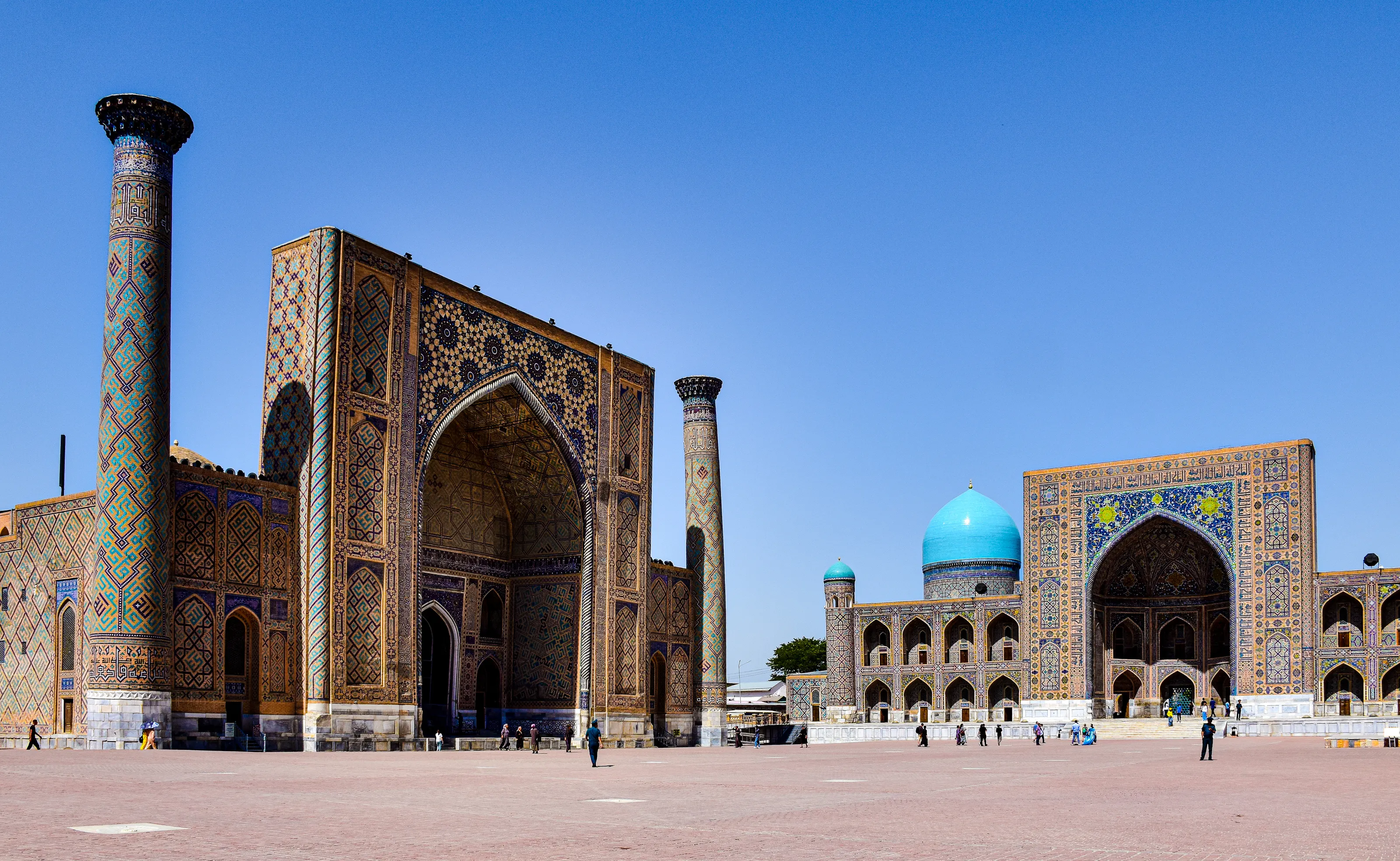
Samarkand and Registan Square
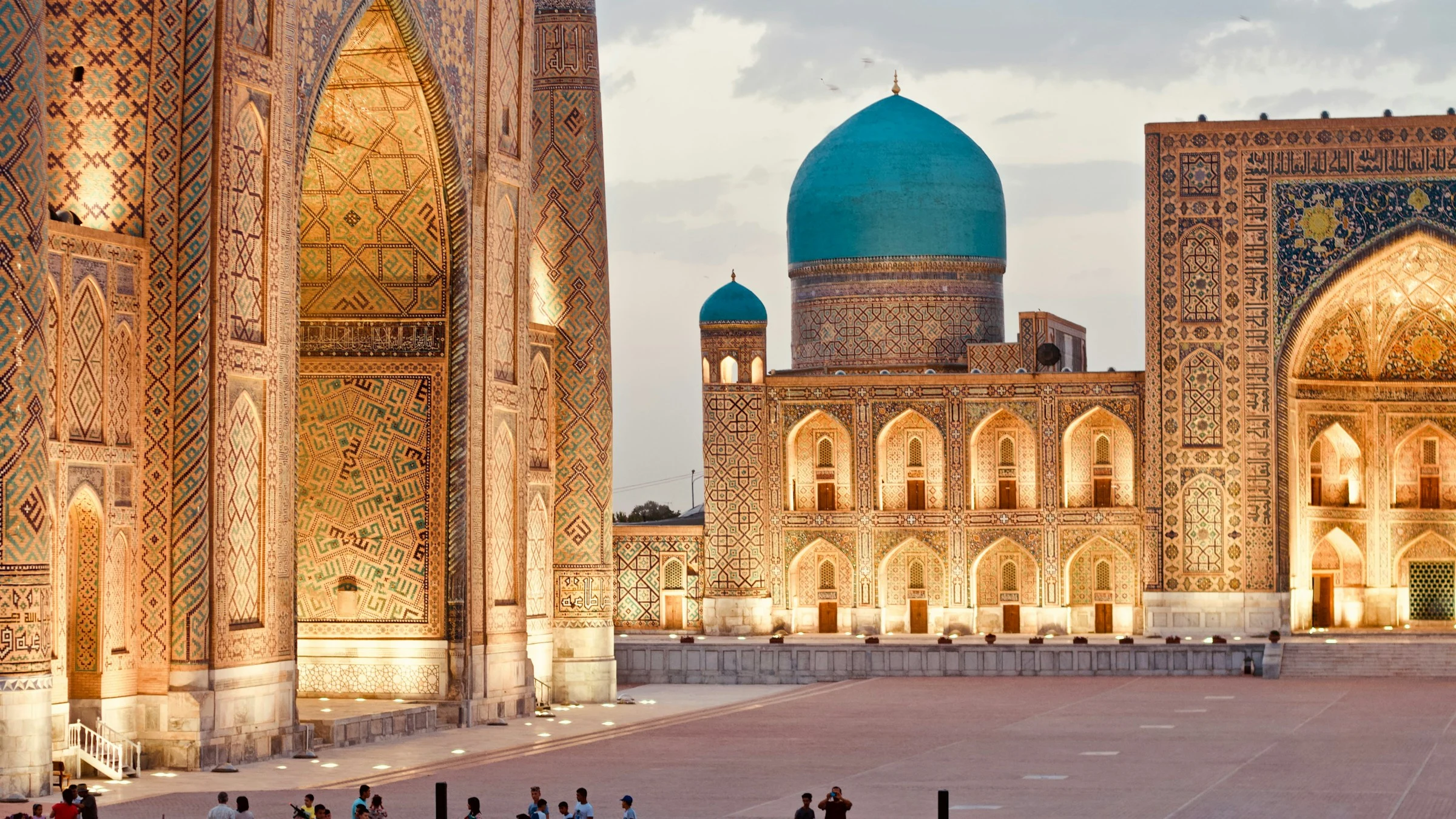
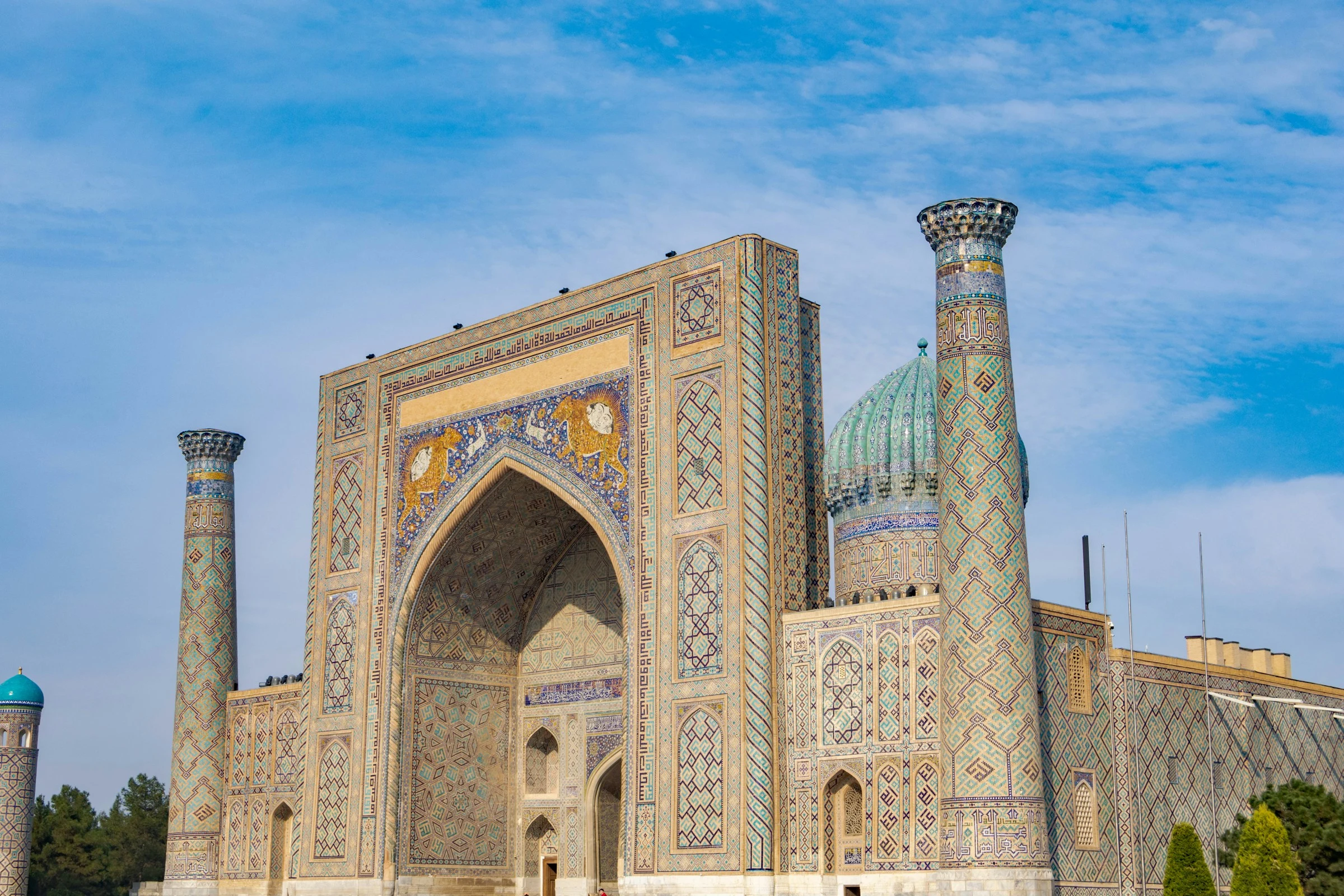
The Registan brings together three tile-fronted madrasas, including Ulugh Beg and Sher-Dor, and is at its most magical at dusk when lighting gilds the tiles. Bibi-Khanym Mosque, the Gur-Emir mausoleum, the Afrasiab site and Siab bazaar round out a two-day visit.
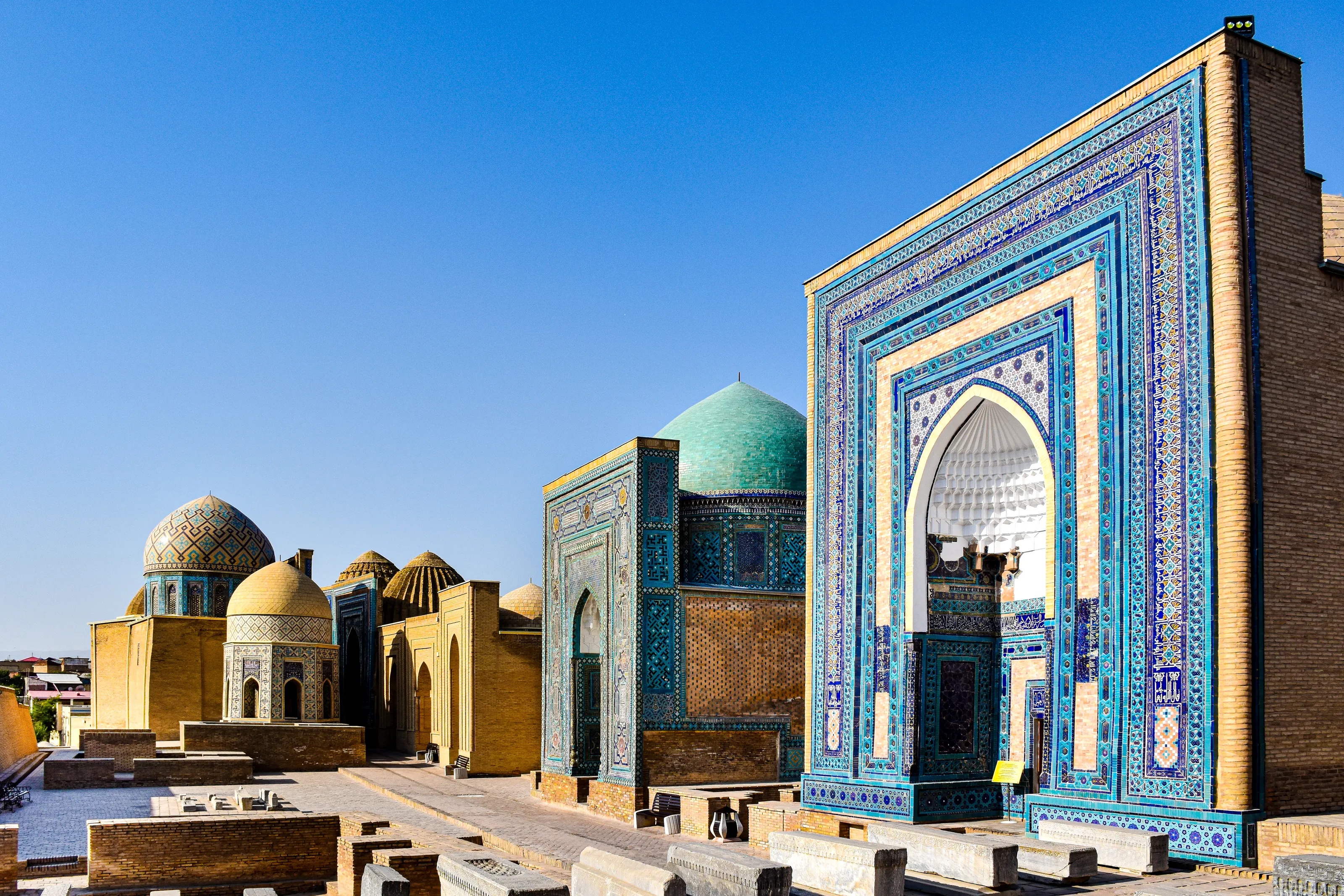
Shah-i-Zinda, the avenue of mausoleums
This Samarkand necropolis lines a stairway with mausoleums covered in blue and turquoise tiles. It is one of the most colourful places in the country, best seen early in the morning for the light and the cool air.
Bukhara, minarets and madrasas
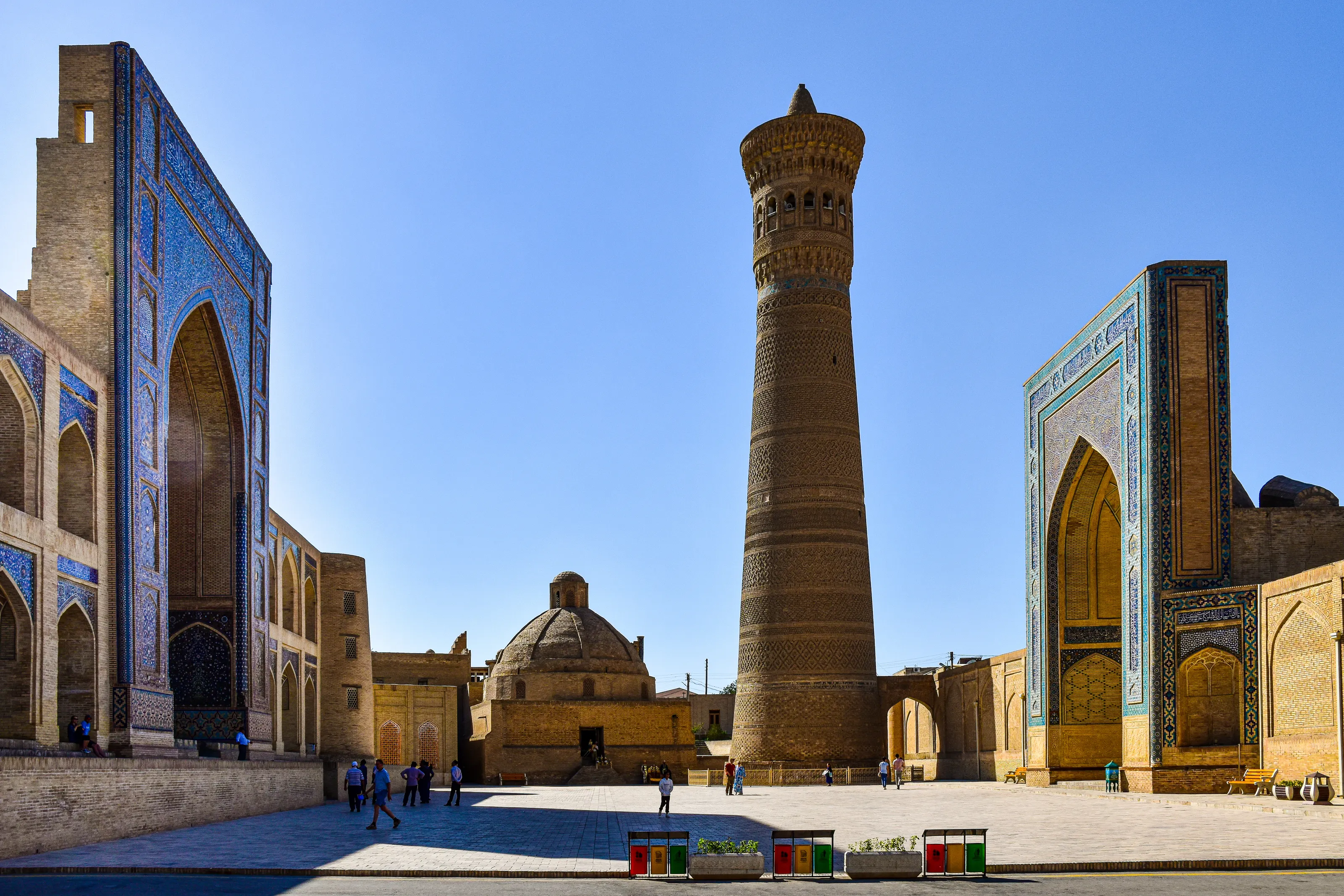
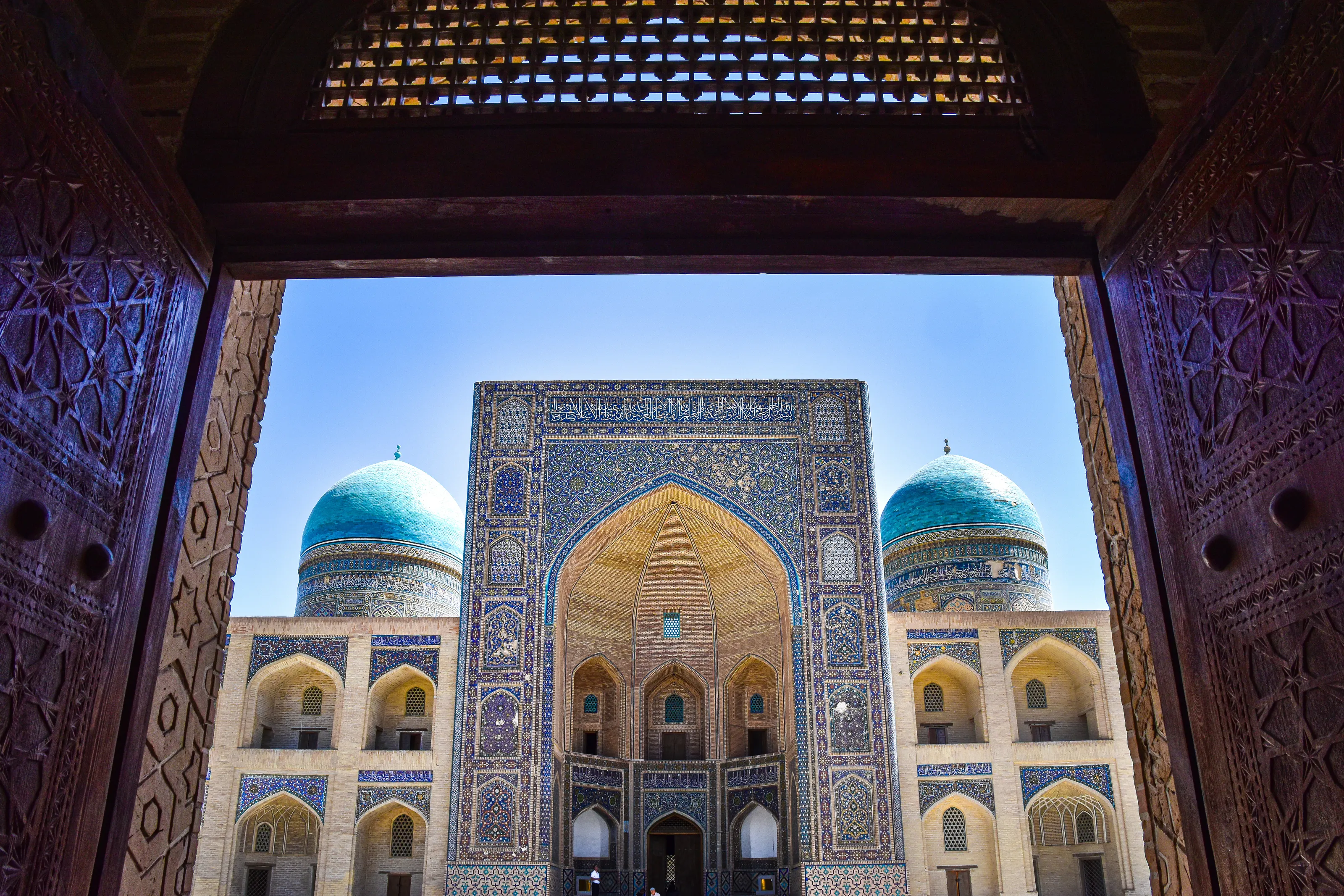
In the historic centre, on UNESCO's list since 1993, the Poi Kalon ensemble gathers the great Kalon minaret and the Mir-i-Arab Madrasa. The Ark citadel, the Samanid Mausoleum, Lyabi-Hauz square and the trading domes are all explored on foot. Bukhara is also the weaving and ikat capital.
Khiva, the museum city of the desert
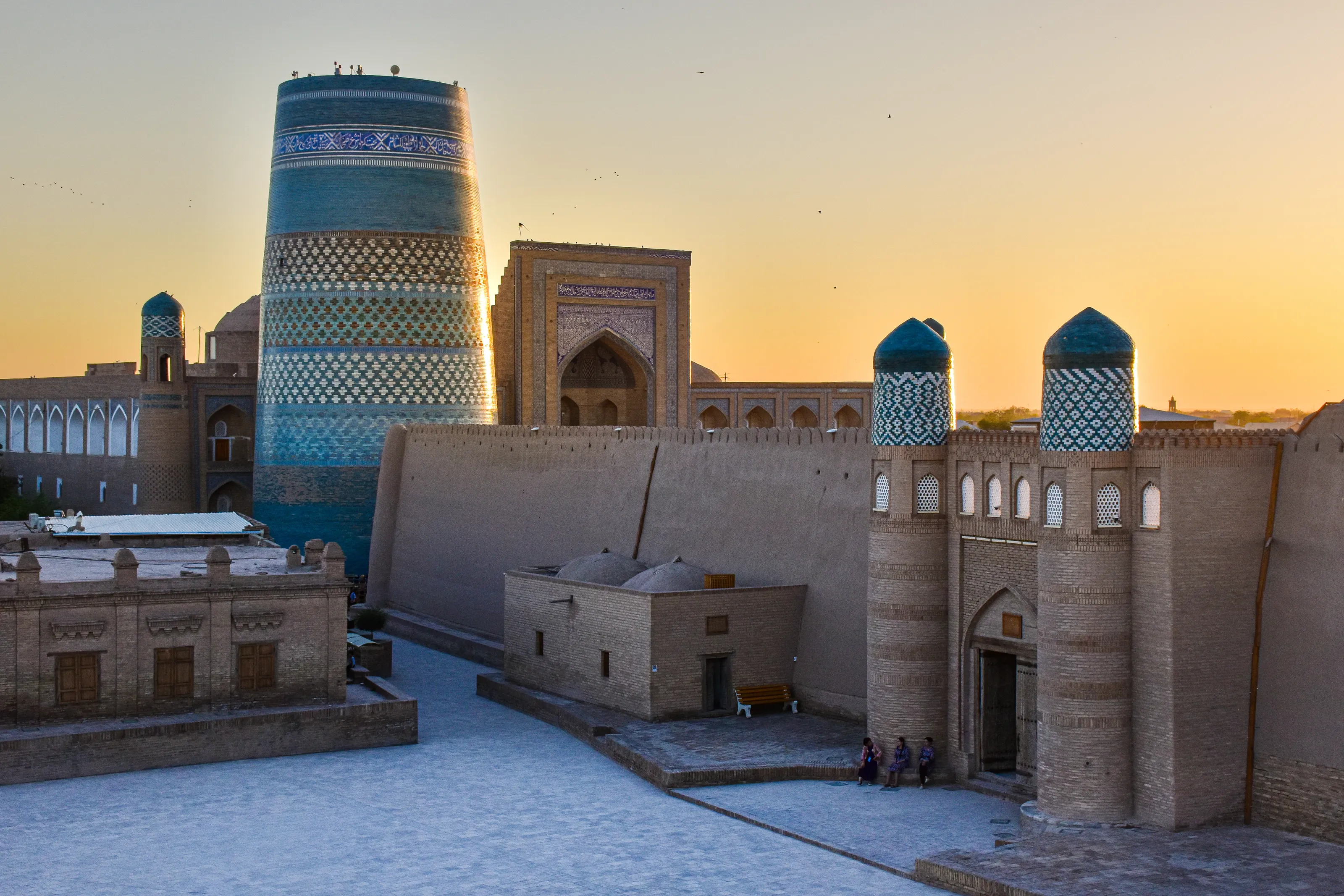
In the Khorezm oasis, Khiva keeps its clay walls and the Ichan-Kala enclosure, on UNESCO's list since 1990, with more than a hundred monuments, among them the Kalta Minor minaret covered in turquoise tiles. It was named Tourism Capital of the Islamic World for 2024.
Tashkent, the modern capital
Tashkent is the largest city in Central Asia: wide avenues, parks, museums, the Kukeldash Madrasa, the Hazrati Imam complex, Chorsu Bazaar and a metro that opened in 1977. It is often the arrival point, with a day or two of sightseeing.
Before you go
Which season to travel to Uzbekistan
| Area | Climate | Best time to visit |
|---|---|---|
| Samarkand and Bukhara | Dry continental climate: very hot summers, around 40 degrees, cool winters. | April-May and September-October |
| Tashkent | Hot summer, usually mild winter with little snow. | April to June and September-October |
| Khiva and the Khorezm desert | Very dry, windy in summer, frequent frost in winter. | April-May and September-October |
| Mountains (Zaamin, Chimgan) | Cooler at altitude, pleasant in summer. | June to September |
Rainfall stays low, around 100 to 200 millimetres a year: sun is everywhere. Bring a hat, sunscreen and clothes covering shoulders and knees for religious sites. Keep an eye on fares before you lock in your dates.
Getting around
Afrosiyob high-speed train, domestic flights and taxis
The Afrosiyob high-speed train has linked Tashkent and Samarkand since 2011, and the line continues to Bukhara. For Khiva, far to the west, combine train, a domestic flight or a long drive. In cities, taxis and ride-hailing apps are the simplest way around.
Book trains ahead in high season. In Tashkent the metro, with its decorated stations, avoids traffic. Leave some slack before a return flight, especially when coming back from a distant stop.
Food and culture
Plov, samsa, ikat and the Navruz festival
The Uzbek table revolves around plov, rice cooked with lamb and carrots in a big kazan, flaky samsa, shurpa soup, kazan-kabob and round stamped bread. Green tea is shared on every occasion.
Navruz, the spring festival, is a public holiday, with music, dancing and laden tables. Crafts show in silk, Bukhara ikat, Khorezm ceramics, suzani embroidery and Khiva puppets.
Flying to Uzbekistan
The Uzbek airport covered by SniperAir
Islam Karimov Tashkent International
The capital's airport, a few kilometres from the centre: allow about twenty to thirty minutes by road. It is the country's main entry point, with rail and air connections to Samarkand, Bukhara and Khiva.
FAQ
Frequently asked questions about Uzbekistan
Which airport do I fly into for Uzbekistan?
Tashkent (TAS) is the main entry point and the one SniperAir tracks. From there take the fast train or a domestic flight to Samarkand, Bukhara and Khiva.
When is the best time to travel to Uzbekistan?
April-May and September-October: temperatures you can bear for outdoor monuments. Summer is very hot, winter cool or cold, but quieter.
Is travelling to Uzbekistan expensive?
On the ground, meals, guesthouses and local transport are generally modest compared with Western Europe. Monument entry fees and excursions are extra.
Do I need a visa for Uzbekistan?
It depends on your nationality: exemption, e-visa or standard visa depending on the case, with rules that change. Check the official government site before you go.
How long do I need in Uzbekistan?
Eight to ten days cover the Tashkent, Samarkand, Bukhara and Khiva circuit. A week is enough for Tashkent and the first two old cities.
What should I wear in Uzbekistan?
A hat and sun protection in summer, warm layers in winter. In mosques and mausoleums, bring clothes that cover shoulders and knees.
How do I get alerted when a flight to Uzbekistan gets cheaper?
Create a SniperAir alert profile with your departure airport and Tashkent as destination: we track prices and tell you as soon as an opportunity matches. See how it works.
Ready to track fares to Uzbekistan?
Create an alert and let SniperAir do the rest.
Create my alert