
Cheap flights to Aswan
Set your departure airport and maximum budget: SniperAir tracks prices to Aswan and alerts you the moment a deal matching your criteria appears.
Quick summary
Country
Egypt
Continent
Africa
Airport
ASW
Currency
Egyptian pound
Time zone
UTC+2
Deals already spotted to Aswan
Real flight examples detected by SniperAir, with their reference price.
Loading examples…
Gateway to Nubia
Aswan and Nubia, the far south of Egypt's Nile
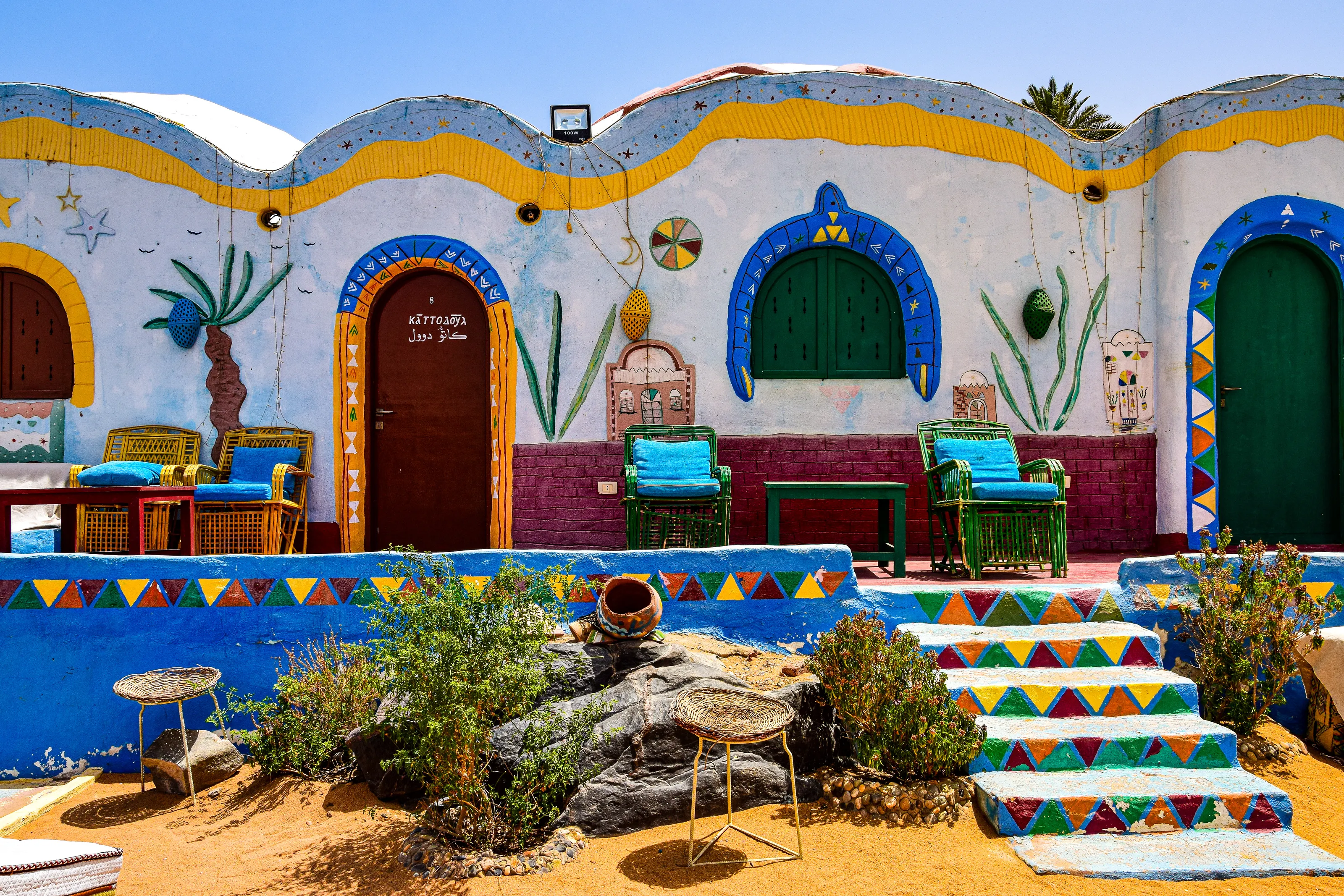
Aswan is the southernmost city of Egypt's Nile valley, about 840 km south of Cairo, on the east bank near the First Cataract. In antiquity, as Syene, it marked the southern frontier of pharaonic Egypt, the door to Nubia and sub-Saharan Africa. Calmer and more relaxed than Luxor, it keeps a strong Nubian identity of its own: colourful villages, music and crafts.
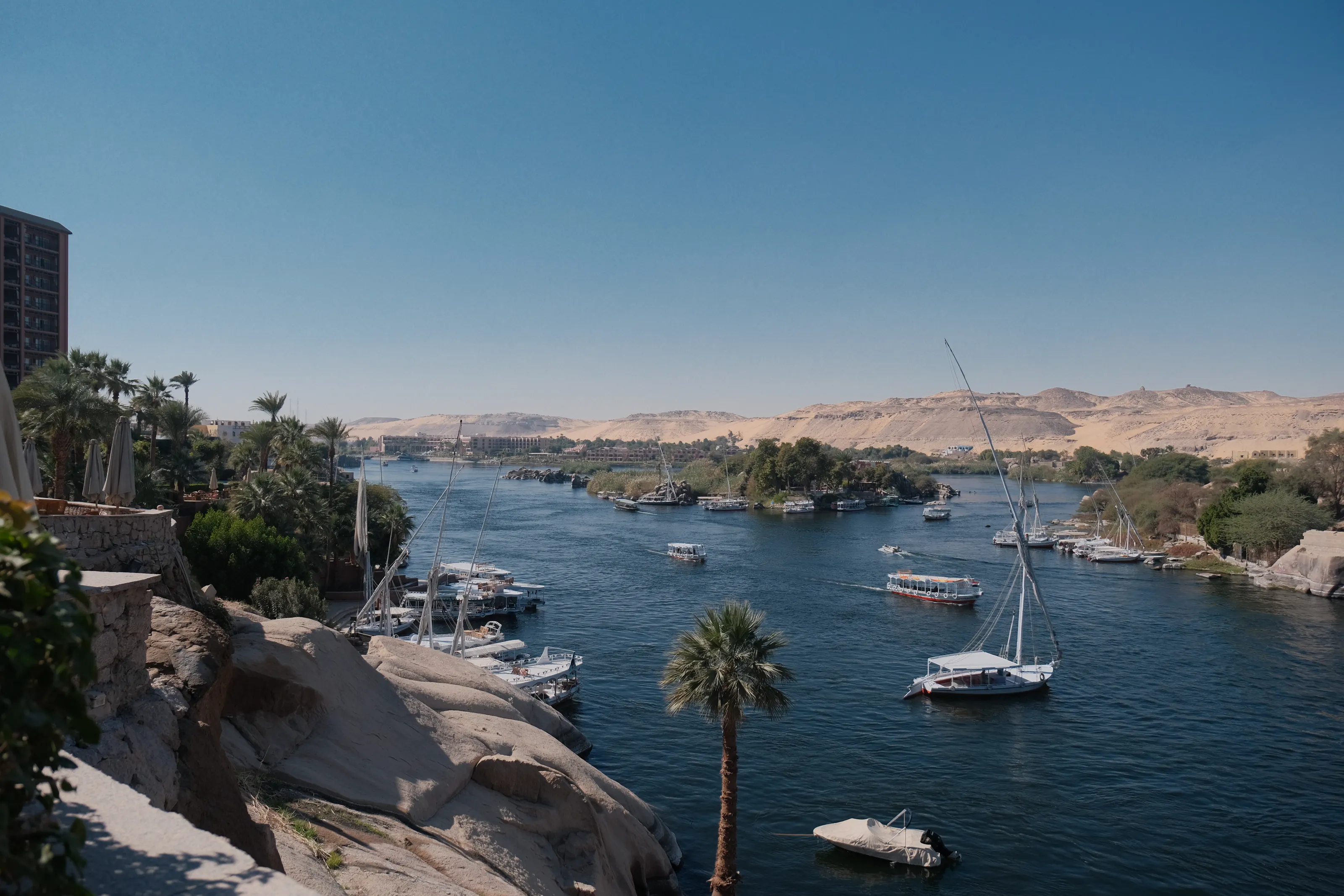
The setting is unique: the Nile flows here between black granite rocks and islands, including Elephantine Island, under a hot desert climate all year round. The urban area counts several hundred thousand people depending on the source, but the centre, stretched along the Corniche, is easy to cover on foot.
A stop and a stay
Many visitors arrive on a cruise from Luxor or by train for two or three nights: just enough time to see Philae, the High Dam, a Nubian village and, very early one morning, Abu Simbel.
The signature experience
A felucca on the Nile at sunset
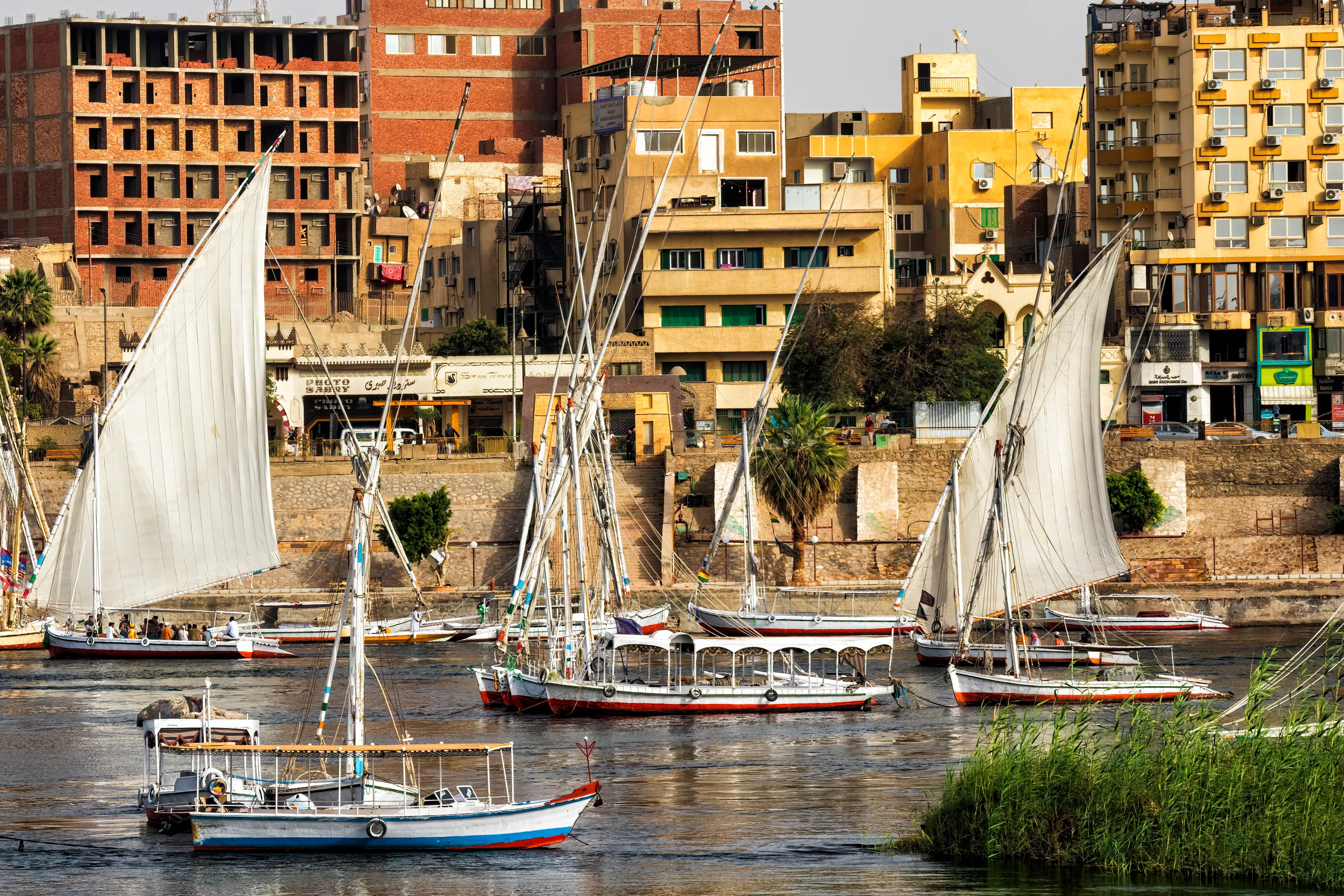
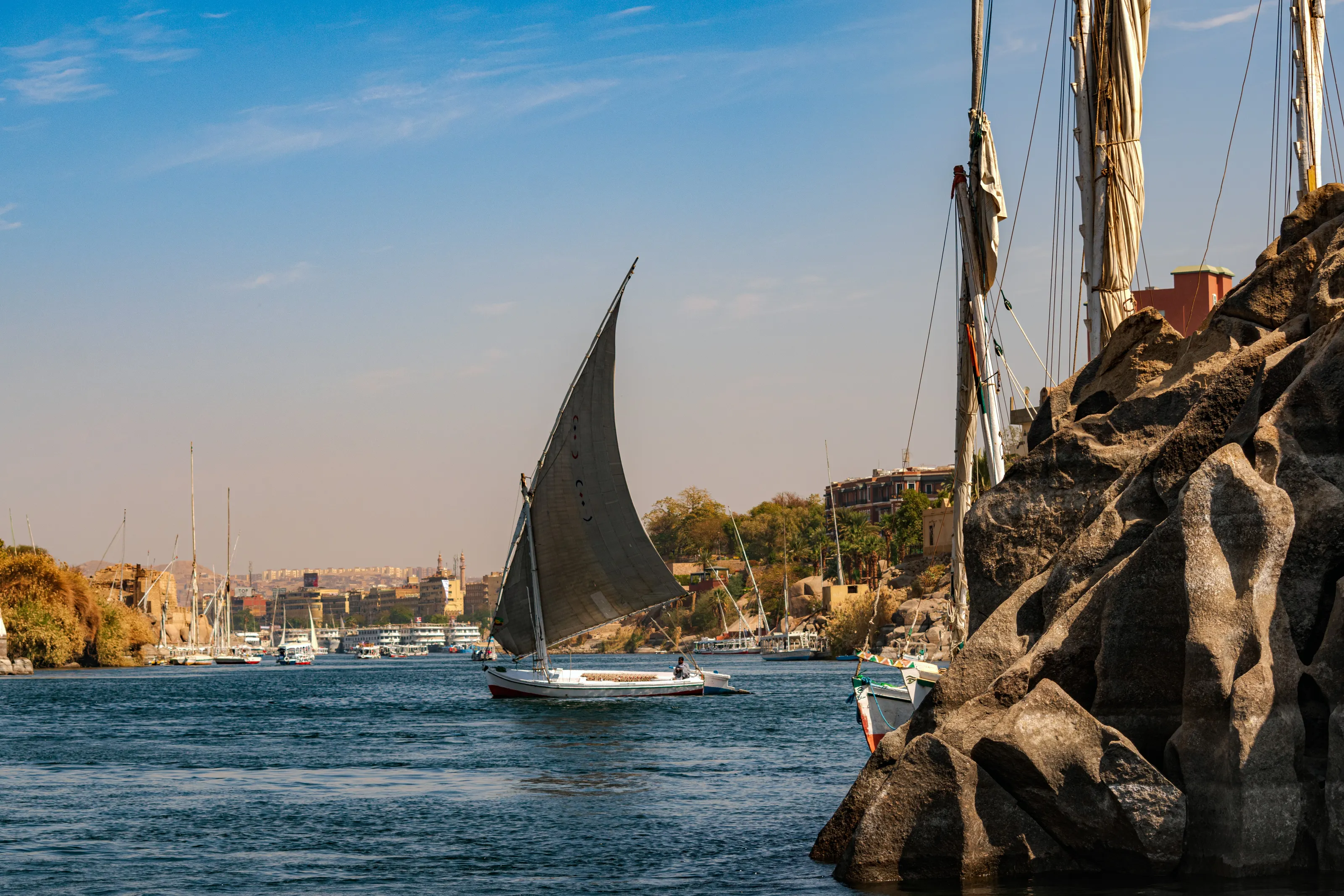
In Aswan the felucca, a traditional wooden sailing boat with a triangular sail, is more than a way to get about: it is the way to read the city. Gliding between the islands and rocks at sunset is the image most travellers keep of Aswan. In the evening, much of local life revolves around these river trips and Nubian music shows.
How to go about it
Boatmen wait along the Corniche. The fare is negotiated before boarding and depends on the length of the trip and the number of passengers: agree on it out loud, and settle the route (Elephantine, Kitchener's Island, the west bank). One to two hours is enough for sunset.
Two or three nights afloat
Some travellers extend the experience with a two- or three-night felucca trip downriver to Kom Ombo or Edfu; it is arranged on the spot, and meals and route should be clearly agreed in advance.
Saved from the water
Philae and Abu Simbel, rescued from the lake
Two landmark temples were moved block by block to escape the rising waters behind the High Dam, inaugurated in 1971: one lies about ten kilometres from Aswan, the other about 280 km away.
Philae Temple
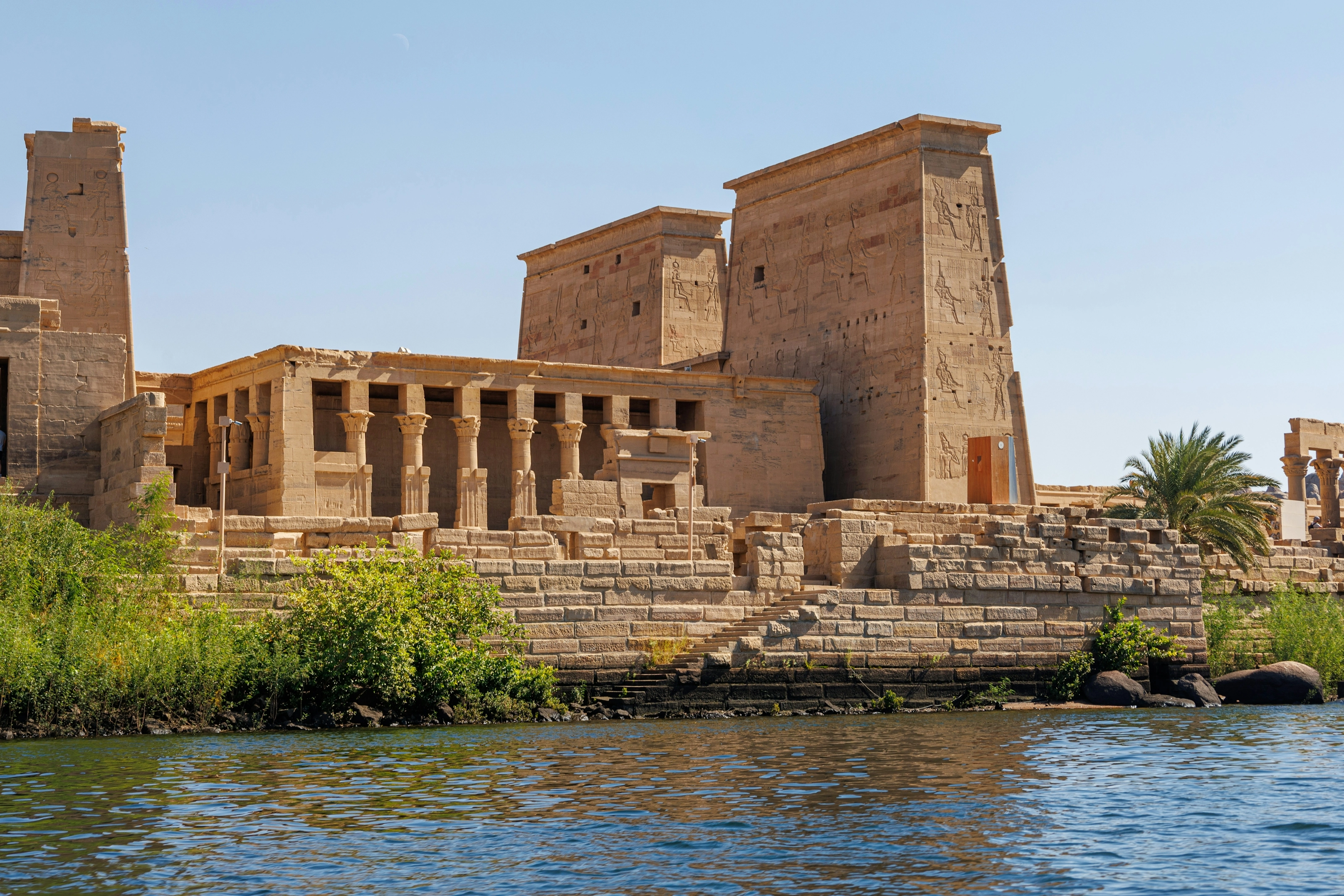
A sanctuary of the goddess Isis and an ancient place of pilgrimage, Philae was dismantled stone by stone and moved to Agilkia Island, around 300 m from its original site, in the 1970s after a five-year project. It is reached by boat from the Shellal landing, which adds to the charm of the visit. A sound and light show is staged in the evening.
Trajan's Kiosk
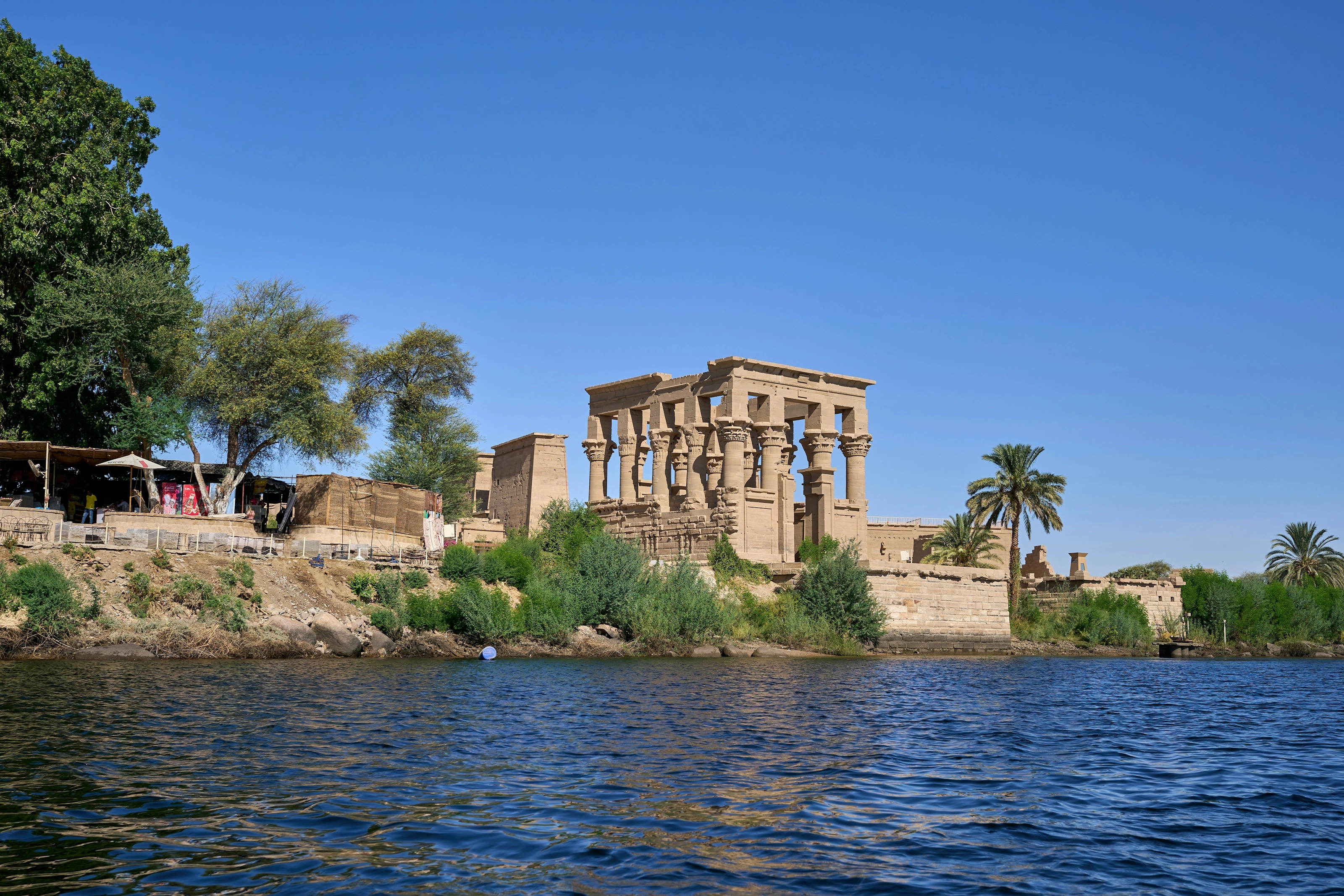
On the same island, Trajan's Kiosk, an elegant columned pavilion open to the river, is the best-known image of the site and the scene you already glimpse from the boat. The best light is early in the morning, when the groups are still small.
The Abu Simbel temples
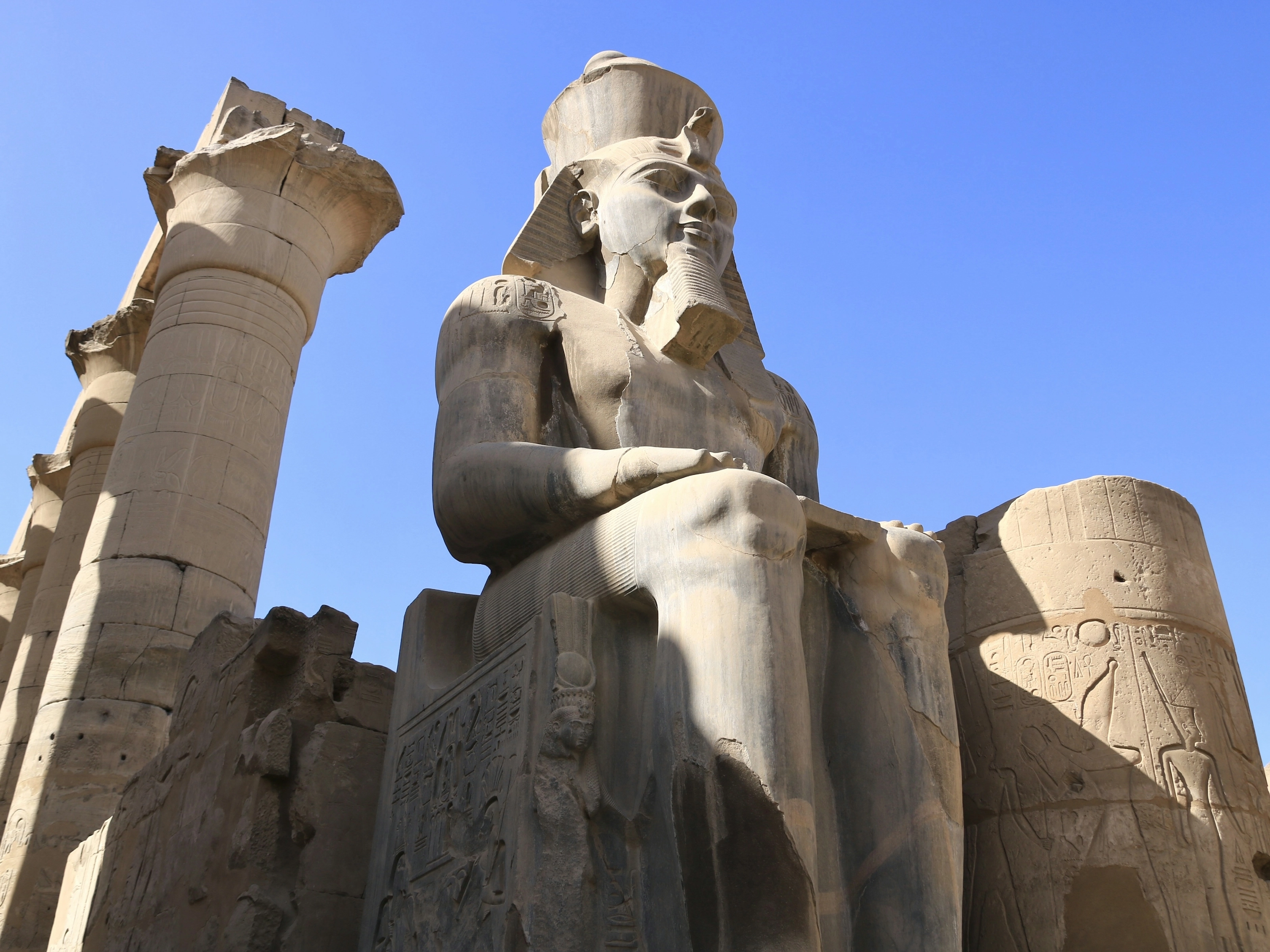
The two temples of Ramesses II have a facade of four colossal statues 21 metres high, carved into the rock in the 13th century BC. Between 1963 and 1968 an international project dismantled and rebuilt them 60 metres higher to save them from the water. Abu Simbel and Philae are UNESCO World Heritage sites. The excursion starts from Aswan, often in a minibus convoy that leaves very early in the morning.
The High Dam
A major 20th-century work, the Aswan High Dam created Lake Nasser. Its construction made this UNESCO-led archaeological rescue necessary, one of the largest in history. It can be visited quickly, usually combined with Philae.
Why watch Aswan with SniperAir
You don't need to compare prices every day
Pick your departure
Enter your departure airport and your maximum budget for a flight to Aswan (ASW).
SniperAir watches
Our systems continuously compare new prices with the real price history of the route. SniperAir watches prices and alerts you: it does not sell or book tickets.
You get an alert
As soon as a price matches your criteria you are notified, without having searched anything yourself.
Getting there and onward
Aswan airport and the road to Luxor
Aswan International
The city's international airport, gateway to southern Egypt, lies on the west bank of the Nile, about 20 to 25 km from the centre. It is served mainly from Cairo, with seasonal links from Luxor, Abu Simbel and a few charters.
Approximate distances and times, based on Wikivoyage and Wikipedia; check schedules before you travel. We do not quote fares.
From the airport to the centre
No public bus serves the airport: take a taxi, and agree the price before getting in. Allow about half an hour to reach the Corniche or the station, depending on traffic.
Train and road
Aswan is the southern terminus of the Egyptian rail network. Luxor is about three to four hours by train, Cairo more than 800 km away. Express trains should be booked ahead with the national railways; local trains are very cheap but slow. Buses also link Hurghada, in roughly eight to twelve hours.
Cruises between Aswan and Luxor
Nile cruises between Aswan and Luxor complete the classic historic itinerary of the valley, with stops at Kom Ombo and Edfu. They last from two or three nights to over five, depending on the programme.
Useful distances
Aswan and its surroundings in numbers
| Destination | Distance from the centre | Approximate time |
|---|---|---|
| Aswan airport (ASW) | about 20 to 25 km | about 30 minutes by taxi |
| Philae (Shellal landing) | about ten km | about fifteen minutes by taxi, then the boat |
| High Dam | about ten km | about 20 minutes by taxi |
| Kom Ombo | about 45 km north | about 1 hour by taxi or bus |
| Edfu | about 105 km north | about 1.5 to 2 hours by road |
| Abu Simbel | about 280 km south | about 3.5 hours by road, convoy very early in the morning |
| Luxor | about 200 km north | 3 to 4 hours by train |
| Cairo | about 840 km north | a little under 2 hours by plane |
These distances are rounded and measured from the city centre; real times depend on traffic, checkpoints and the season. Abu Simbel excursions usually leave before dawn to avoid the midday heat.
Museums and monuments
Nubia, granite and temples to visit
The Nubia Museum, opened in 1997, is the best place to start: it traces Nubian history and culture and shows pharaonic statues and objects rescued from the waters of Lake Nasser. It sits in a garden and takes one to two hours.
The Aswan Museum on Elephantine
On Elephantine Island, facing the Corniche, a small museum and archaeological site present the remains of ancient Syene: temples, a nilometer, old quarters. It is a few minutes away by ferry.
The Unfinished Obelisk
In the old granite quarries, the Unfinished Obelisk, which would have measured nearly 42 m, was left in the rock because of a crack. It shows how the Egyptians quarried such monoliths.
Tombs of the Nobles and St Simeon Monastery
On the west bank, the Tombs of the Nobles and the Qubbet el-Hawa sanctuary overlook the river; a keeper unlocks the tombs and may ask for a tip for photos. Further into the desert, the Coptic-era Monastery of St Simeon is reached on foot or by camel.
Islands and gardens
Kitchener's Island, a botanical garden planted with exotic trees, is reached by small boat; you can also visit Kalabsha Temple, moved like Philae, and Kom Ombo Temple, on the riverbank towards Luxor.
Food and drink
Nile-side tables, tea and sugarcane juice
Aswan's cooking is that of Upper Egypt: kebabs and kofta, chicken, stuffed pigeon (hamam mahshi), grilled Nile fish, clay-pot stews, mezze and fresh bread. Cafes on the Corniche, facing the river, also serve inexpensive lentil dishes, ful and falafel.
Drinks
Sugarcane juice pressed on the spot is the local drink par excellence; mint tea and karkadé, a hibiscus infusion served hot or iced, accompany the whole day. Alcohol is easier to find than in Cairo or Luxor in hotels and some restaurants, with common Egyptian beers (Stella, Saqqara).
Markets and souk
The Sharia al-Souq souk, which starts at the station, is the main bazaar: spices, hibiscus, cumin, henna, scarves, jewellery, leather and Nubian crafts. Nubian crafts are generally the best buy; sellers haggle, and pickpocketing distractions happen in crowds.
Tea with a view
Several terraces let you drink tea facing the First Cataract at sunset, including the one at the historic Old Cataract hotel, with colonial charm, pricier than the local average.
Getting around
Getting around Aswan
The centre, stretched along the Corniche, is walkable. For the rest, the options are simple: public ferry to Elephantine and the west bank, taxi, tuk-tuk, horse carriage and, of course, the felucca.
Ferries and boats
Public ferries cross the Nile in a few minutes for a very low fare; motorboats and feluccas link the islands, the Philae landing and the Nubian villages, with fares to negotiate.
Taxis, tuk-tuks and carriages
Taxis and tuk-tuks serve Philae, the High Dam and the Unfinished Obelisk; ride apps sometimes work but prices are often renegotiated. Carriage drivers often ask for more at the destination: agree the price first.
Organised trips
Abu Simbel is done by minibus convoy (leaving around 4 am, with an escort), by private car or, less often, by public bus. Hotels and agencies also offer half-day packages covering Philae, the High Dam and the obelisk.
Budget and safety
A fairly low budget, fares to negotiate
Aswan is a fairly low-budget destination: meals, tea, ferries and local transport stay cheap, and accommodation ranges from small family hotels to large Nile-front hotels. Site entrance fees, often different for foreigners, make up most of the spending; they change regularly, so check them before you go.
Bargaining calmly
Haggling is the rule in the souk and for boats; stating a price out loud first avoids misunderstandings. Keep small notes and beware of detours imposed towards shops.
Traveller advisories
Check your government's official advice before travelling: the situation varies across Egypt's regions, and road excursions to the south (Abu Simbel) run in escorted convoys. This is a general note and does not replace the current advisories of your foreign ministry.
When to go to Aswan
Climate by season and best time
Spring
March and April are pleasant early on, then the heat climbs fast; highs already reach 35 °C by the end of the season.
Summer
Very hot and dry: highs generally exceed 40 °C from May to September, with nights of 25 °C or more. Visits are done at dawn.
Autumn
October and November bring the heat down gradually: the weather turns pleasant from November.
Winter
The ideal season: highs of 23 to 26 °C, cool nights around 11 to 12 °C, clear skies, but more people at the sites.
The best time
October to April, especially November to February. It almost never rains: annual rainfall is a few millimetres according to Wikipedia, and the air is very dry (average humidity around 26%). Bring a hat, water and sunscreen all year round, and a light jacket in the evening in winter.
By length of stay
What to do in Aswan depending on how long you stay
The essentials
Philae in the morning, the High Dam, a felucca at sunset and tea on the Corniche.
Going deeper
Add the Nubia Museum, Elephantine Island, a Nubian village by water taxi and the souk.
Abu Simbel and the valley
Leave very early for Abu Simbel, then head north to Kom Ombo, Edfu and Luxor by road, train or the Nile.
In pictures
Aswan in pictures
You might also like
Similar destinations
FAQ
Frequently asked questions about flights to Aswan
Which airport serves Aswan?
Aswan International Airport (ASW), about 20 to 25 km from the centre, served mainly from Cairo. The city is also linked to Luxor and Cairo by train and road.
How do I get from Aswan airport to the centre?
By taxi, agreeing the price beforehand: allow about half an hour. No public bus serves the airport.
Can you visit Abu Simbel from Aswan?
Yes, it is the flagship excursion from Aswan: about 280 km, or 3.5 hours by road, often in a convoy very early in the morning. Philae, closer by, is visited by boat.
When is the best time to visit Aswan?
October to April, especially November to February, when highs are around 23 to 26 °C. From May to September it is generally over 40 °C.
Is Aswan expensive?
No: the budget is fairly low for meals and local transport. Site entrance fees make up most of the spending and change regularly; the flight remains the most variable item.
What is there to do in Aswan besides temples?
A felucca ride at sunset, a visit to a Nubian village by water taxi, the Nubia Museum, a Nubian music show and a stroll through the souk.
How do you get around Aswan?
On foot along the Corniche, by public ferry to Elephantine Island, by taxi, tuk-tuk or carriage to Philae and the High Dam; agree the price before getting in.
What should I eat in Aswan?
Kebabs, kofta, stuffed pigeon, grilled Nile fish and clay-pot stews; to drink, sugarcane juice, mint tea and karkadé.
How do you combine Aswan and Luxor?
By a Nile cruise between the two cities, or by train (3 to 4 hours) and road, with possible stops at Kom Ombo and Edfu.
How do I get alerted when a flight to Aswan drops below my budget?
Create an alert profile with your departure airport, Aswan as destination and your maximum budget. You are notified automatically as soon as a matching price is detected; SniperAir does not sell or book tickets.
Ready to head to Aswan?
Set your budget and let SniperAir monitor fares for you.
Create my alert