
Cheap flights to New Delhi
Set your departure airport and maximum budget: SniperAir tracks prices to New Delhi and alerts you the moment a deal matching your criteria appears.
Quick summary
Country
India
Continent
Asia
Airport
DEL
Currency
Indian rupee
Time zone
UTC+5:30
Deals already spotted to New Delhi
Real flight examples detected by SniperAir, with their reference price.
Loading examples…
A capital in layers
Flights to New Delhi land you in eight centuries of capitals
Book flights to New Delhi and you arrive in a capital built in layers. Few cities in the world fit the monuments of three successive powers onto a single metro map: the Delhi Sultanate, the Mughal emperors and the British Raj. New Delhi is the capital of India and the natural gateway to the north of the country, starting point of the Golden Triangle to Agra and Jaipur.
Size and history
The Delhi territory had 16.79 million people at the 2011 census and an estimated 21.6 million in 2024 (Wikipedia EN), making it one of the largest urban areas on Earth. New Delhi proper covers only 42.7 km2 on the west bank of the Yamuna. Its history goes back well before the British: construction of the Qutb Minar began around 1193, and Shah Jahan made Shahjahanabad his capital in 1638.
| Era | What to see |
|---|---|
| Delhi Sultanate | Qutb Minar, a 72-meter tower begun in 1193 |
| Mughal Empire | Humayun's Tomb, the Red Fort, Jama Masjid and the lanes of Chandni Chowk |
| British Raj | India Gate, Rashtrapati Bhavan and Parliament House |
| Modern India | The Lotus Temple, the Akshardham complex and the metro |
Why watch New Delhi with SniperAir
You don't need to compare prices every day
Pick your departure
Enter your departure airport and your maximum budget for a flight to New Delhi (DEL).
SniperAir watches
Our systems continuously compare new prices with the real price history of the route. SniperAir watches prices and alerts you: it does not sell or book tickets.
You get an alert
As soon as a price matches your criteria you are notified, without having searched anything yourself.
Lutyens's Delhi
An imperial city planned from scratch
From the Delhi Durbar to India Gate
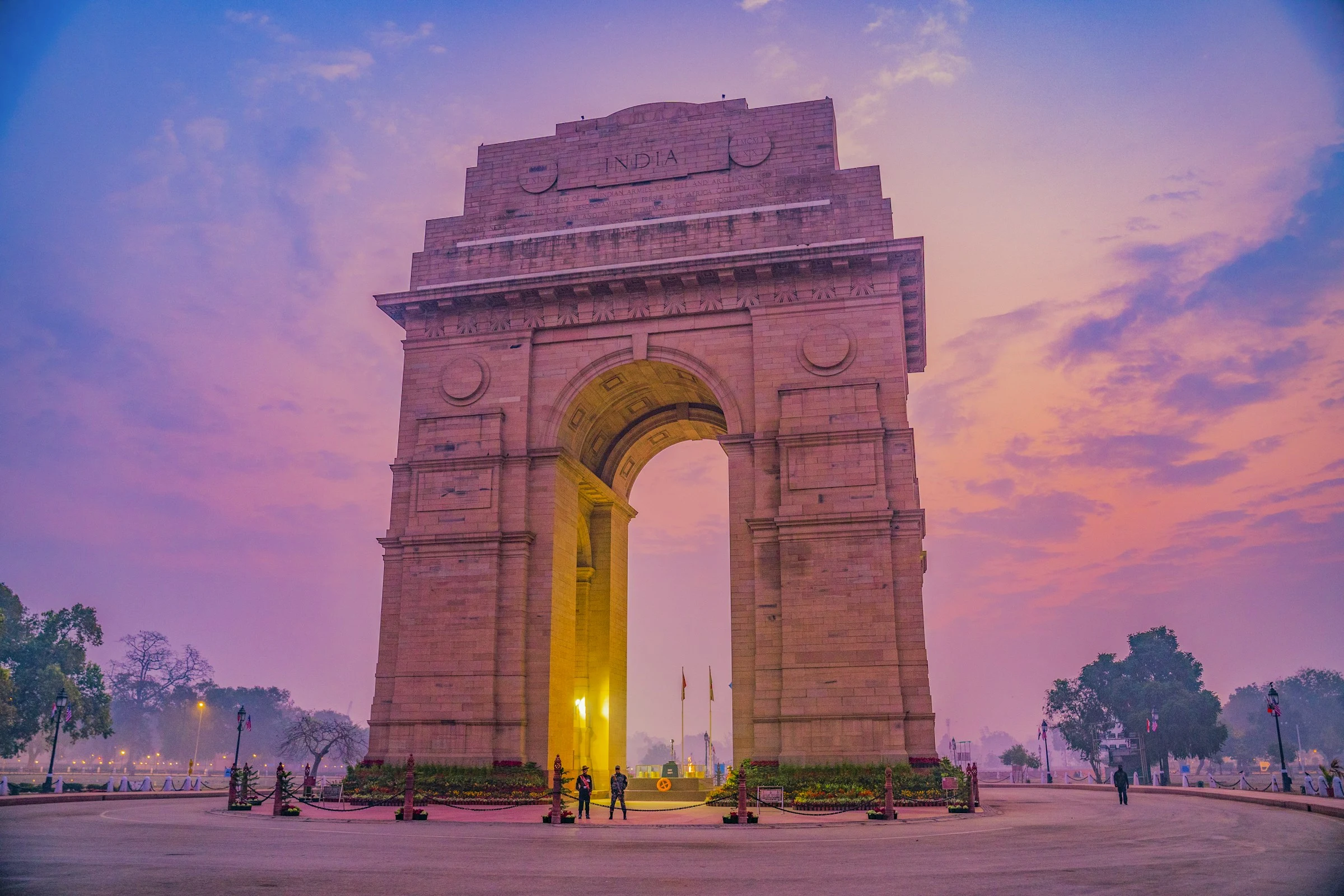
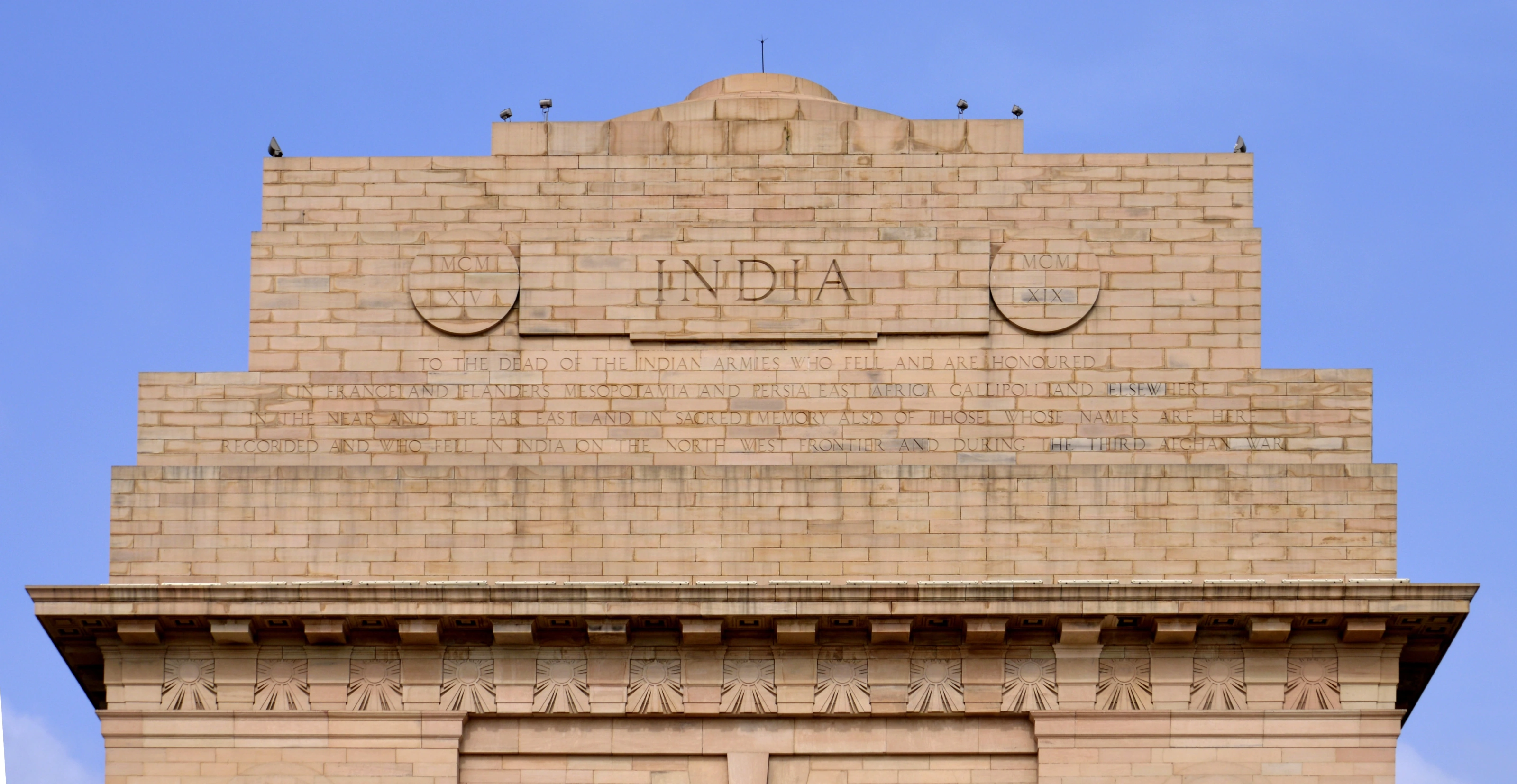
At the Delhi Durbar of 1911, King George V announced that the capital would move from Calcutta, and the foundation stone was laid that December. Planned by Edwin Lutyens and Herbert Baker, New Delhi was inaugurated in 1931. Its ceremonial axis, Kartavya Path, leads to India Gate, a 42-meter arch by Lutyens that honours 74,187 Indian Army soldiers killed between 1914 and 1921; 13,313 names are inscribed on it. Since 2022, the Amar Jawan Jyoti flame burns at the adjacent National War Memorial.
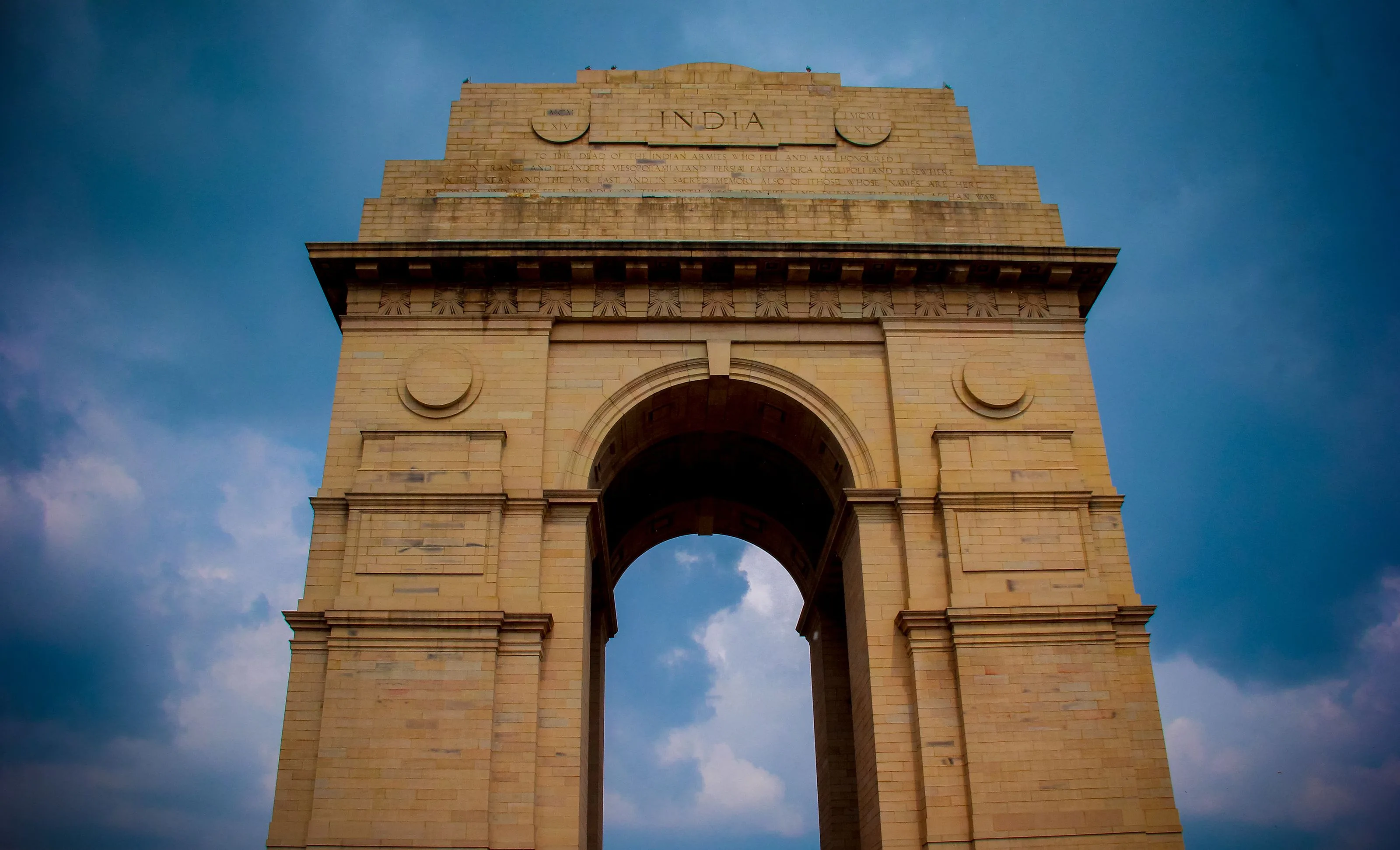
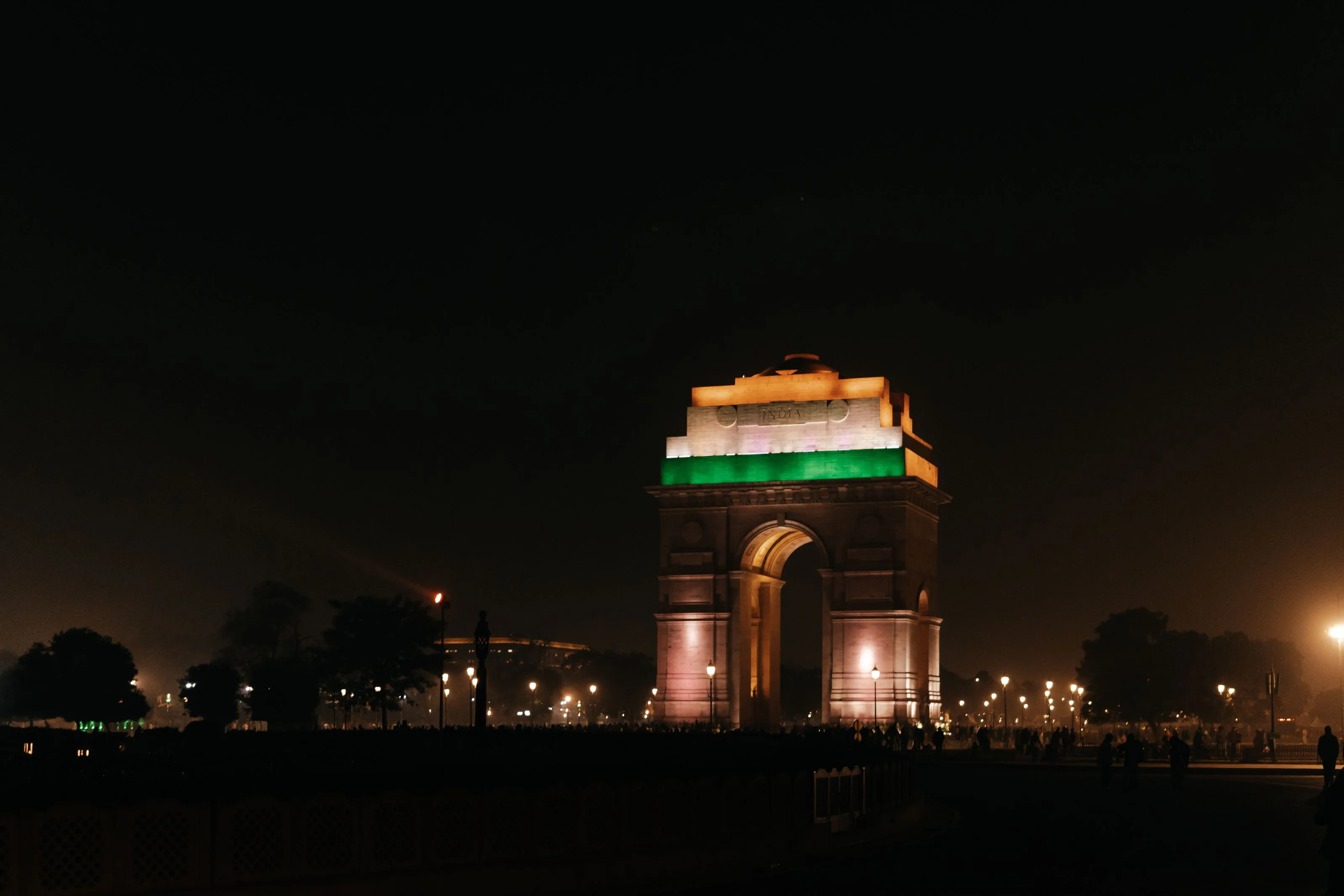
The lawns around the monument are busy in the evening, when it is floodlit; in summer, the heat makes late afternoon a better time to come than midday.
World Heritage
Three UNESCO sites within reach of the metro
| Monument | Good to know |
|---|---|
| Red Fort (Lal Qila) | Built by Shah Jahan between 1639 and 1648, covering 103 ha; listed in 2007. Closed on Mondays. |
| Qutb Minar | Brick minaret begun around 1193. Open 7 am to 5 pm. |
| Humayun's Tomb | Architectural forerunner of the Taj Mahal. Open 6 am to 6 pm. |
Every August 15 since 1947, the Prime Minister has raised the national flag at the Red Fort, whose walls rise 18 to 33 meters. Foreigners pay an entry fee far higher than Indians do, in the order of several hundred rupees depending on the source: check it on the official Archaeological Survey of India website before you visit. Arriving at opening time, especially at Humayun's Tomb, means fewer crowds and cooler air.
Places of worship
From the Lotus Temple to Jama Masjid
The Lotus Temple and Akshardham
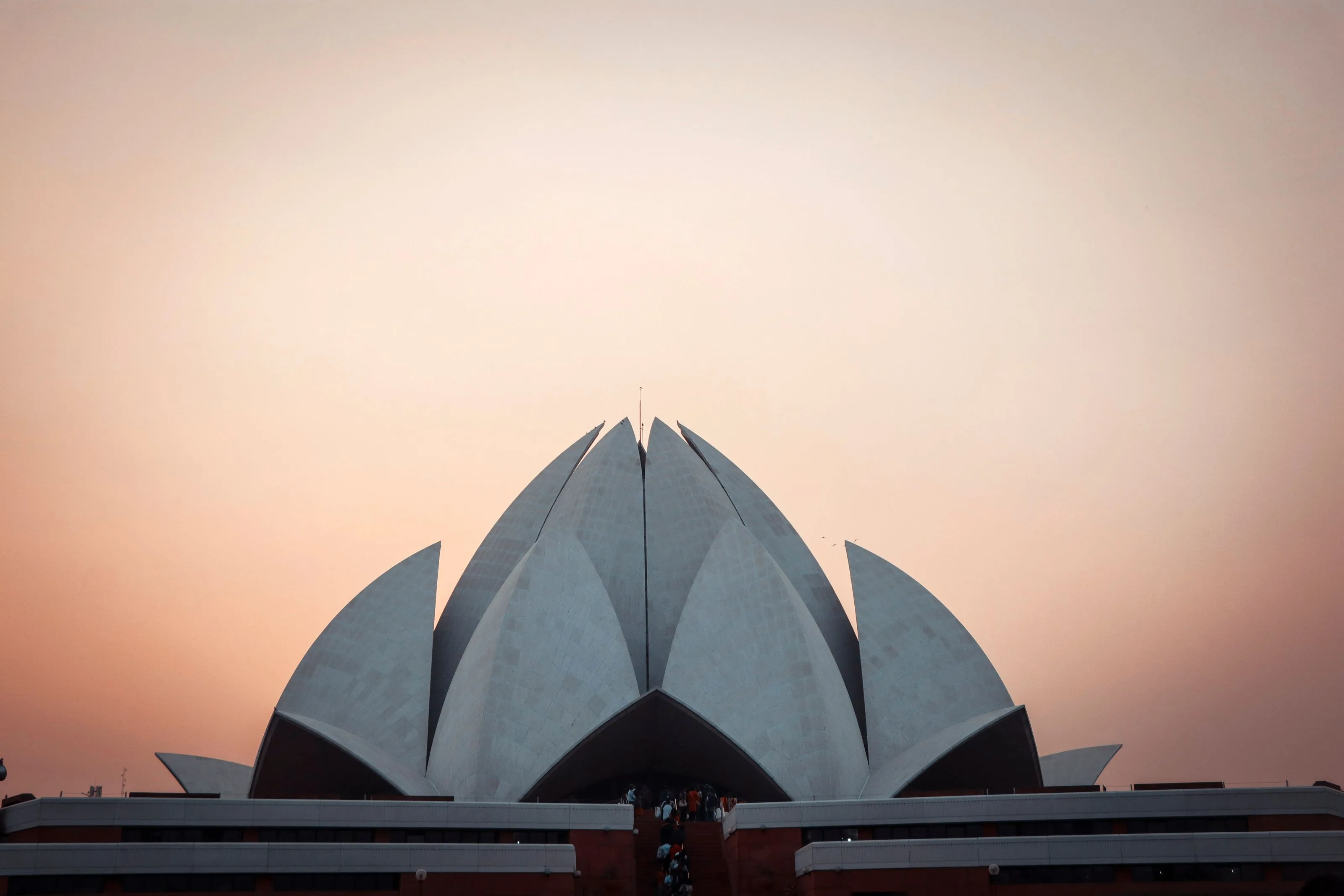
Completed in 1986, the lotus-shaped Baha'i temple is free to enter and open Tuesday to Sunday. On the bank of the Yamuna, the vast Akshardham temple complex opened in 2005.
Jama Masjid
India's largest mosque, in red sandstone and white marble, is free to enter, preferably in the morning, though a camera fee applies. Wear long clothing, and expect non-Muslim visitors to be turned away at prayer times.
Museums
From the National Museum to the Crafts Museum
| Museum | Good to know |
|---|---|
| National Museum | The country's main archaeology and art museum, on Janpath; the foreigner ticket is much higher than the Indian one, with a French audio guide offered according to Wikivoyage FR |
| Crafts Museum | Devoted to Indian handicrafts (Wikivoyage FR) |
| National Gandhi Museum and Indira Gandhi Memorial Museum | Two museums on the country's modern political history (Wikivoyage FR) |
| National Gallery of Modern Art | Modern and contemporary Indian art, near India Gate |
| Red Fort | The foreigner ticket includes the fort's museums (Wikivoyage FR) |
Several state museums close on Mondays: check hours and prices before you set out, as figures vary between sources.
Food
Parathas, chaat, spices and butter chicken
Old Delhi's Paranthe Wali Gali is a lane devoted to stuffed flatbreads. Nearby, Khari Baoli is said to be Asia's largest spice market. Karim's, near Jama Masjid, was founded in 1913 by Haji Karimuddin, a former Mughal court cook, and Moti Mahal in Daryaganj, open since 1947, is often credited with inventing butter chicken and dal makhani, though other sources dispute that claim.
Chaat and sweets
Delhi chaat is a deep-fried pastry shell stuffed with potatoes or lentils and topped with yoghurt, chutneys and spices; pani puri and jalebis, sweet fried spirals, are hugely popular (Wikivoyage EN).
Drinks
Masala chai is sold on every corner; lassi, a yoghurt drink, cools you down in summer.
Advice
Wikivoyage EN calls Delhi one of the best street-food cities in India but advises against food left open to the air: choose dishes cooked to order and served hot, and busy stalls.
Delhi airport
From the airport to the center by metro
Delhi IGI Airport
India's capital airport, about 16 km from the city center (Wikipedia EN). Terminal 3 handles international airlines and welcomed more than 79 million passengers in the 2024-25 financial year. The Airport Express metro line links Terminal 3 to New Delhi station in 15 to 20 minutes.
| From the airport | Good to know |
|---|---|
| Airport Express (metro) | 15 to 20 minutes to New Delhi station, trains roughly every 10 to 15 minutes, from 5 am to about 11:30 pm; a single fare of a few dozen rupees |
| Prepaid taxi | Official booths in the terminal: a fixed price announced before you leave, with no haggling |
| Ride-hailing app | Uber, Ola or Rapido let you check the price before the ride (Wikivoyage DE) |
| Auto-rickshaw | To be negotiated; older guides cite about 150 to 200 rupees, often more in practice |
Touts around stations and fake tourist offices are common: use the official prepaid taxi counters or ride-hailing apps.
Getting around
Metro, auto-rickshaws and ride-hailing
The Delhi Metro, opened in 2002, is the most extensive network in the country; fares run from 10 to about 60 rupees depending on distance (Wikivoyage EN and DE), with a rechargeable card and tourist cards, and the first coach is reserved for women. It runs from about 6 am to 11 pm.
Taxis and autos
Taxi meters are often rigged, so agree a price first; most trips in the city cost 200 to 500 rupees (Wikivoyage EN and FR). In an auto-rickshaw you should never need to pay more than 150 rupees within the city (Wikivoyage EN and FR); a cycle-rickshaw for 1 to 2 km costs around 20 rupees, to be negotiated.
Buses
Buses cost 5 to 25 rupees but are crowded; keep them for simple trips.
Budget
An affordable destination, with major monuments priced higher for foreigners
India remains one of Asia's most affordable destinations: street meals, transport and basic lodging cost little, while big hotels and luxury restaurants, especially in the New Delhi district, play in another league. Several places of worship, such as the Lotus Temple and Jama Masjid, are free; the major monuments have a separate, much higher ticket for foreigners.
What to expect
Taxes may be added to the hotel prices shown (Wikivoyage EN), and a guide or a day-long taxi quickly adds to the bill; the metro and local meals, by contrast, stay very cheap.
How to save
Favour the metro, restaurants used by locals and grouped visits on the same day, and watch flights with an alert.
The Golden Triangle
Delhi, Agra and Jaipur
Delhi to Agra
About 200 km, 2 to 3.5 hours by train. The Gatimaan Express runs six days a week, every day except Friday, when the Taj Mahal is closed.
Agra to Jaipur
About 240 km to Jaipur, in Rajasthan.
Jaipur to Delhi
About 393 km by train, roughly 4 h 40 to 5 h 30, to close the loop.
When to go
When to visit New Delhi?
October to mid-December
One of the two best windows for sightseeing, around 33 degrees C by day in October. Air quality, however, deteriorates, and November is the worst month for smog, with crop burning and Diwali fireworks.
Late December to January
Mild days around 20 degrees C in January, cool nights near 7 degrees C and sometimes fog; air pollution stays high until February.
February to mid-March
The second good window, before the heat of April sets in.
April to September
Punishing heat, up to 45 degrees C between April and July (an average high of about 42 degrees C in late May), then the monsoon from the end of June, with the heaviest rain in July and August. August has the cleanest air of the year.
Delhi receives about 775 mm of rain a year (Wikipedia EN), almost all of it in the monsoon. From November to January, smog can disrupt flights and trains, so leave some slack on connections.
Practical tips
Avoiding traps on arrival
Touts around stations and fake tourist offices are common. For a taxi, use the official prepaid counters or a ride-hailing app. Allow two to three days for the city before heading to Agra, and remember that the Taj Mahal is closed on Fridays and the Red Fort on Mondays.
In pictures
New Delhi in pictures
You might also like
Similar destinations
FAQ
Frequently asked questions about flights to New Delhi
How do I get from Delhi airport to the city center?
The Airport Express metro line runs from Terminal 3 to New Delhi station in 15 to 20 minutes. If you take a taxi, use an official prepaid counter or a ride-hailing app.
What's the best time to visit New Delhi?
October to mid-December and February to mid-March. April to July can hit 45 degrees C, and air quality is at its worst from October to February, especially in November.
How many days do you need in New Delhi?
Two to three days for the city, plus a day trip or an overnight in Agra. Remember that the Taj Mahal is closed on Fridays and the Red Fort on Mondays.
How much should I budget for New Delhi?
India remains one of Asia's most affordable destinations. Several places of worship, like the Lotus Temple and Jama Masjid, are free; the major monuments have a separate foreigner ticket, to be checked on the official website before your visit.
How do I get around New Delhi?
The metro is the most reliable and cheapest option; ride-hailing and auto-rickshaws, agreed before you board, fill the gaps. Allow 200 to 500 rupees for a taxi ride within the city.
What should I eat in Delhi?
The parathas of Paranthe Wali Gali, chaat, Karim's kebabs and butter chicken; choose dishes cooked to order and served hot.
How much does a flight to New Delhi usually cost?
It mostly depends on your departure city, the season and how far ahead you book. The "deals" section above shows real examples of prices already detected by SniperAir for this destination.
How do I get alerted when a flight to New Delhi drops below my budget?
Create an alert profile with your departure airport, New Delhi as the destination and your maximum budget. You'll be notified automatically the moment a matching price is detected.
Ready to head to New Delhi?
Set your budget and let SniperAir monitor fares for you.
Create my alert