
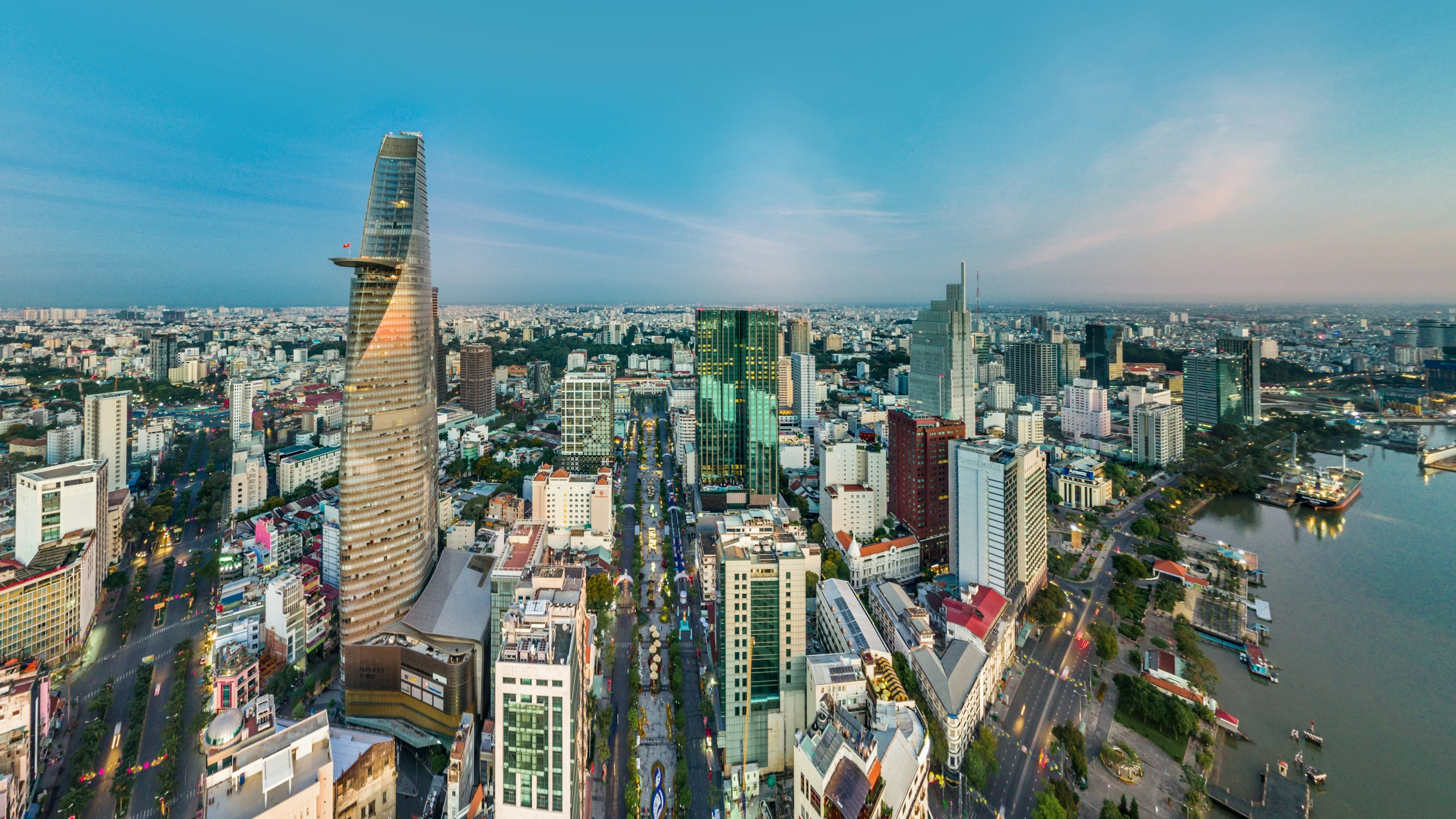
Cheap flights to Ho Chi Minh City
Set your departure airport and maximum budget: SniperAir tracks prices to Ho Chi Minh City and alerts you the moment a deal matching your criteria appears.
Quick summary
Country
Vietnam
Continent
Asia
Airport
SGN
Currency
Vietnamese dong (VND)
Time zone
UTC+7 (no daylight saving time)
Deals already spotted to Ho Chi Minh City
Real flight examples detected by SniperAir, with their reference price.
Loading examples…
Why track Ho Chi Minh City with SniperAir
You do not need to compare prices every day
Choose your departure
Enter your departure airport and your maximum budget for a flight to Ho Chi Minh City (SGN).
SniperAir keeps watch
Our systems continuously compare new prices with the real price history of the route. SniperAir monitors prices and alerts you: it does not sell or book tickets.
You receive an alert
As soon as a price matches your criteria, you are notified, without having searched for anything yourself.
Airport and getting into town
An airport close to the centre, then bus, taxi or app
Tan Son Nhat (SGN)
Tan Son Nhat Airport lies about 8 km from the centre according to Wikivoyage (EN); it is Vietnam's largest airport, with many regional flights, long-haul services to Australia, Europe and the United States, and around 19 domestic connections. City bus 152 runs every 15 minutes at a very low fare; the express bus 109 serves the centre from the international terminal. Taxis and ride-hailing apps are another option, but traffic slows heavily at peak hours. Wikivoyage (EN) mentions a temporary free-bus measure: check it before counting on it.
Distances and times are approximate, based on Wikivoyage (EN, DE); timetables and arrangements change, so check them before you travel. We do not quote fares.
Ho Chi Minh City is Vietnam's most populous city and its main economic centre, according to Wikipedia (FR). Many residents and travellers still say Saigon: officially the name now refers only to the centre, District 1 and its surroundings, according to Wikipedia (EN) and Wikivoyage (DE). The city lies on the Saigon River, near the Mekong delta, about 1,760 km south of Hanoi according to Wikipedia (FR, ES).
Landmarks
Notre-Dame, City Hall, the Reunification Palace and the towers of downtown
Downtown Saigon packs a French colonial legacy, 1960s buildings and a skyscraper skyline into a few kilometres. Wikipedia (EN) lists City Hall, the Central Post Office, Notre-Dame Cathedral and Ben Thanh Market among the colonial buildings. The places below are illustrated; Cholon and its temples are described at the end of the section.
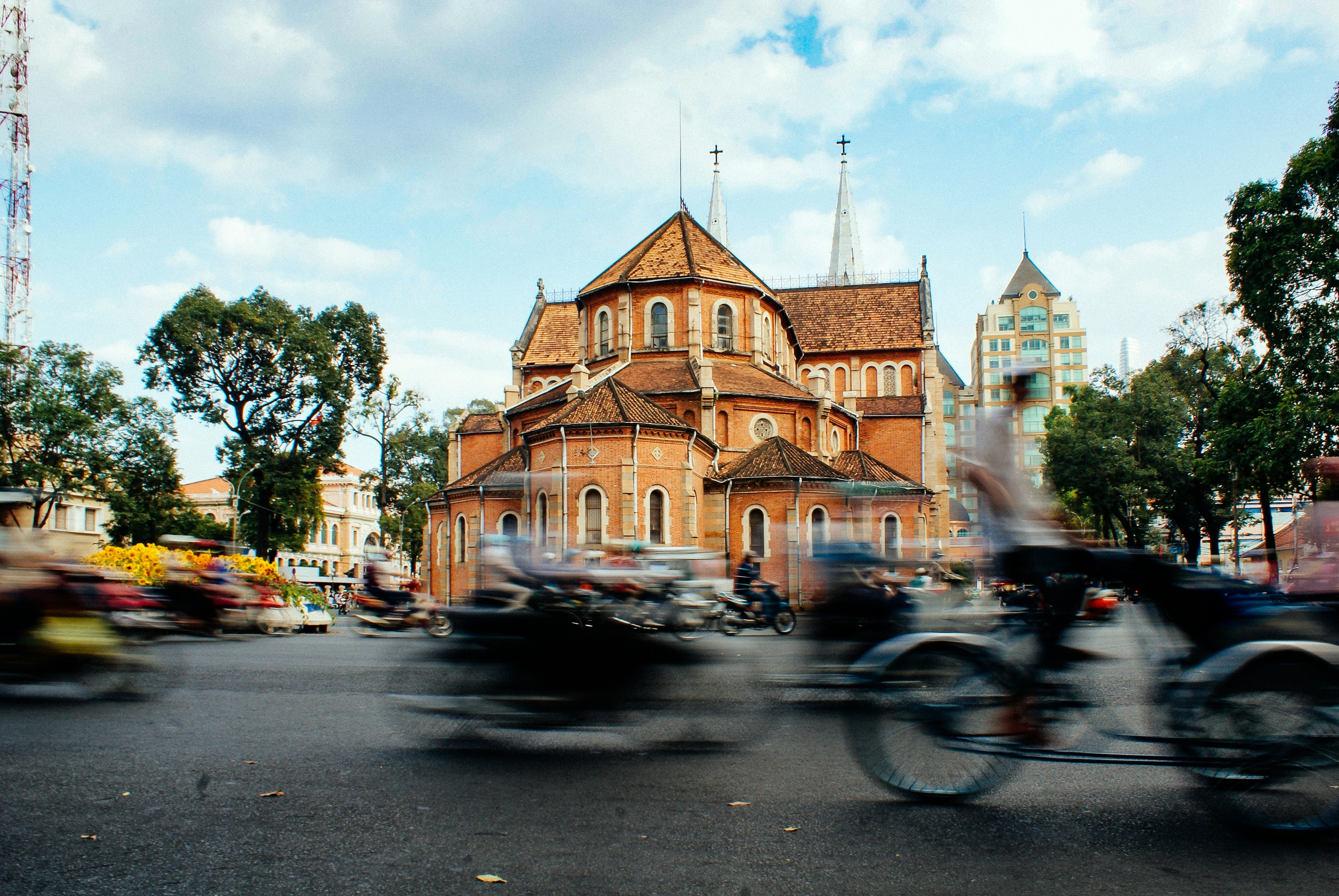
Notre-Dame Cathedral
Built in the French colonial period, Saigon's Notre-Dame Cathedral is made of red brick and dominated by two bell towers. It faces the Central Post Office, another colonial building in the centre, built in the late 19th century. The area is constantly buzzing with two-wheelers; for photographs, aim for early morning or late afternoon.
Bitexco, the riverfront and the modern centre
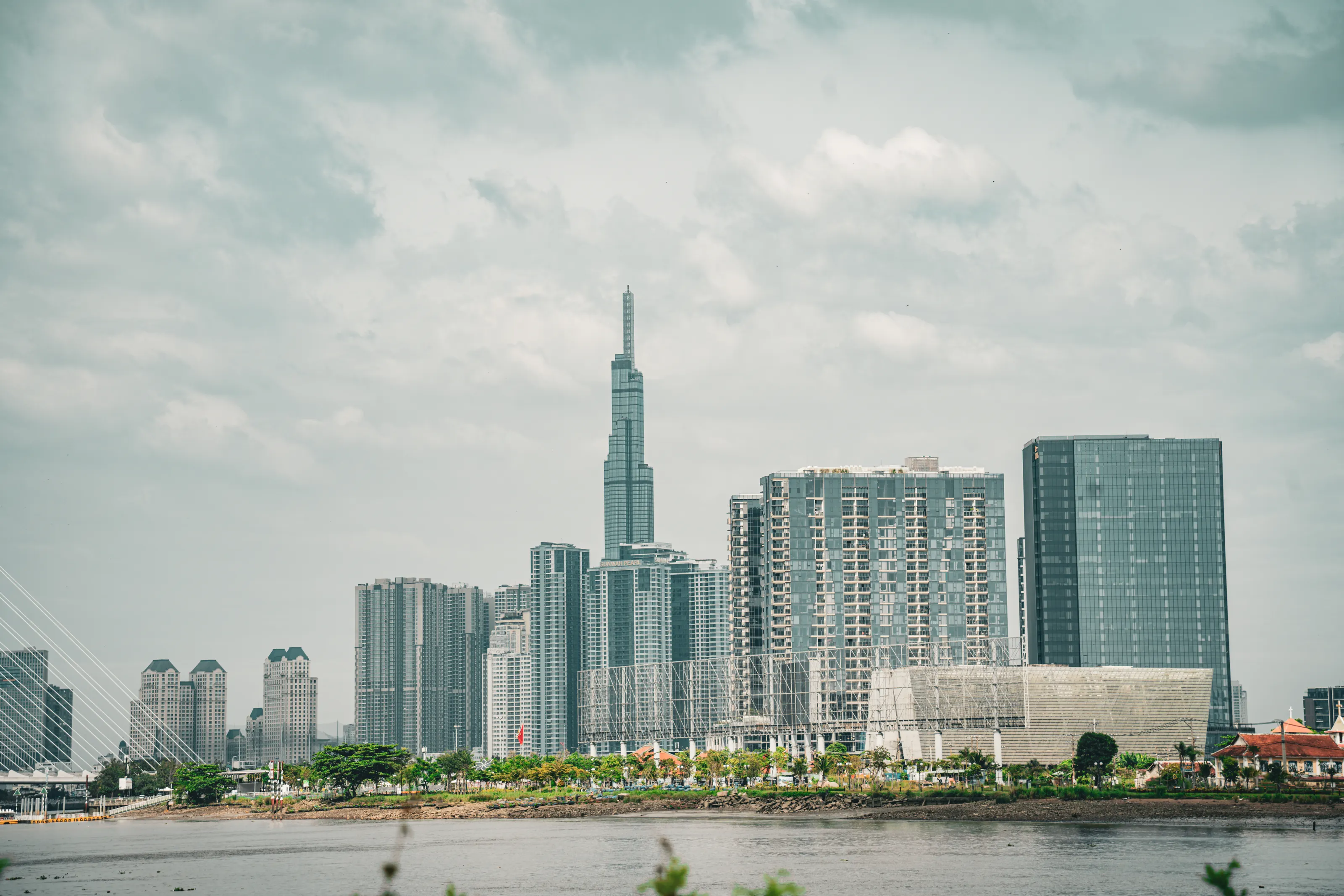
The Bitexco tower, with its protruding platform, and further away Landmark 81 are among the modern landmarks cited by Wikipedia (EN). Between the towers and the Saigon River, the centre mixes pedestrian streets, office blocks and older buildings. The area around Dong Khoi and Nguyen Hue streets is the tourist heart, and the river can also be seen by boat.
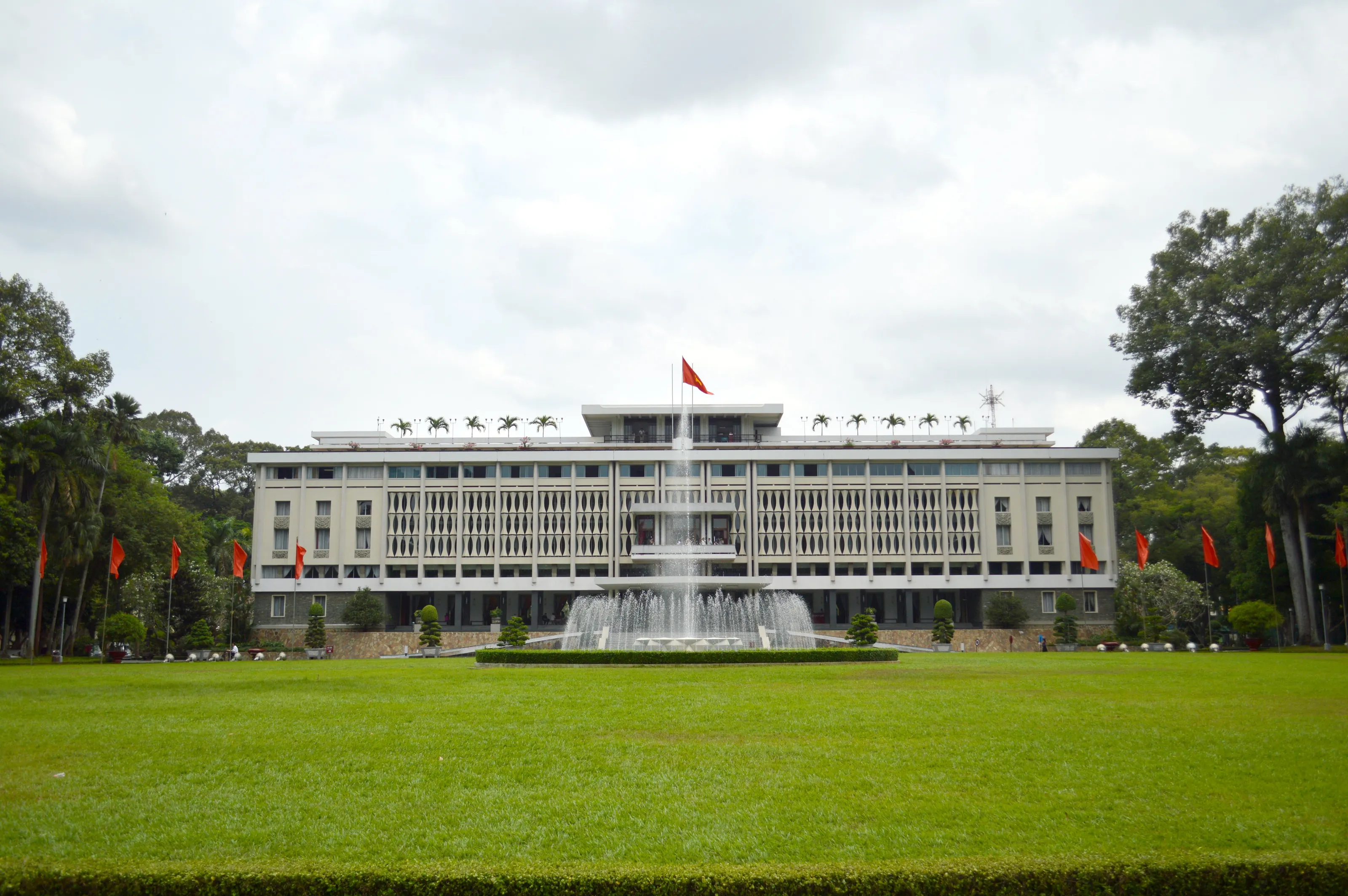
The Reunification Palace
Formerly the Independence Palace of South Vietnam, built from 1962 to 1966, the palace has been left almost untouched since the fall of Saigon, according to Wikivoyage (EN). Its four floors, restored to the atmosphere of the 1960s, include reception rooms, meeting rooms and an underground bunker. There is a cafe in the grounds.
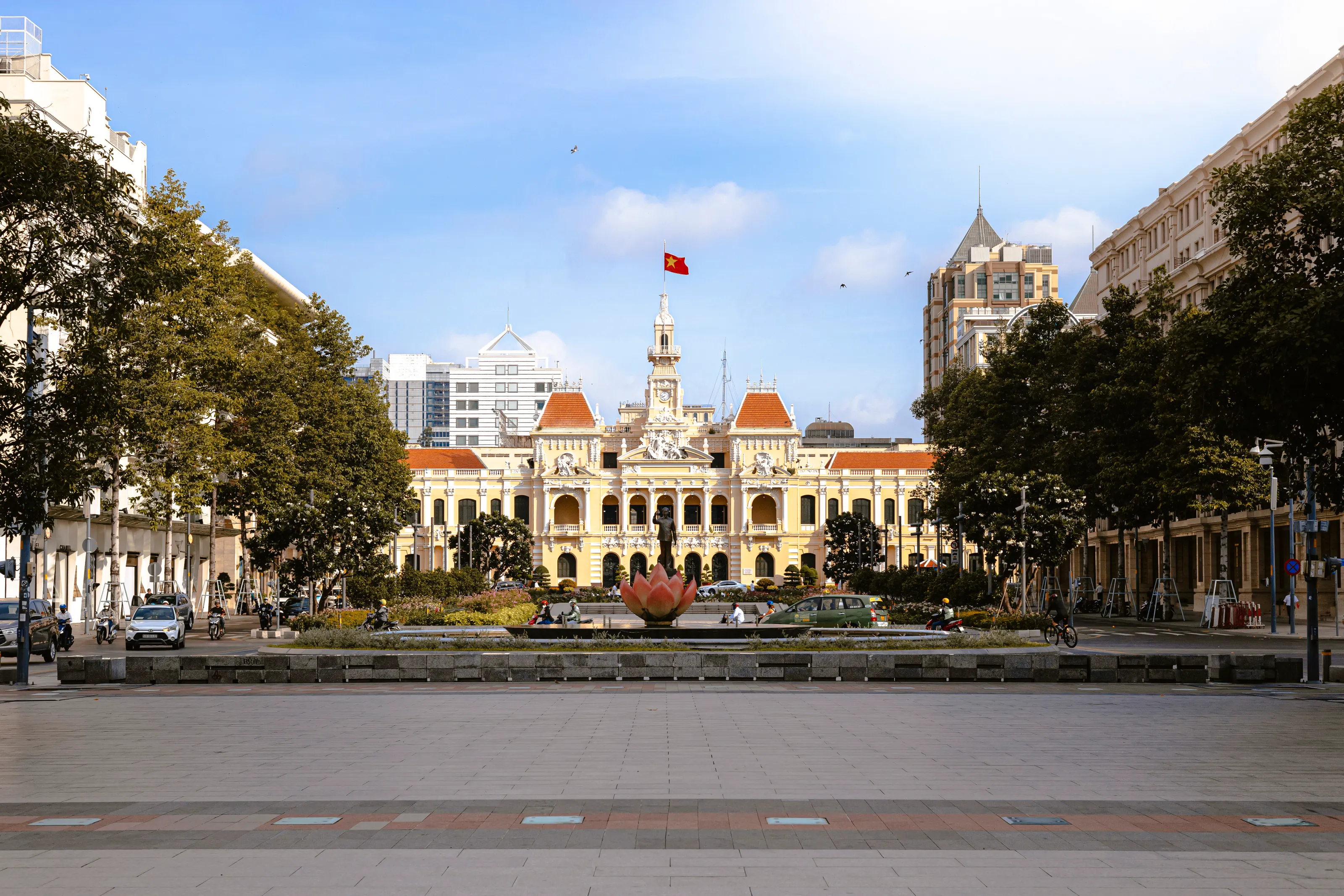
City Hall
This French colonial-style building in the heart of the city is one of its most photographed. It faces a long pedestrian square leading down towards the river. It is generally not open to visitors: it is admired from outside, by day or by night.
Landmark 81 and the river
The Landmark 81 skyscraper towers over the Saigon River and has an observation platform, noted by Wikivoyage (FR). It is one of the symbols of the city's modernisation, along with new waterfront districts. Clear evening weather gives the best views.
Cholon, Ben Thanh Market and nightlife
Cholon, the Chinese district, has temples such as Thien Hau Temple, devoted to the sea goddess, and pagodas such as Quan Am, built in the late 19th century by the Fujian Chinese community according to Wikipedia (DE). Ben Thanh Market, also colonial, is one of the downtown landmarks. Pham Ngu Lao and Bui Vien streets concentrate bars and nightlife per Wikipedia (EN).
Museums and culture
War memory, city history and southern culture
War and memory
The War Remnants Museum, opened less than five months after the fall of Saigon, is one of the city's most visited museums; it covers the Vietnam War from the Vietnamese point of view, with photographs and displayed equipment. The subject remains sensitive, and Wikivoyage (EN) advises against raising the war with locals, since many Southerners lost relatives or hold varied opinions.
City history
The Ho Chi Minh City Museum, housed in a colonial-era building, traces the city's history from prehistory to the present and presents local culture, according to Wikivoyage (EN). The Southern Women's Museum, often overlooked, is close to the War Remnants Museum.
Palaces, temples and pagodas
Besides the Reunification Palace, the city has many Chinese temples and pagodas in Cholon, with offerings, incense and colourful altars. We do not quote prices, since they change, and opening hours vary by season and public holidays.
Food and drink
Pho, banh xeo, baguette sandwiches and Cholon cooking
Pho, banh xeo and central soups
Ho Chi Minh City offers the country's widest variety of Vietnamese and international food according to Wikivoyage (EN). Beyond pho there is banh xeo, a crisp crepe filled with meat, shrimp or mushrooms, and Hue beef noodle soup (bun bo Hue). Restaurants in the centre are getting pricier, and authentic budget places are mostly found away from tourist streets.
French and Chinese legacies
French influence shows in the baguettes that bakeries fill with cheese, meat or onions. The Chinese community of Cholon has left its mark, with many Chinese restaurants adapted to Vietnamese tastes. Around the Jamiul Anwar Mosque in District 8, stalls serve halal dishes.
Cafes and drinks
Cafes are everywhere and are a city institution. Iced coffee is drunk on terraces, in the shade, during the hot hours. In the evening, Bui Vien street is livelier and noisier.
Getting around
Motorbikes, buses, metro and river
Two-wheelers and taxis
Traffic crawls for most of the day and long walks are impractical in the heat, according to Wikivoyage (EN). Two-wheelers dominate; pedestrians should cross slowly and at a steady pace. For taxis and apps, check the fare or the meter before setting off.
Buses and metro
Metro Line 1 has been running since late 2024 according to Wikivoyage (DE): it links Ben Thanh Market in the centre to Suoi Tien Park in the east, over about 20 km and 14 stations, with contactless payment by card or e-wallet. Air-conditioned buses complete the network, with city lines at 5,000 to 10,000 VND per Wikivoyage (DE), which notes low fares; check them.
On the water and on day trips
A water bus runs along the Saigon River, a calm way to see the city per Wikivoyage (DE). From the city, day trips head to the Cu Chi tunnels, where partisans hid during the war, or to the Mekong delta.
Budget and precautions
A city getting pricier, with simple precautions
Price level
Ho Chi Minh City is pricier than many cities in the country, and restaurant prices in the centre have risen sharply per Wikivoyage (EN). We do not quote figures, as we could not cross-check them on two independent open sources.
Payments
Contactless payment by card or e-wallet is growing, notably on the metro; cash remains useful in markets and small places. Compare prices before buying in very touristy areas.
Flights and precautions
SniperAir monitors prices to SGN and compares them with the route's history, but it does not sell or book tickets. Check entry requirements for Vietnam for your nationality with the official authorities, as they change. In town, keep an eye on your bag and phone, particularly near the roadside.
When to go
Dry and rainy seasons: December to February is the mildest
Dry season (December to February)
The most pleasant period according to Wikivoyage (EN): lower temperatures and humidity, clearer skies. It is also high season for many visitors.
Heat (March to April)
The hottest months of the year, with temperatures that can reach 40 degrees C according to Wikivoyage (EN, ES). Plan breaks in the shade or in air-conditioned spaces.
Rainy season (May to October)
Long, hot and humid, with sometimes cloudy days but also sunny spells per Wikivoyage (EN). Downpours of one to two hours often fall in late afternoon, notably in July and August according to Wikivoyage (ES).
Year end (November)
A transition: the rainy season ends and temperatures drop. Street flooding caused by tides, rain and ground subsidence can occur in the wet season per Wikipedia (EN).
Ho Chi Minh City has a tropical savanna climate, with average humidity of 78 to 82% and around 1,800 mm of rain a year over about 150 days according to Wikipedia (EN). The rainy season runs from May to October and the dry season from December to May. We do not give monthly averages because sources differ.
By length of stay
What to do in Ho Chi Minh City depending on how long you stay
Downtown Saigon
Notre-Dame and the Central Post Office, City Hall, the Reunification Palace, Ben Thanh Market and dinner in a lively street.
Museums and Cholon
The War Remnants Museum, the city museum, Cholon and its temples, a metro or water-bus ride and a skyline view from a skyscraper.
Day trips
The Cu Chi tunnels, the Mekong delta on a day trip or longer, or a flight to the country's beaches, with the city as a base.
In pictures
Ho Chi Minh City in pictures
You might also like
Similar destinations

FAQ
Frequently asked questions about flights to Ho Chi Minh City
How do I get from Ho Chi Minh City airport to the centre?
Tan Son Nhat (SGN) is about 8 km from the centre. Bus 152 runs every 15 minutes, express bus 109 also serves the centre, and taxis or ride-hailing apps are another option. Check timetables and fares on the spot.
When is the best time to visit Ho Chi Minh City?
From December to February, when temperatures and humidity are lower. March and April are the hottest; the rainy season runs from May to October.
Is Ho Chi Minh City expensive?
More than other cities in the country, especially in downtown restaurants. We do not quote figures because we could not cross-check them on two independent sources.
How long should I stay in Ho Chi Minh City?
Two days for downtown; three to four days with museums, Cholon and a day trip; more for Cu Chi and the Mekong delta.
How do I get around Ho Chi Minh City?
On foot downtown, by bus, metro (Line 1), taxi or app. Traffic is heavy: check the price before you set off.
What should I eat in Ho Chi Minh City?
Pho, banh xeo, a baguette sandwich, Hue beef noodle soup and Cholon dishes; halal dishes in District 8.
How much does a flight to Ho Chi Minh City usually cost?
The price depends mainly on your departure city, the time of year and how far ahead you book. The "opportunities" section above shows real examples of prices SniperAir has already detected to this destination.
How do I get alerted when a flight to Ho Chi Minh City drops below my budget?
Create an alert profile with your departure airport, Ho Chi Minh City as the destination and your maximum budget. You are notified automatically as soon as a matching price is detected.
Ready to head to Ho Chi Minh City?
Set your budget and let SniperAir monitor fares for you.
Create my alert