Cheap flights to Wrocław
Set your departure airport and maximum budget: SniperAir tracks prices to Wrocław and alerts you the moment a deal matching your criteria appears.
Quick summary
Country
Poland
Continent
Europe
Airport
WRO
Currency
Polish zloty (PLN)
Time zone
UTC+1 (UTC+2 in summer)
Deals already spotted to Wrocław
Real flight examples detected by SniperAir, with their reference price.
Loading examples…
Why track Wrocław with SniperAir
You do not need to compare prices every day
Choose your departure
Enter your departure airport and your maximum budget for a flight to Wrocław (WRO).
SniperAir keeps watch
Our systems continuously compare new prices with the real price history of the route. SniperAir monitors prices and alerts you: it does not sell or book tickets.
You receive an alert
As soon as a price matches your criteria, you are notified, without having searched for anything yourself.
Airport and getting into town
An airport south-west of the centre, linked by bus
Wrocław Copernicus (WRO)
Copernicus Airport serves Wrocław and is Poland's fifth busiest by passenger numbers, according to Wikipedia (FR). LOT, Lufthansa, SAS, KLM and several low-cost carriers such as Ryanair and Wizz Air fly here, says Wikivoyage (EN). City buses run from the terminal to the centre during the day, with a night service; Wikivoyage (DE) gives about 35 minutes for roughly 12 km, and the route number is 106 in Wikivoyage (EN) but 406 in Wikivoyage (ES), so check it on the spot.
Distances and times are approximate, from Wikivoyage (DE, EN, ES); schedules and routes change, so check them before you travel. We do not quote fares.
Wrocław, the historic capital of Silesia and of Lower Silesian Voivodeship, has about 673,000 inhabitants (672,929 in 2021 per Wikipedia FR and ES). It stretches along the Oder across twelve islands linked by between 100 and 300 bridges, depending on the criteria, hence the nickname Venice of Poland (Wikipedia DE). Trains run from Wrocław Główny to all major Polish cities (Wikivoyage EN).
Landmarks
Market Square, Cathedral Island, the university and Centennial Hall
Wrocław has changed hands repeatedly: the Kingdom of Poland, Bohemia, the Austrian Empire, Prussia and Germany, before becoming Polish again in 1945, notes Wikivoyage (EN). That history can be read in its buildings. The city was a European Capital of Culture in 2016 according to the same source. The places below are illustrated; the dwarfs and museums follow.
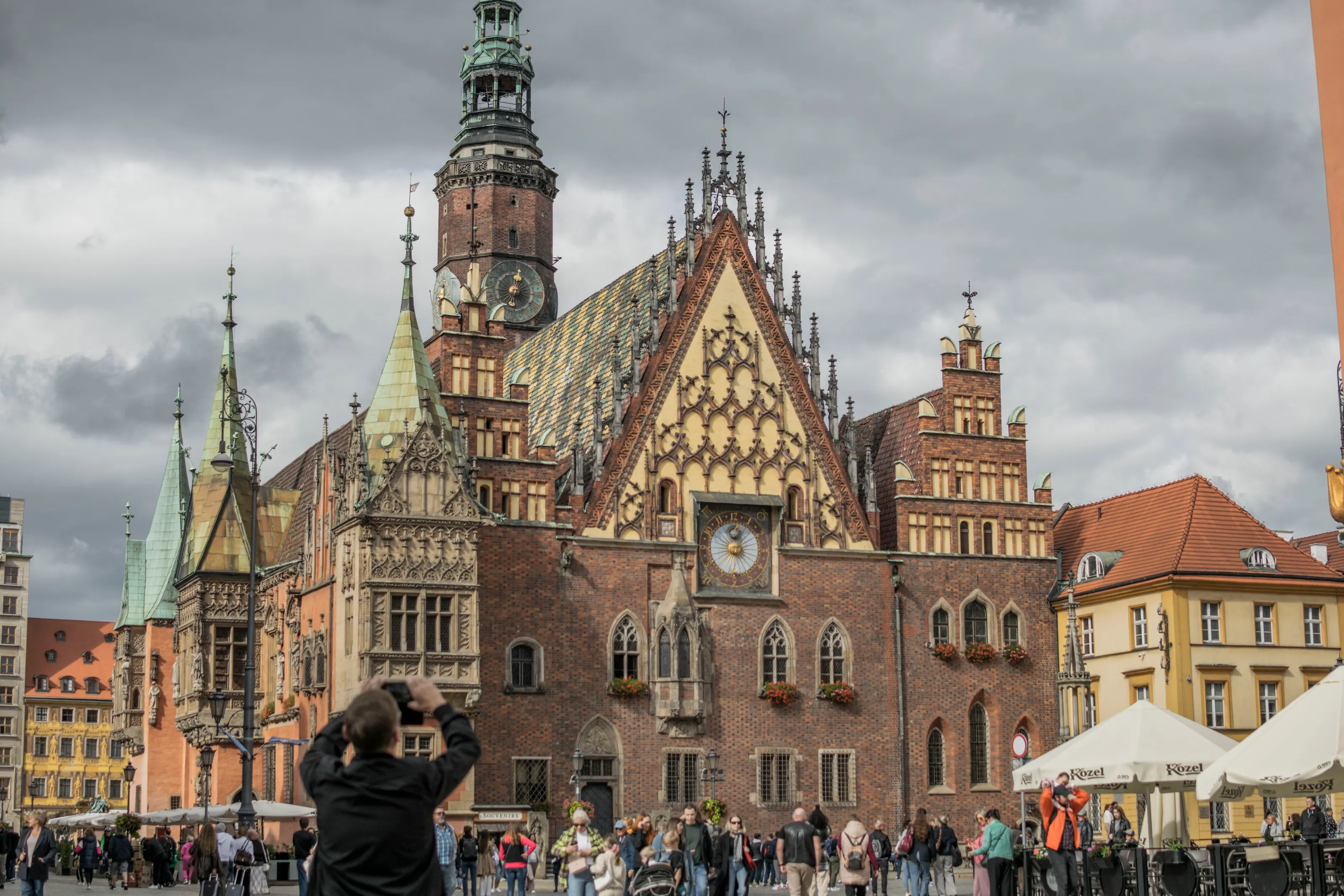
The town hall and Market Square
The Market Square (Rynek) is the heart of the city, dominated by the old Gothic town hall, which Wikipedia (FR) lists among the main monuments together with the new town hall. Terraces, cafes and ornate facades make it the centre of local life; Wikivoyage (DE) adds that the venues on the square are mostly for tourists and pricier than those on nearby streets.
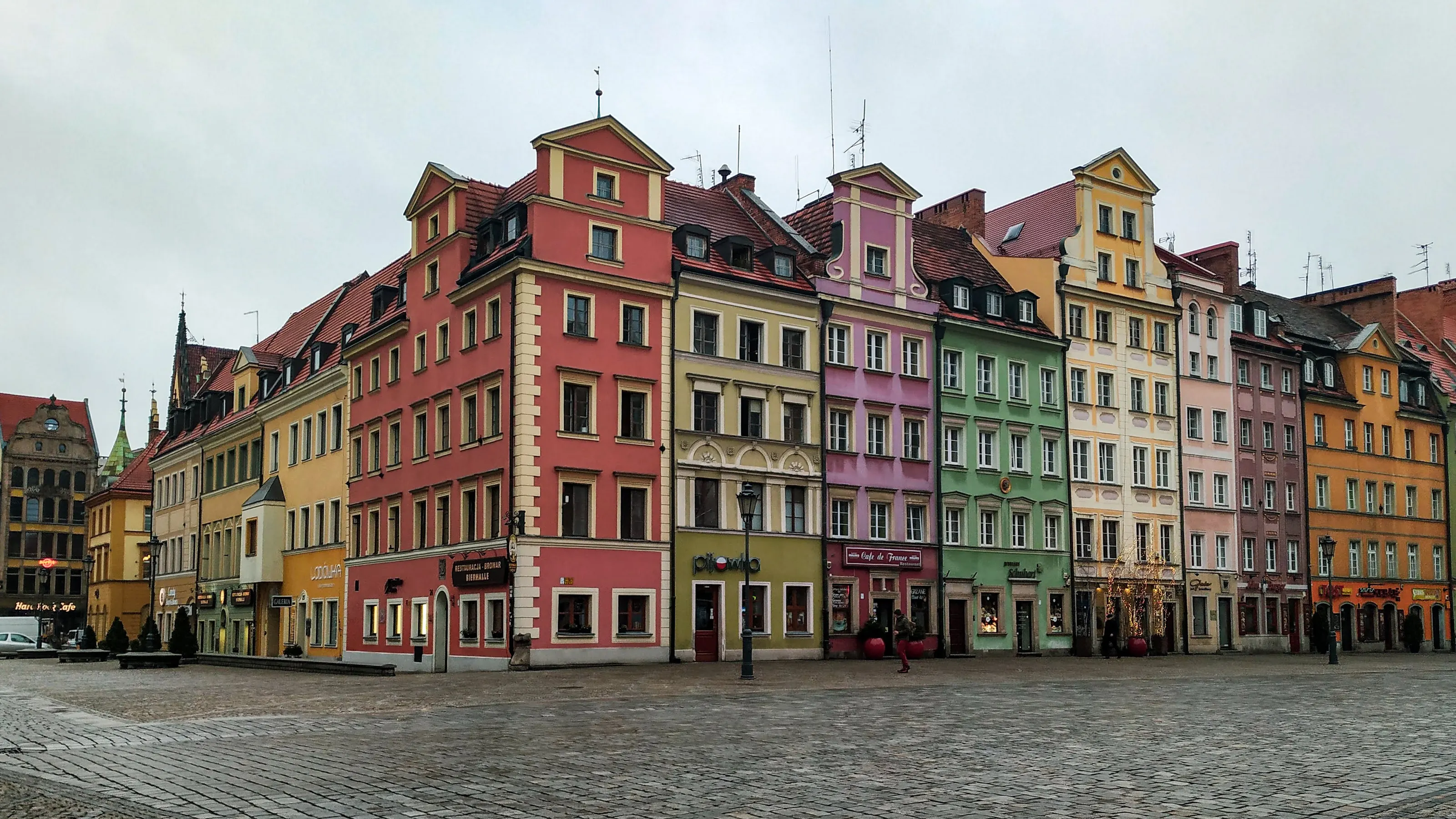
The colourful houses of the Rynek
Gabled houses with painted facades line the square and can be photographed from one end to the other. Nearby, Salt Square (Plac Solny), a former salt market, is now a flower market according to Wikivoyage (EN).
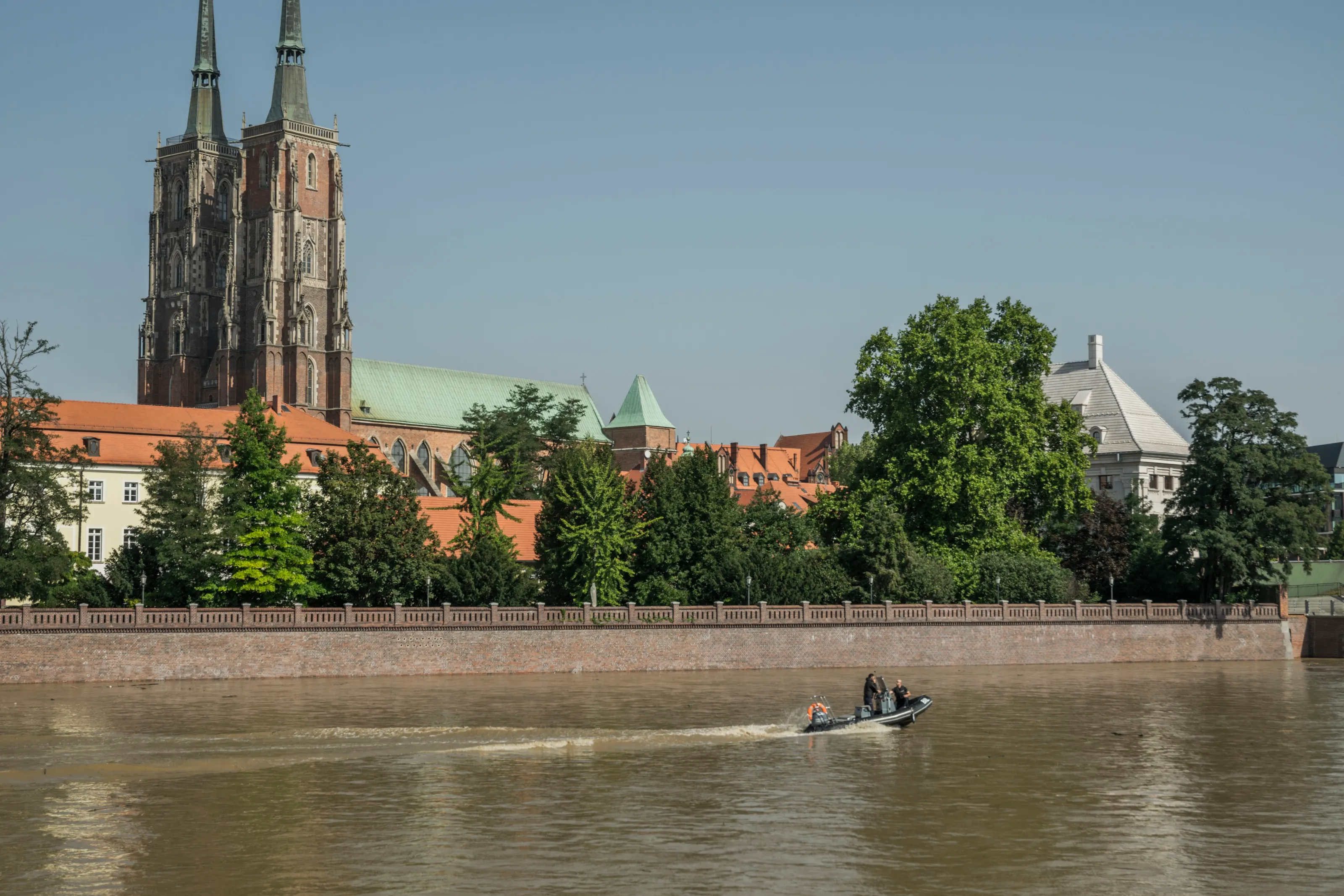
Cathedral Island (Ostrów Tumski)
This group of islands on the Oder holds St. John the Baptist Cathedral, which dates back to the 13th century according to Wikivoyage (EN), and several churches. Wikivoyage (EN) recommends an evening stroll, when the hand-lit lamps are lit. The cathedral's twin spires can be seen from far along the bridges.
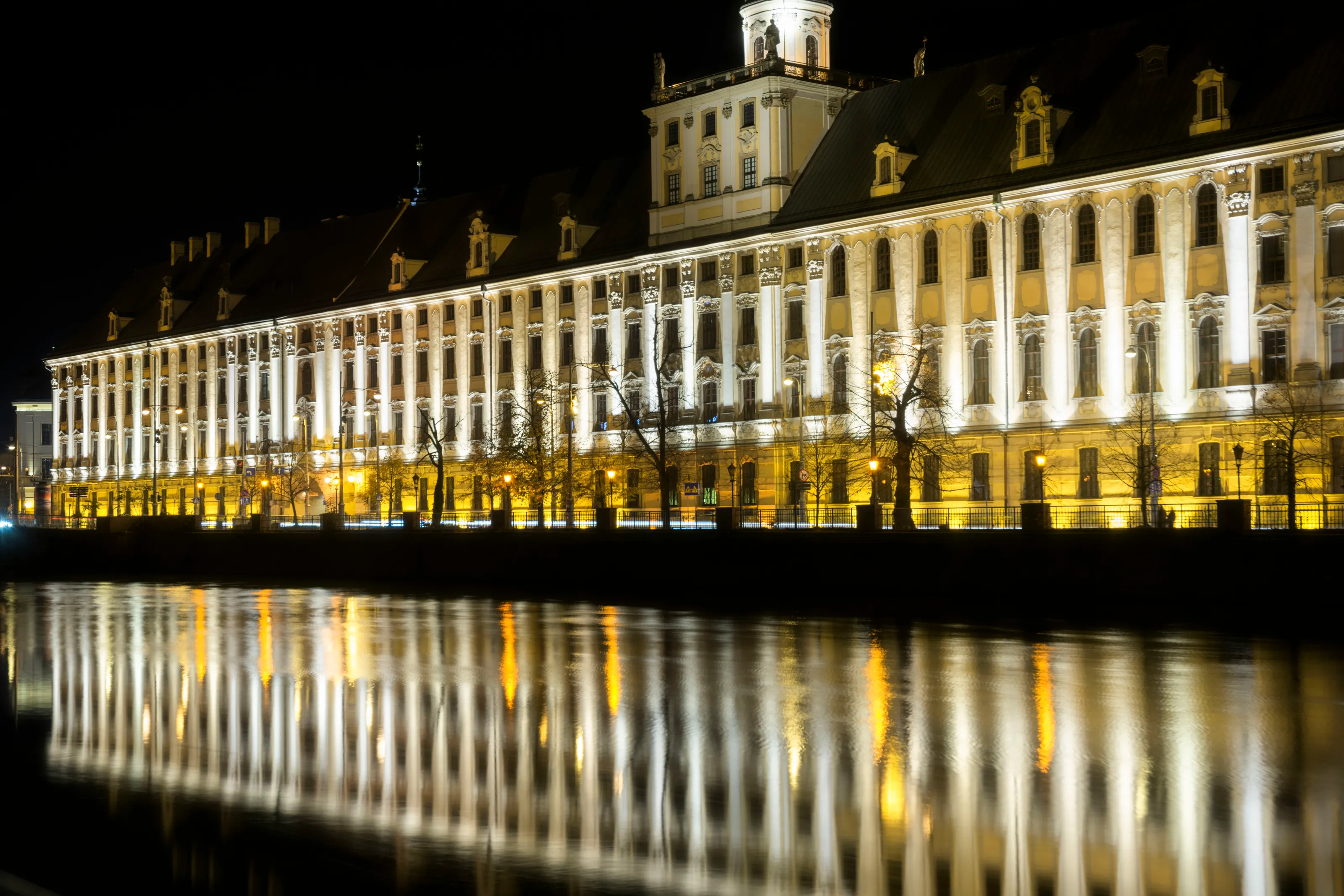
The university
The old Baroque university building lines the Oder; Wikivoyage (DE) mentions the Baroque main building and the nearby student canteen. Lit up at night, its long facade is reflected in the river.
Centennial Hall
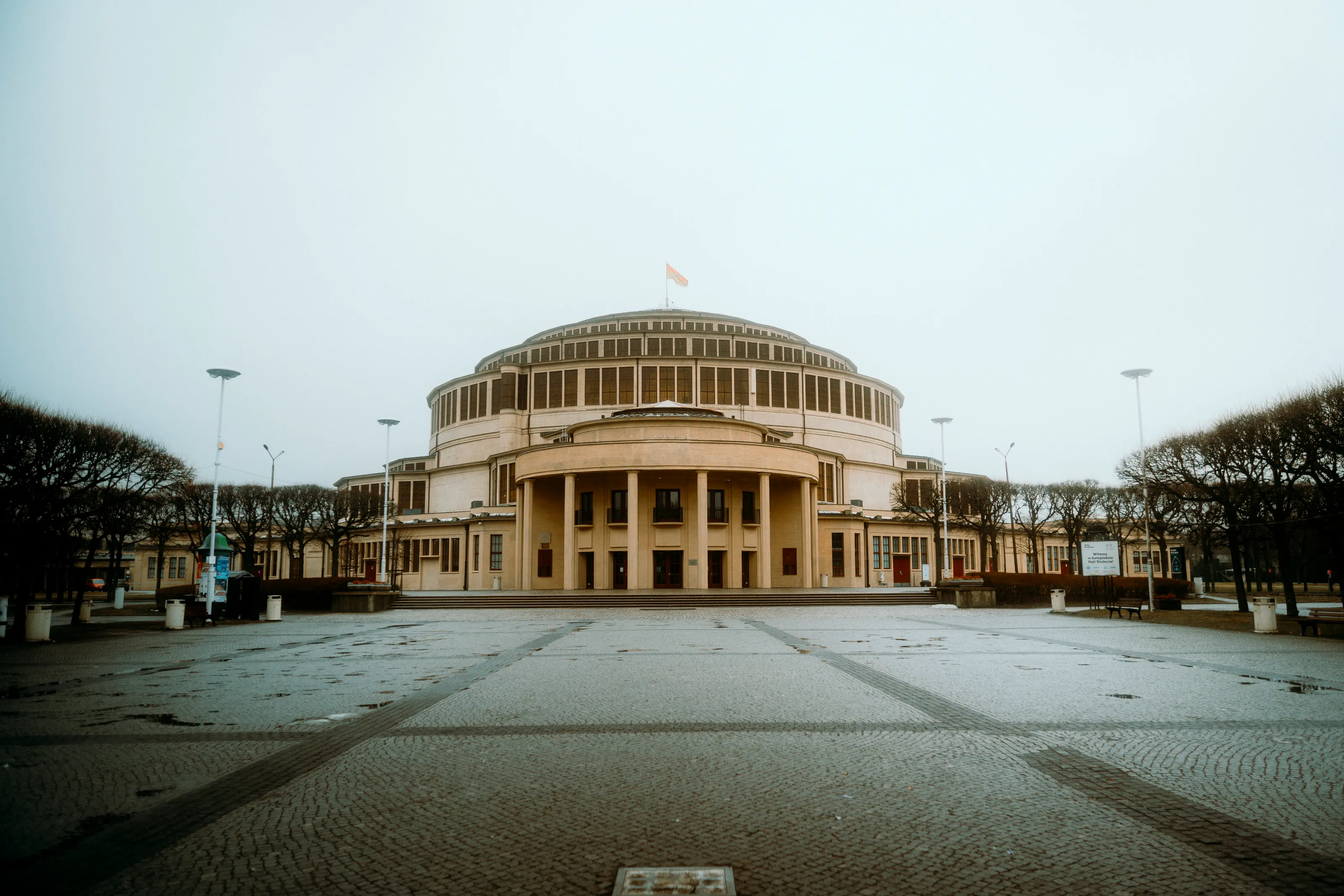
Designed by architect Max Berg and built between 1911 and 1913, Centennial Hall is an early landmark of reinforced-concrete architecture listed by UNESCO in 2006, says Wikivoyage (EN). A multimedia fountain, working from early May to the end of September, spreads out in the neighbouring pergola according to the same source.
Wrocław's dwarfs and bridges
Wrocław's dwarfs, small bronze statues scattered across the city, have become a symbol of Wrocław and a major attraction according to Wikipedia (EN); they recall the Orange Alternative opposition movement, whose emblem was a dwarf (Wikivoyage EN, Wikipedia DE). The many bridges and footbridges over the Oder and its channels make for more good walks.
Museums and culture
The Racławice Panorama, the National Museum and the botanical garden
The Racławice Panorama
This huge circular painting, shown in a rotunda, depicts the Battle of Racławice in 1794 between Russian troops and Polish insurgents. Wikivoyage (EN) calls it perhaps the most-visited tourist site in the city; visits run in groups roughly every half hour, with audio guides in several languages.
National Museum and other collections
The National Museum, of which the Panorama is a branch, occupies several sites per Wikivoyage (EN). The city also has Poland's oldest zoo (Wikipedia EN) and the university's botanical garden, open from late spring to autumn according to Wikivoyage (EN).
Culture and Jewish history
Wikivoyage (EN) mentions a 19th-century synagogue on Włodkowica Street. We do not quote fares: they change, as do opening days and hours; check them before you travel.
Food and drink
Milk bars, pierogi and the market hall
Milk bars
Milk bars (bar mleczny) are self-service canteens dating from the communist era, serving very cheap traditional Polish meals; Wikivoyage (EN, DE) treats them as a gastronomic and cultural experience, used by students, pensioners and office workers. You order at the cash desk in Polish, then collect your meal at the counter.
Pierogi and Polish cooking
Pierogi ruskie, filled with potato and cottage cheese, served with kefir, barszcz (beetroot soup) and nalesniki (crêpes) give a taste of home-style Polish food according to Wikivoyage (EN). The covered market (Hala Targowa) sells vegetables, fruit and pierogi (Wikivoyage ES).
Cafes, wine and nightlife
The old town has plenty of pubs, cafes and a few clubs (Wikivoyage DE); the bars on the Market Square are mainly for tourists and pricier, while the side streets offer more choice. Wikivoyage (EN) also lists natural-wine addresses and bakeries.
Getting around
Walkable centre, trams and buses, affordable taxis
On foot and by bike
The centre is walkable; allow 15 to 20 minutes from the main station to the Rynek per Wikivoyage (DE). The city has many cycle lanes and a bike-sharing network (Wikivoyage DE).
Trams and buses
Wikivoyage (EN) describes an excellent public transport system, with 57 bus lines, 22 tram lines and 13 night bus lines. Tickets are sold at machines, kiosks or on board and must be validated on boarding; the Jakdojade app is recommended.
Taxis
Taxis are readily available and quite affordable, even on a budget, according to Wikivoyage (EN). Agree the route or check the meter.
Budget and precautions
A big student city: cheap in milk bars, pricier on the square
Price level
Wikivoyage (DE, EN) cite very cheap full meals in milk bars, while the Market Square is pricier. We give no figures because we could not cross-check them on two independent open sources; prices vary with the season and neighbourhood.
Busy periods
Cultural events and summer weekends draw crowds to the Rynek. Book early for holiday periods.
Flying and precautions
SniperAir tracks prices to WRO and compares them with the route's history, but it does not sell or book tickets. Check entry requirements for Poland for your nationality with the official authorities. Always validate your transport ticket: fines are steep.
When to go
One of Poland's warmest cities: May to September
Spring (March to May)
Parks and the botanical garden turn green again and Market Square terraces reopen. Cool in March.
Summer (June to August)
Wrocław is one of Poland's warmest cities according to Wikipedia (EN, DE). The multimedia fountain at Centennial Hall runs from early May to the end of September (Wikivoyage EN).
Autumn (September to November)
Soft light on the Oder embankments and thinner crowds. Days shorten in November.
Winter (December to February)
Cool to cold, with winters slightly colder and drier than Berlin's according to Wikipedia (DE). The Christmas market enlivens the Rynek.
Wrocław has an oceanic climate bordering on humid continental, with warm summers, per Wikipedia (EN); Wikipedia (DE) compares it with Berlin, with slightly colder and drier winters. We give no monthly averages because values differ between sources.
By length of stay
What to do in Wrocław depending on how long you stay
The historic centre
The Rynek, the town hall, Salt Square, the dwarfs and an evening in the milk bars or pubs.
Cathedral Island and museums
Ostrów Tumski at dusk, the university, the Racławice Panorama and the National Museum.
Centennial Hall and surroundings
Centennial Hall, the multimedia fountain, the botanical garden and the zoo, with Wrocław as your base.
In pictures
Wrocław in pictures
You might also like
Similar destinations
FAQ
Frequently asked questions about flights to Wrocław
How do I get from Wrocław airport to the centre?
City buses run from the terminal to the centre during the day, with a night service; allow about 35 minutes for roughly 12 km, according to Wikivoyage. Check the route and schedule before you go.
When is the best time to visit Wrocław?
May to September, when terraces and the Centennial Hall fountain are running; winter is cold, but the Christmas market has its charm.
Is Wrocław expensive?
Milk bars serve very cheap meals, while the Market Square is pricier. We quote no figures because we could not cross-check them on two independent sources.
How long should I stay in Wrocław?
Two days for the centre and Cathedral Island; three to four days with the museums, Centennial Hall and strolls by the water.
What are Wrocław's dwarfs?
Small bronze statues scattered across the city that have become a local symbol, inspired by the Orange Alternative opposition movement.
What should I eat in Wrocław?
Pierogi, barszcz, nalesniki and milk-bar meals; the covered market sells vegetables, fruit and pierogi.
How much does a flight to Wrocław usually cost?
The price depends mainly on your departure city, the time of year and how far ahead you book. The "opportunities" section above shows real examples of prices SniperAir has already detected to this destination.
How do I get alerted when a flight to Wrocław drops below my budget?
Create an alert profile with your departure airport, Wrocław as the destination and your maximum budget. You are notified automatically as soon as a matching price is detected.
Ready to head to Wrocław?
Set your budget and let SniperAir monitor fares for you.
Create my alert